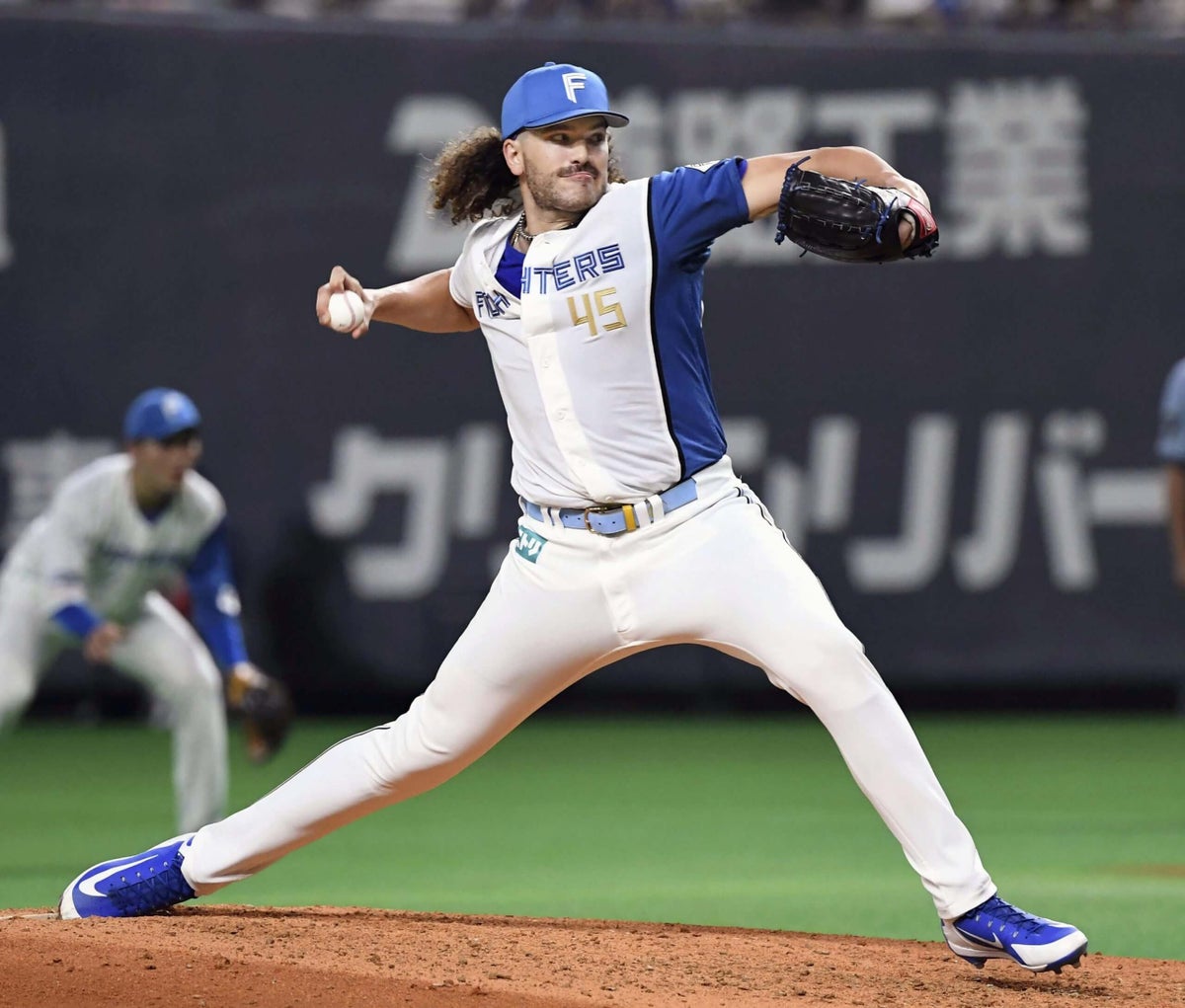
Last offseason, Cody Ponce sat on a couch with his wife, pondering his future and weighing his options.
He was a second-round draft pick in 2015, but had only 55 1/3 major-league innings to his name. He had already spent the past three seasons pitching overseas. No one from the world of Major League Baseball was calling. Even his days in Japan’s Nippon Professional Baseball appeared numbered.
Ponce and his wife weighed two choices: He could return to the U.S. and play in an independent league, something that might be easier on his family but harder on his finances. Or he could go to the Korean Baseball Organization, making a healthy wage but extending an oblong baseball journey, even as he and his wife hoped to start a family.
They talked and deliberated.
They chose the KBO.
“We just kind of doubled down on each other, and she kind of tripled down on me,” Ponce said, “and was like, ‘Hey, we’re going to go out there, we’re going to have fun. We’re going to enjoy this experience.’”
Ponce spoke those words last month on his introductory video call with the Toronto Blue Jays, now the recipient of a three-year, $30 million contract after a season in which he went 17-1 for the Hanwha Eagles, posted a 1.89 ERA and set a KBO record with 252 strikeouts. His deal is the most lucrative in an offseason in which several pitchers have climbed back from the brink in Korea’s KBO and Japan’s NPB to find healthy markets in MLB free agency.
The Detroit Tigers signed right-hander Drew Anderson to a one-year, $7 million deal with a $10 million team option for 2027. The Houston Astros signed Ryan Weiss to a one-year, $2.6 million contract with a club option and more incentives. The Chicago White Sox gave Anthony Kay two years and $12 million, and the Washington Nationals paid $5.5 million on a one-year deal with left-hander Foster Griffin.
Pitching overseas, then, has become less of a last resort and more of an appealing mid-career avenue for players who might otherwise be stuck in minor-league limbo.
There are ample reasons that explain this trend. Foreign leagues, in the view of some industry sources, have begun targeting pitchers with more raw “stuff.” In different environments, pitchers get paid well and operate with the freedom to alter their pitch mixes and mechanics. In turn, the rise of pitch modeling gives MLB teams a better ability to predict how these changes will translate to the major leagues.
In the words of one pro scout with experience in the Pacific Rim, “We’re all looking for pitching. We’re all looking for guys who can start. We’re all looking for cheaper options to target.”
The question now: Will it work?
During his days in the KBO, Merrill Kelly would wake up, brew coffee and — because of the time difference — watch MLB games that were unfolding back home.
“It felt literally and figuratively miles away when I was over there,” Kelly said during the 2023 World Series. “But that was always the mindset. That was always the focal point, was getting back to the big leagues.”
Kelly, a righty with the Arizona Diamondbacks, is the most prominent success story in recent years, a man who pitched four years in the KBO and returned to throw more than 1,000 MLB innings and make $38.5 million and counting.
There was Colby Lewis before him, and others such as Erick Fedde, Nick Martinez, Matt Moore and Chris Flexen who have ventured to NPB or the KBO and returned with different degrees of success. Eric Thames even serves as a strong example for hitters.
Those players laid the groundwork. But might the failed-prospect-turned-international-success archetype be burgeoning to a whole new degree? When the Tigers needed to round out the back of their rotation this winter, they turned not to a savvy veteran or an appealing trade target but instead to a pitcher who has not thrown in the major leagues since 2021.
Only two years ago, Drew Anderson made a strong impression in spring training with the Tigers, upping his velocity, tweaking his arsenal and making a case for a spot on the major-league roster. But Anderson finished spring with a 7.88 ERA, got sent to Triple A and soon left the Tigers for a $570,000 deal with the KBO’s SSG Landers.
Anderson, who had previously spent two seasons in Japan, stayed in Korea for the 2024 and 2025 seasons, adding a kick-changeup and holding his improved velocity through a career high in innings. In ’25, he posted a 2.25 ERA and struck out 245 batters, challenging Ponce for the KBO record.
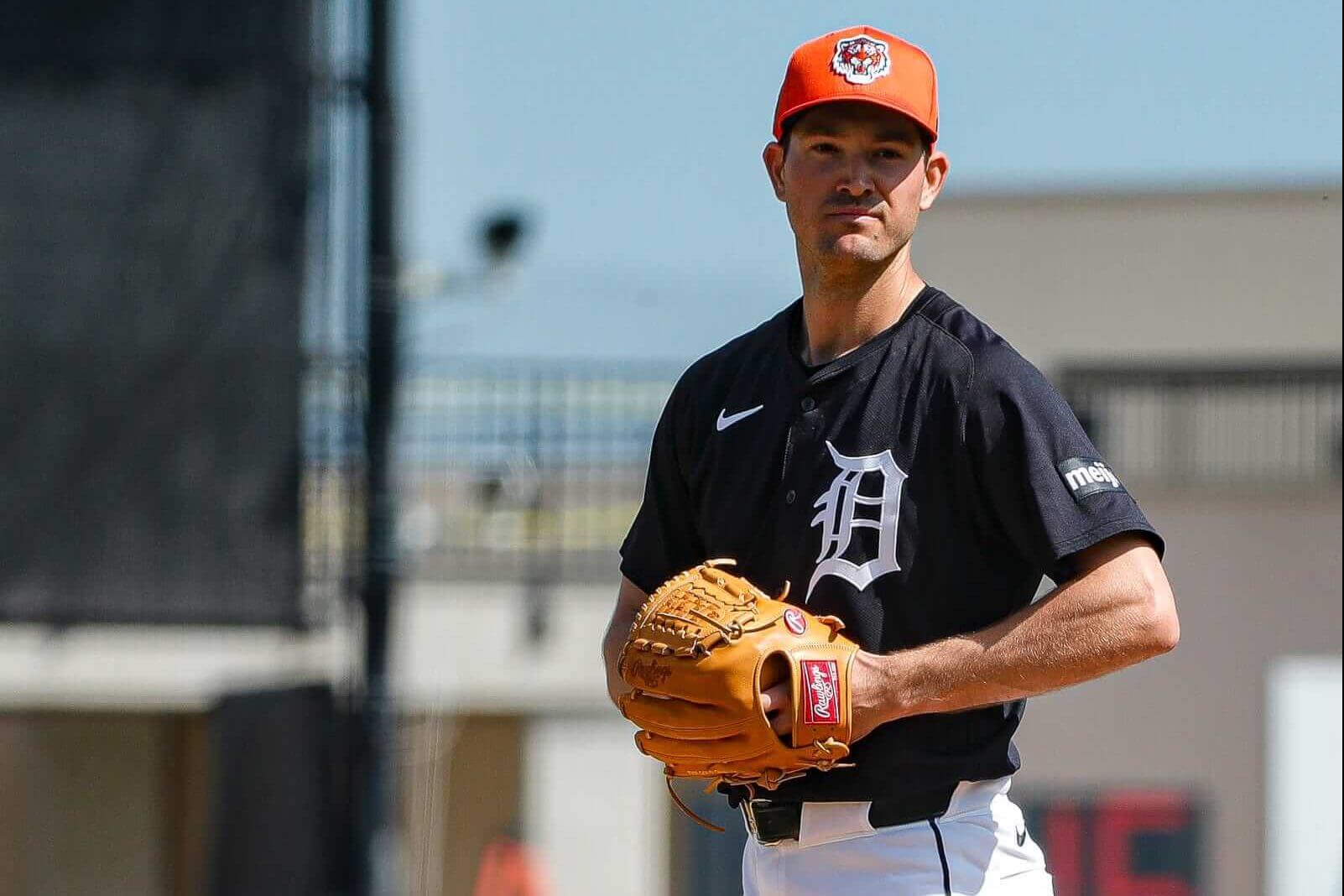
Drew Anderson couldn’t stick with the Tigers in 2024. A stint in Korea changed that. (Junfu Han / USA Today Network)
“It’s a great opportunity to go over there and solidify yourself as a starter,” Anderson said last month. “Especially Korea. … Everybody wants to be the guy. As soon as you get to Korea, you’re the guy. That’s always a good feeling.”
For the Tigers, choosing a pitcher such as Anderson rather than a more established name is a gambit. But with mid-market starters consistently earning upward of $15 million to $20 million per year via free agency, finding other options has obvious appeal to teams throughout the league.
Clubs might also be becoming more confident in picking pitchers whose KBO and NPB results could translate to the major leagues. MLB organizations use models such as Stuff+ and other proprietary formulas to create a predictive framework for how pitches will play in MLB games.
Based on spin rate, movement, arm angle and more, analysts believe there can be a reliable structure to evaluate any pitcher in any setting, whether it be Yankee Stadium, the KBO or your local sandlot.
“It’s pretty hard to do what those guys did,” Tigers president of baseball operations Scott Harris said, speaking of Anderson and Ponce. “We think just the performance but also the shapes of the pitches and the ability to hold the power and command them will translate to Major League Baseball again.”
It’s notable that every pitcher coming back to MLB this year made significant changes during the time abroad. Once a pitcher who had a 7.04 ERA in 2021 with the Pirates, Ponce upped his velocity into the mid-90s, improved his command and added a changeup with splitter-like action. Weiss, who had a 4.88 ERA over five seasons in the minor leagues, improved his fastball shape and developed a curveball while pitching for the same KBO club as Ponce.
Kay, a failed first-round pick with a 5.59 ERA in the majors, added a two-seamer and a curveball during his time in Japan. Griffin, another first-rounder who has pitched only eight MLB innings, expanded his arsenal to seven pitches, including mastering the en vogue splitter while in NPB.
The data and the projectability offers pitchers a significant advantage over hitters. Even star Japanese sluggers such as Munetaki Murakami and Kazuma Okamoto found lukewarm markets in MLB this offseason, largely because there is more doubt regarding how they will fare against higher velocity and nastier shapes on a nightly basis.
At the same time, reasons for apprehension around pitchers such as Ponce and Anderson are numerous. Both the NPB and KBO have significantly different hitting environments than MLB. That can skew not only the numbers pitchers produce but also the way they throw in games. There are, for instance, scouts and executives skeptical of whether the approach Ponce used in the Korean Series — namely, an aggressive strategy of attacking hitters with challenge fastballs over the plate — can work in MLB, or whether Ponce can alter his style and still succeed.
Pitchers do not even throw with the same balls overseas. Baseballs in both Japan and Korea are slightly smaller, differ in seam height and have a more tacky surface.
The scout likened much of Japan’s NPB to a level between Triple A and the major leagues, while the KBO sits closer to Double A.
That reality makes this crop of returning players into something of a test group, and they will be watched closely in baseball circles.
“The fact that all these guys are coming back over, it’s going to be a good litmus test,” the scout said. “Maybe there will be a correction in the market next year if some of these guys struggle.”
As teams appear more willing to sign reclamation projects from foreign leagues, might more pitchers begin flocking overseas?
The scout, who has previously worked in the KBO, theorized the league’s switch to an automated strike zone two years ago made catcher framing less important and thus incentivized KBO teams to target stuff and upside over sheer command. The success of pitchers such as Ponce, Weiss and Anderson last season only adds to the league’s desire to import pitchers from the MLB universe.
“There were a lot of good pitchers in Korea, American guys that were throwing strikes and throwing high velo and then had success,” Anderson said. “Guys have always come back, especially if they’ve shown they can throw 170 innings. Can you throw innings? And can you throw strikes? That’s what teams are looking for.”
While Japan has long been a place for players holding on to their careers, Korea is becoming more appealing to American and Latin players than ever. Although the success stories are overall still small in number, any stigma of playing overseas — go there, and you aren’t coming back — could be fading. Playing in the NPB or KBO can serve as an alluring alternative to the grinding lifestyle and low pay of the minor leagues.
“When you’re not on the Four-A train and you’re not just bouncing up and down, trying to do all these things that a team wants you to do,” the scout said, “and you can go over there and experiment with stuff and also build your confidence, it just does wonders for you. It’s a completely different animal.”
Adjusting to a different country, language and culture is still a barrier, particularly for players with families.
“It makes you miss America, for sure,” Anderson said. But technology — Instagram, Google Maps, translation apps — make the transition easier than ever. It doesn’t hurt that players can go from making a meager Triple-A minimum ($1,225 per week in 2025) to six-figure or larger salaries.
This offseason, former Phillies prospect Spencer Howard signed on for a second season in NPB. Former Braves pitcher Carson Rasdale and former Toronto Blue Jays lefty Easton Lucas are among those joining him in Japan.
Anders Tollhurst, a right-hander from the Blue Jays’ system, signed with the KBO’s LG Twins last August and ended up serving as the winning pitcher in two games of the Korean Series.
This offseason, a host of pitchers who might once have been stuck in the minors opted to play in the Pacific Rim. The KBO’s Hanwha Eagles replaced Ponce and Weiss with former Tigers prospect Wilkel Hernandez and former Rangers and White Sox right-hander Owen White. Some, such as former Tigers first-round pick Matt Manning, profile as high-upside reclamation projects who would otherwise be toiling in the minors.
Manning, White, Caleb Boushley, Elvin Rodriguez and Jeremy Beasley are all import pitchers who signed for the KBO’s $1 million maximum for first-year foreign players.
Whether this pipeline is at its peak or just beginning could depend on the success of players such as Ponce in 2026 and beyond.
For now? Pitchers who might have otherwise been lost in the shuffle are finding new hope overseas.
As Ponce put it: “Every little kid’s dream, or 31-year-old’s dream, is still possible.”