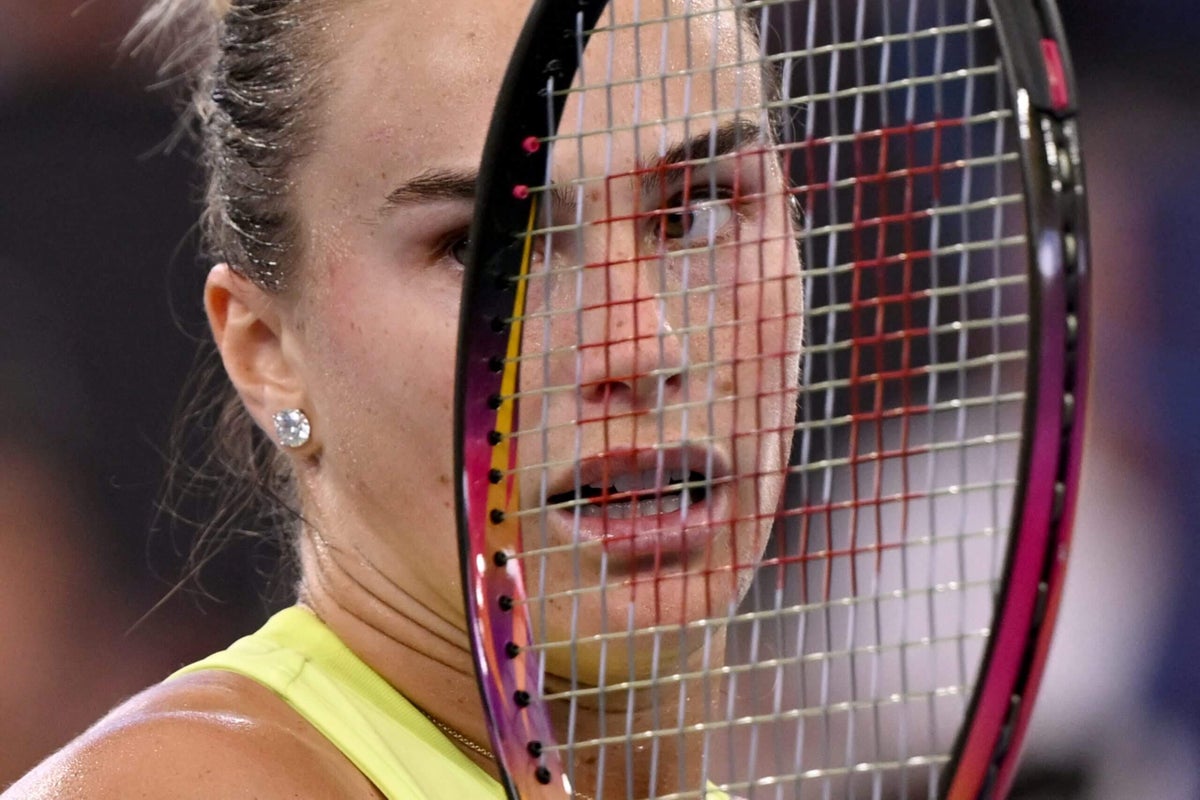
Aryna Sabalenka, the world No. 1, has labeled both the tennis season and the WTA Tour as “insane,” referring to the intensity of the schedule and the consequences for players skipping events respectively.
After beating Sorana Cîrstea 6-3, 6-3 to reach the Brisbane International quarterfinals, during a news conference Sabalenka was asked whether she would consider playing a lighter schedule, like Serena Williams used to do.
Sabalenka said doing so was impossible, because of the penalties that come with missing mandatory WTA 1000 events (the rung below the Grand Slams), or with failing to compete in six 500-level events (the next rung down). Last year, Sabalenka and world No. 2 Iga Świątek were deducted rankings points for failing to play enough 500s. Players can also be fined for missing events, depending on when they withdraw and for what reason.
“The season is definitely insane, and that’s not good for all of us, as you see so many players getting injured and also the balls are quite heavy. It’s a lot of struggle for all of us,” Sabalenka said Thursday.
“The rules are quite tricky with mandatory events, but I’m still skipping a couple events to protect my body, because I struggled a lot last season,” she added.
“Even though the results were really consistent, but some of the tournaments I had been playing completely sick or I’ve been really exhausted from overplaying.
“This season we will try to manage it a little bit better, even though they are going to fine me by the end of the season. But it’s tricky to do that. You cannot skip a 1,000 event. It’s really tricky, and I think that’s insane what they do. I think they just follow their interests, but they’re not focusing on protecting all of us.”
A WTA spokesperson said that “athlete welfare is, and will always remain, a top priority for the WTA. We listen and engage closely with players on all matters relating to the tennis season, including through the WTA Players’ Council and player representatives on the WTA Board.
“We are committed to supporting athlete welfare and sustaining the long-term health of the sport. Based on feedback from our players, tournaments, and fans, we continue to review and explore improvements to our Tour structure, working in coordination with the ATP, ITF and Grand Slams.”
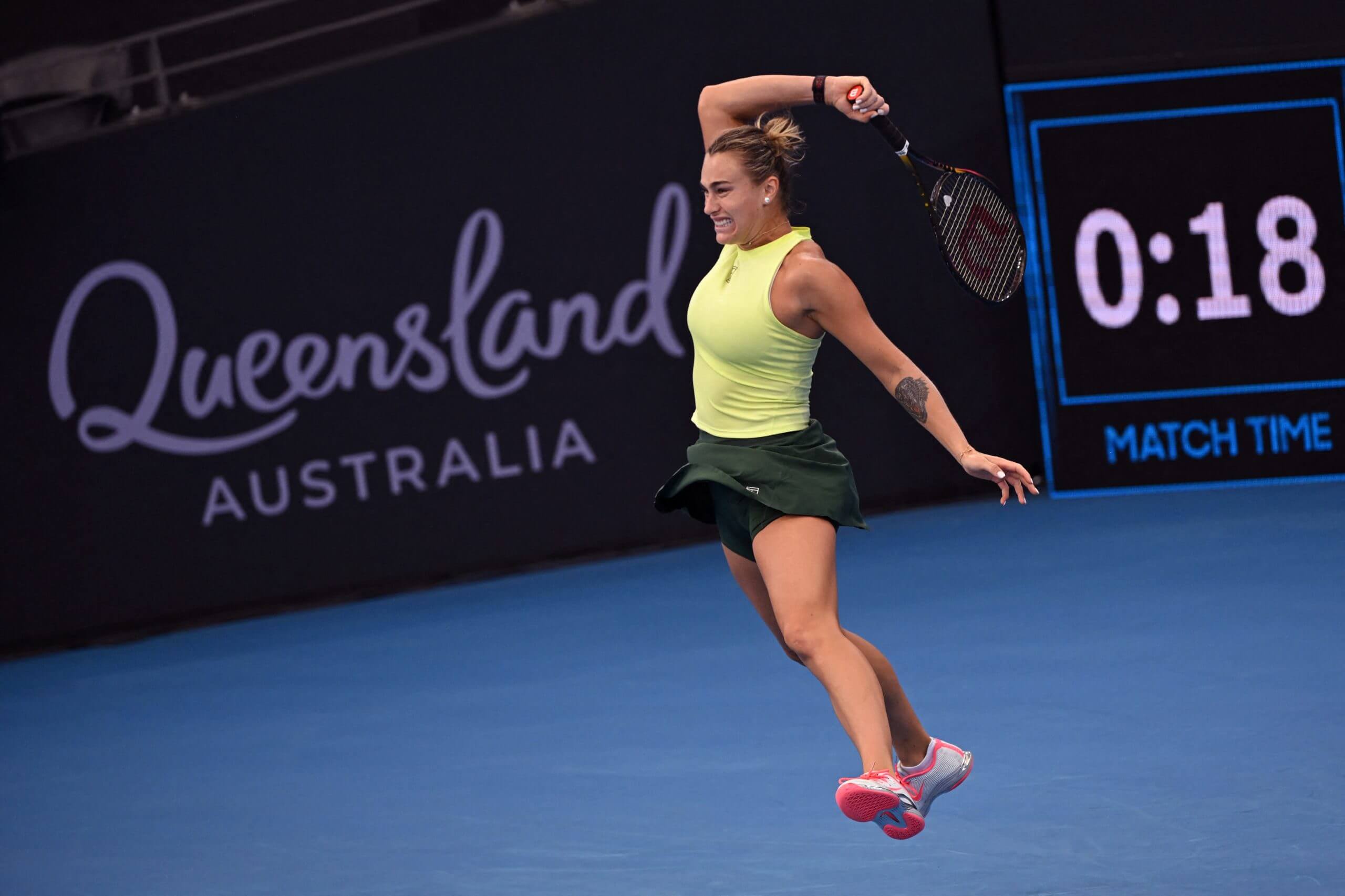
Aryna Sabalenka will play Madison Keys in the quarterfinals of the Brisbane International. (William WEST / AFP via Getty Images)
Sabalenka’s comments follow Świątek, her main rival, saying in September during the China Open, where numerous players suffered injuries, that the WTA’s mandatory rules had made the schedule “a madness,” and that it was “impossible to fit everything in the calendar.”
It’s been a similar story on the men’s ATP Tour. Carlos Alcaraz, the men’s world No. 1, said in September 2024 that tennis’s schedule meant that “probably they are going to kill us in some way.”
Daniil Medvedev and Holger Rune have expressed similar sentiments during matches played in particularly oppressive weather conditions — the latter in October a couple of weeks before rupturing his achilles at the Stockholm Open.
Alcaraz, like Sabalenka and Świątek, was a signatory of a pair of letters sent by a group of leading players to the Grand Slams last year demanding better pay, a greater say in how the tournaments are run, and additional contributions to player welfare.
The mobilization of the group also led to more players speaking out publicly about the need for change, and Sabalenka’s latest comments are expected to be a portent for similar complaints at the Australian Open, which begins next week.
The players want to publicly put pressure on the Grand Slams, and many have given interviews to this effect. At the end of October, world No. 2 Jannik Sinner told The Guardian: “We had good conversations with the Grand Slams at Roland Garros and Wimbledon, so it was disappointing when they said they cannot act on our proposals until other issues are resolved.”
The “other issues” Sinner referred to included the lawsuit the Professional Tennis Players Association (PTPA) launched against the ATP and WTA Tours in March, which added the Australian, French and U.S. Opens and Wimbledon as defendants on its New York City filing in September.
The PTPA has subsequently settled with the Australian Open but remains in dispute with the other three slams. The PTPA’s lawsuit demanded better pay for players and more freedom to choose what events they play — something Sabalenka alluded to with her comments Thursday.
Some might question why a player talking about mental and physical exhaustion would play in an exhibition such as Sabalenka’s ‘Battle of the Sexes’ match against Nick Kyrgios in Dubai late last month.
The response from players is typically that exhibitions are far less onerous and stressful on the body and mind than tour events, where prize money and ranking points are at stake. The PTPA, and others, have also argued that players should have the choice to maximise their earning potential.
Sabalenka next faces Madison Keys in the Brisbane quarterfinals Friday — a repeat of last year’s Australian Open final, which the American won in three sets. The Australian Open gets under way Jan. 18.