Jan. 8, 2026, 4:00 p.m. ET
The world’s five largest corporations by market capitalization are Nvidia, Apple, Microsoft, Alphabet and Amazon, with their particular ranks fluctuating daily. The boards of those companies average 11 directors, with none seating more than 13. By comparison, the PGA of America has 22 board members. Doubtless most of them are well-intentioned and some of them are even capable, but that unwieldy number betrays an organization that’s become driven less by purpose than by perks and privilege. It certainly doesn’t suggest a governance structure designed to empower chief executives.
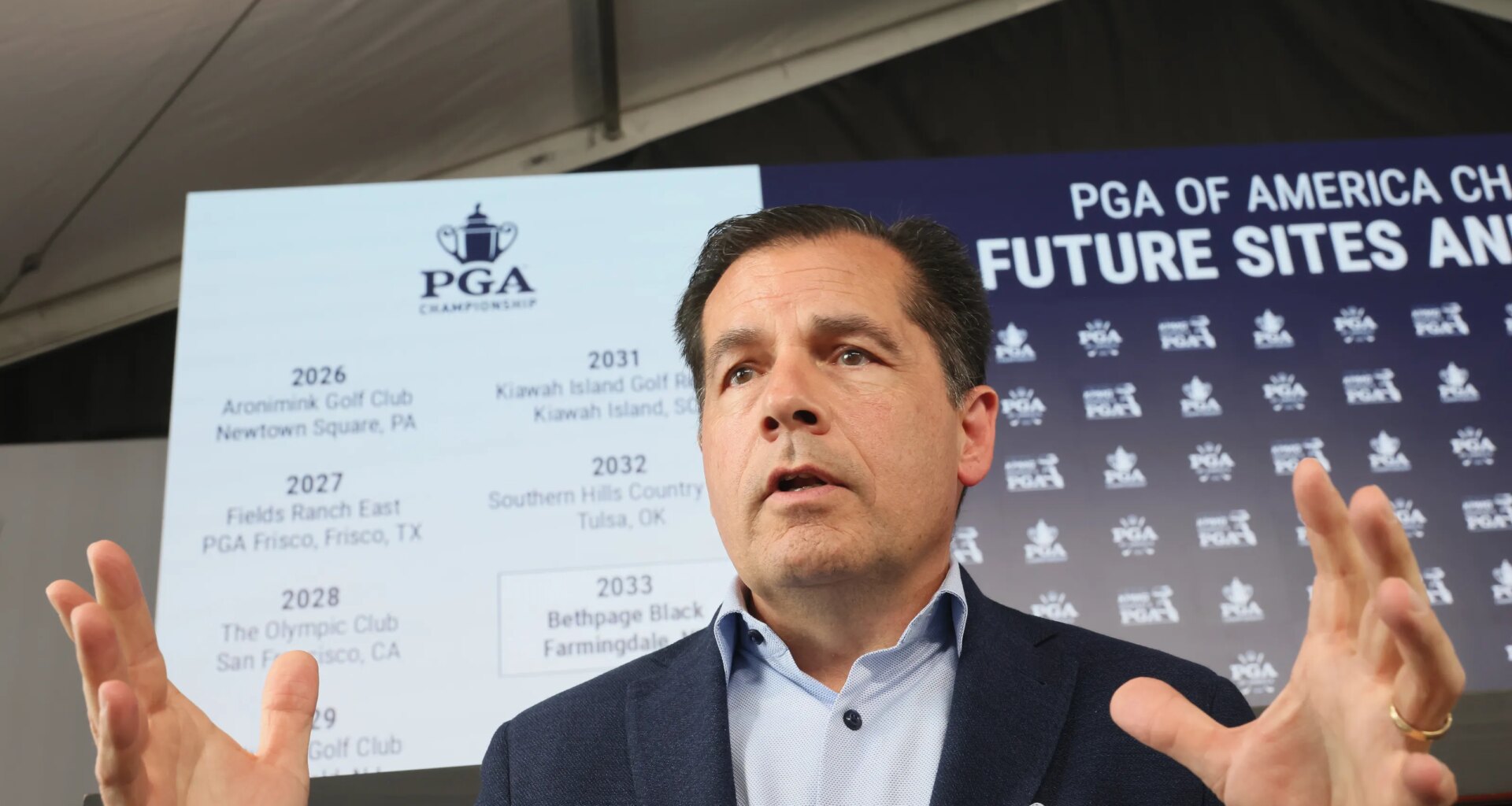
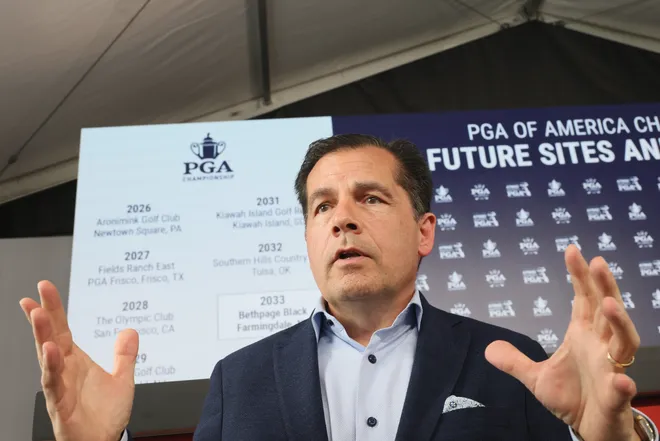
The PGA of America’s latest CEO, Derek Sprague, announced his resignation on January 7 after less than a year in the role. Sprague is a good man and deserves to be taken at face value when he cites a need to spend more time caring for aging family members who live far from the Frisco headquarters. A former PGA of America president, he was hired because the board insisted on having a member club professional serve as CEO. His predecessor, Seth Waugh, wasn’t a club pro (as anyone who’s witnessed his swing can attest), but did have business chops as the former head of Deutsche Bank Americas. Waugh quit in 2024, weary of dealing with a system that every two years anoints a new PGA president, who often then sets about shifting strategies and priorities, or attempting to engineer relevance beyond their term in office.
Sprague made no mention of similar concerns influencing his exit, and as a loyal member, he probably won’t. But the underlying dysfunction was an open wound during his short tenure, and it’s possible he just tired of it quickly. The PGA of America has been roiled with internal tensions for months, which led to the board recently taking the extraordinary step of reminding its current president, Don Rea Jr., to stay in his lane. That is from five sources familiar with the top-level discussions that took place.
“Don likes being in front of the camera, and that’s not everyone’s perception of where he should be,” said one.
The Ryder Cup fiasco in September was a tipping point when it came to the board’s impatience with Rea and his messaging missteps. He blithely dismissed criticism of the PGA’s handling of the abusive crowd and suggested that similar misbehavior happened with home fans in Rome two years prior. It was mealy-mouthed nonsense and demonstrably false. His comments caused deep embarrassment at PGA HQ and simmering resentment with the Europeans. In an interview with the Times of London last month, Europe’s captain, Luke Donald — one of the more temperate, measured voices in golf — aimed a broadside directly at Rea.
Need a news break? Check out the all new PLAY hub with puzzles, games and more!
“As a leader, you have a responsibility. Nobody’s perfect. We all make mistakes and f*** up, just own up to it,” he said. “Just say, ‘We should’ve done more. This isn’t acceptable and we will do better next time.’ I would’ve loved to have heard that message rather than, ‘Well, it happens and it happens over there.’ I don’t think that’s what leaders should do.”
Given his various roles over the years — golf pro, pastor, minor league umpire — Rea probably isn’t accustomed to being told that he’s wrong, but he did apparently acknowledge his blunders as anger grew among the board.
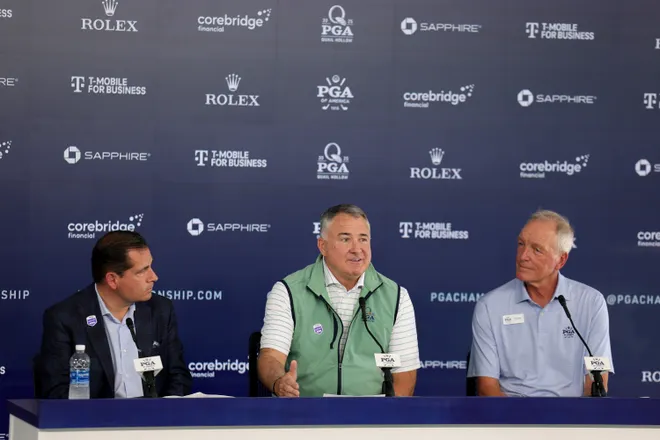
“Don owned his mistakes and accepted that changes needed to be made,” said one person familiar with the conversations. “It’s just clarifying the roles, who should be doing what. It made crystal clear what we need to be doing, who should be messaging and when.”
Rea’s term ends in November, but the PGA of America’s structure means there’s always the prospect of hitting another presidential pothole around the next bend. In the last dozen years we’ve seen one occupant of the office run out of town for ill-advised comments on social media and another run off the road in a DUI incident. That’s not an argument against the position of president existing, but it bolsters the case for limiting the power of officers whose professionalism is too often limited to the pro shop or practice tee, and for streamlining a board that pays mere lip service to its hired executives.
This is a member organization that treats non-members as guests, even if that guest is their CEO. The fallout from the Ryder Cup exposed again one of the more uncomfortable truths in golf: that the only organization run by professionals is actually the most amateurish, hostage to a revolving door of club pros who fancy themselves captains of industry, equipped to run a global sports business that oversees two of the five most important events in the game.
In its statement announcing Sprague’s departure, the PGA of America said it expects to name a successor within a few weeks. Six months elapsed between Waugh leaving and Sprague arriving, so this accelerated timeframe suggests there will be no exhaustive search. The C-suite in Frisco offers no obvious internal candidate since almost every office there has been vacated in recent months, meaning the next CEO will likely come from the last pool of finalists or from the board itself.
That looming decision will indicate how serious the desire is for root and branch reform and whether one of the most fundamentally important organizations in golf can finally stop governing itself in a fundamentally unserious manner.