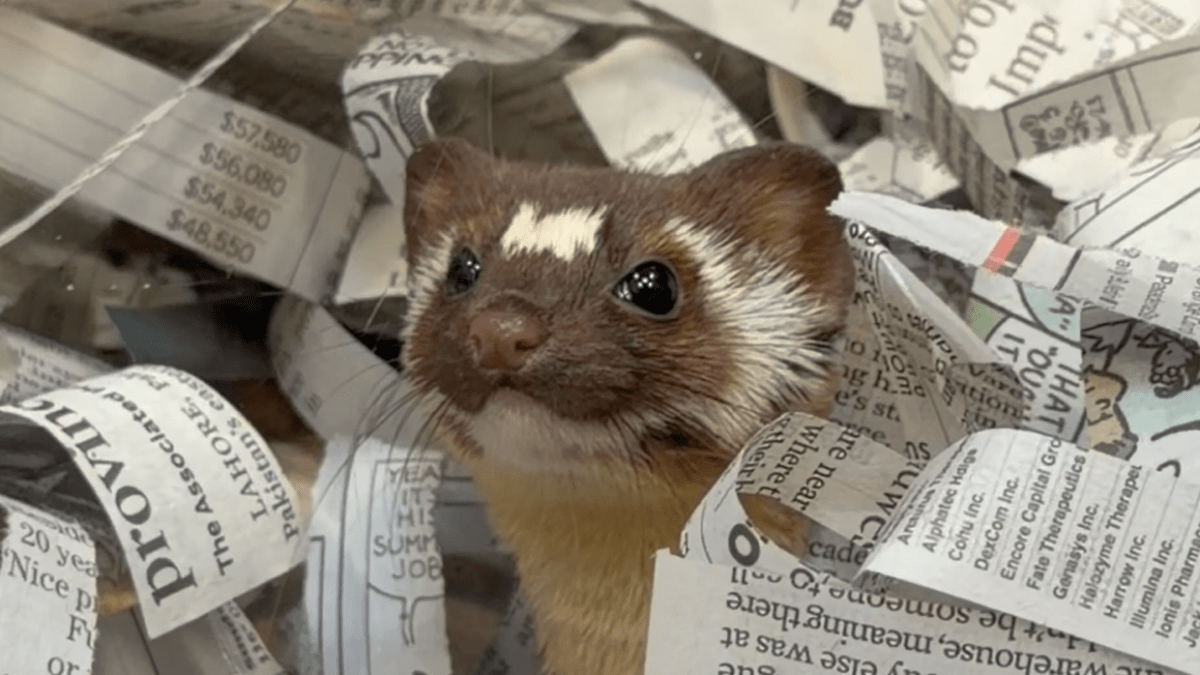
Following injuries caused by a snap trap and 26 days of recovery at the San Diego Humane Society’s Pilar & Chuck Bahde Wildlife Center, a long-tailed weasel is back in the wild, SDHS announced Thursday.
The adult male weasel was brought to the animal welfare nonprofit by member of the community who found him caught in the trap in Oceanside. During an initial exam, SDHS’ Project Wildlife team located severe injuries to his right front paw. The trap had broken multiple digits, and two toes needed to be amputated, a statement from SDHS read.

A long-tailed weasel scurries from within newspaper the San Diego Humane Society on Jan. 8, 2026. (San Diego Humane Society)
After the surgery, the weasel was cared for at the Bahde Wildlife Center before being released back into the wild on Wednesday.
“Despite losing two toes, the weasel recovered well and remained bright, alert and active throughout his stay,” the nonprofit’s statement read. “He demonstrated a strong appetite, normal movement and the feisty personality typical of his species.”
SDHS leaders said snap traps are “a common cause of serious wildlife injuries and are both cruel and unnecessary.” They are designed to crush bones and animals can be trapped for hours or days in severe pain and with fractures and possible amputation and infection.
San Diego Humane Society
San Diego Humane Society
A long-tailed weasel gets its toes examined on Jan. 8, 2026 with the San Diego Humane Society. (San Diego Humane Society)
“A very wide variety of domestic and wild animals are harmed by snap traps left outside,” Denys Hemen wrote for the California Wildlife Center in 2022. “A rat snap trap has the potential to cause great injury to a curious cat or dog that may sniff around the bait. Wild animals fare even worse.”
Humane, wildlife-safe alternatives are widely available and far more effective for long-term pest control, the SDHS statement reads.
According to the nonprofit, long-tailed weasels are small but bold hunters that naturally help control rodent populations. They typically eat up to 40% of their body weight each day, primarily small rodents, along with insects and birds. They are common yet rarely seen due to their nocturnal and solitary nature, often sheltering in fallen logs or abandoned burrows.
The San Diego Humane Society’s Project Wildlife team treats few weasels. Last year, just two weasels were admitted out of nearly 13,000 orphaned and injured animals.
“Thanks to timely intervention and expert care, this resilient weasel was given a second chance — and we’re grateful to see him return to the wild where he belongs,” the SDHS statement read.