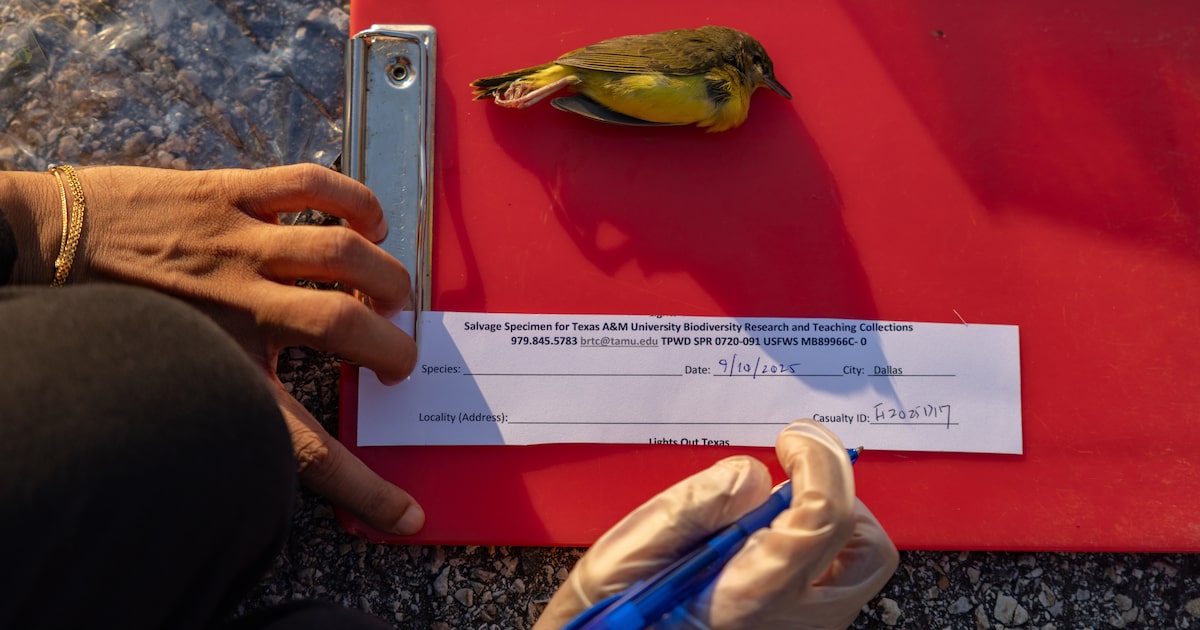
Dallas’ Kay Bailey Hutchison Convention Center has been fooling birds for years, reflecting the sky and delivering a hard stop. After years of deadly collisions, the city now is recommending brighter fixes and smarter glass to protect them.
The Environmental Commission, made up of City Council-named board members, is expected Wednesday to vote on adopting bird-friendly changes as part of the center’s new design.
“Birds play a critical role in our ecosystems and our lives. They provide irreplaceable services like distributing seeds, pollinating flowers, maintaining the balance of insect and rodent populations and much more. Not only that, seeing and hearing birds just makes us feel better,” said Kathryn Guerra, the committee’s chair.
Related
Breaking News
Since 2021, environmental volunteers with Lights Out Dallas! have documented at least 3,052 bird-building collisions across 128 downtown locations. About 924 collisions, or about 30%, occurred at the convention center.
Dallas plays a crucial role in bird migration because it is in the middle of the Central Flyway, one of the major migration routes for birds traveling between North and South America.
Volunteers work to reduce bird deaths in downtown Dallas
Bird-friendly changes
The commission identified two major contributors to collisions at the convention center, lighting and glass, and proposed fixes:
The problem: Bright nighttime lighting can confuse migrating birds that rely on natural light cues, drawing them toward artificial light sources, such as buildings.
The solution: Lighting that follows dark-sky principles, including shielding fixtures, directing light downward, using warmer color temperatures and limiting unnecessary nighttime lighting.
The goal: To reduce light pollution that disorients birds during overnight migration.
The problem: Birds do not have the contextual clues that humans use, such as window frames and placement within a building’s shape, to determine where windows are located. Birds may attempt to fly through fully transparent glass, especially in multi-story buildings and skybridges.
The solution: Include fritted or patterned glass, external screens and architectural elements that break up reflections and make glass visible to birds.
The goal: Research cited by the commission indicates these measures can reduce bird collisions by more than 90% when properly implemented.
The full council will later take up recommendations from the commission. It said that incorporating such features during design is typically more cost-effective than retrofitting buildings after construction.