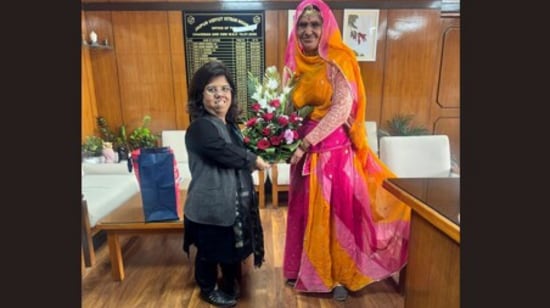
A Rajasthan IAS officer has drawn attention to a quiet but powerful story of rural empowerment after sharing the journey of a woman entrepreneur from Phalodi who now runs her own solar power plant under a central scheme.
 A Rajasthan IAS officer recalled meeting a Phalodi woman whose journey into solar entrepreneurship reflected quiet rural empowerment. (X/@artizzzz)
Taking to X, Arti Dogra shared a post about Papu Devi, a resident of Phalodi, and how decentralised solar energy transformed her life and confidence.
In her post, Dogra wrote, “Papu Devi from Phalodi runs her own PMKUSUM solar plant. I first met her during the Hon’ble PM’s visit to Banswara, where she spoke about how decentralised solar had changed her life. This week, she was sitting across the table in my office, speaking confidently about load, GSS and trippings. Watching this shift, from household roles to enterprise, in rural #Rajasthan is a reminder of how quietly empowerment can take root.”
From village fields to the power sector
Along with the note, the officer shared a photograph with Papu Devi taken inside her office. The post also included a video from an earlier interaction during the Prime Minister’s visit to Banswara, where Papu Devi can be seen narrating her journey and explaining how running a solar plant gave her financial independence and recognition.
Take a look here at the post:
Social media reacts
The post quickly gained traction on X, crossing more than 7,000 views and drawing several reactions from users who praised the story. One user commented, “This is so heartwarming”, while another wrote, “Stories like these show what real development looks like on the ground.” A third reaction read, “Quiet empowerment is the strongest form of change”, as another user said, “Proud to see rural women leading in clean energy.” One comment noted, “Direct interaction with beneficiaries gives management a clearer, more practical picture of ground realities than filtered feedback from departmental staff. It surfaces real pain points, builds trust, and often leads to faster, more workable solutions.”