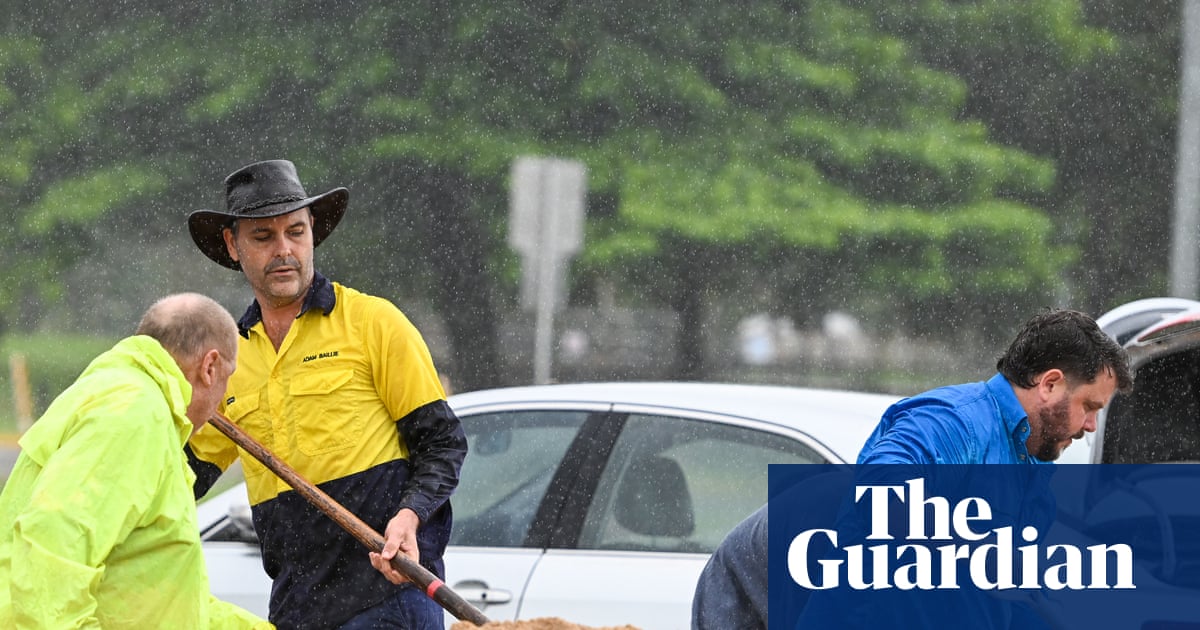
Residents are being “smashed” by heavy rain and fierce wind gusts after Tropical Cyclone Koji crossed the coast in north Queensland.
Wind gusts up to 100km/h brought down trees and fences as the cyclone tracked south to south-west, with residents from Bowen to Mackay in the line of fire as the system crossed the coast, the Bureau of Meteorology said on Sunday morning.
Residents of Marian, about 30km west of Mackay, said roads were closed and water levels were rising after conditions intensified.
“We are getting absolutely smashed,” Stephanie, a mother of one, said.
“Our fence is down, our neighbour’s fence is down. The rain is just sideways. There’s nothing we can do but just wait it out. The back yard is flooded – it’s worse here than we were expecting.”
Heavy rain fell on the town, with the bureau reporting 146mm of rain in just two hours at nearby Gargett.
In Mackay, Josephine Tobias – a tourist staying at the Mackay caravan park – said locals knew how to cope.
“Honestly, so far here it’s not too bad at the moment,” Tobias said. “We chose to stay, and it’s wet, and it’s windy, but everything is OK.”
“This is the first time I’ve been through a cyclone, but everyone keeps telling me it’s just a category one and not to panic. It’s like a really bad storm that just keeps going.”
Further north in the town of Bowen, residents were on alert as the storm system approached.
“The wind has just suddenly changed direction,” the manager of Coral Cove Apartments, Karyn, said.
“It’s been coming from the south all night, and it’s just changed direction in the last 30 minutes. It’s been raining on and off, and it’s pretty gusty, but we will have power.”
Heavy rain was hammering Ayr and Mackay, and damaging 100km/h wind gusts hit tourism hotspot the Whitsunday Islands.
Overnight falls of up to 200mm were recorded west of Mackay, with the bulk of the falls expected in the next two days.
“Cyclone Koji is crossing the coast between Ayr and Bowen,” a BoM senior forecaster, Dean Narramore, said on Sunday.
Sign up: AU Breaking News email
“We can see a lot of rainfall spiralling around the system – it’s a very lopsided system with most of the heaviest rainfall near and well south of Tropical Cyclone Koji, and that’s why we’re particularly concerned about our residents and communities from around the Ayr and Bowen area, down through the Whitsundays.
“That’s bringing strong to locally damaging winds and also widespread heavy rainfall that is going to lead to widespread flooding in the coming days, on top of what is already going on through parts of Queensland.”
Narramore told ABC TV after midday that the system had been downgraded to ex-Tropical Cyclone Koji.
Anthony Albanese said the storm was expected to bring large amounts of rainfall.
“Dangerous and life-threatening flash flooding is a major risk along a significant stretch of Queensland’s coast,” the prime minister said when visiting communities in Victoria affected by bushfires that have destroyed at least 300 structures.
“The situation is dynamic and likely to change regularly, so people should actively monitor local emergency services and the Bureau of Meteorology for updates.”
Queensland’s premier, David Crisafulli, praised the preparation of communities who had endured floods in the past.
“I do believe that people have prepared brilliantly for the rain that will come,” he said on Sunday.
“If Queenslanders continue to do that, then I have every faith we will respond following the event.”
Warnings were in place for much of the north-east Queensland coast from Townsville to Mackay, including Bowen, Proserpine and the Whitsundays.
Heavy rainfall leading to flash flooding was developing between Townsville and St Lawrence, and tides were likely to be higher than normal between Cardwell and Mackay, the bureau noted.
The heavy downpours could add to already-soaked catchment areas.
After crossing inland on Sunday morning, gales were expected to ease rapidly as Koji weakened and then tracked westwards.
In the north-west, major flooding that had already heavily affected gulf country communities – where livestock losses are projected to be significant – continued on the Flinders River.