
Myra Juliet Farrell always liked to think about a problem before going to bed.
She often solved them while asleep.
The self-professed “inventress”, born in Ireland and who grew up in Broken Hill before moving to Sydney, recorded at least 25 patents for different inventions throughout her life.
Her creations started at the age of 10, with a self-locking safety pin, and later went on to include a tuberculosis inhaler, a boneless corset, a mulberry picker, stitch-less buttons, a baby carrier inspired by a marsupial, and she even pitched a bulletproof fence to the military.
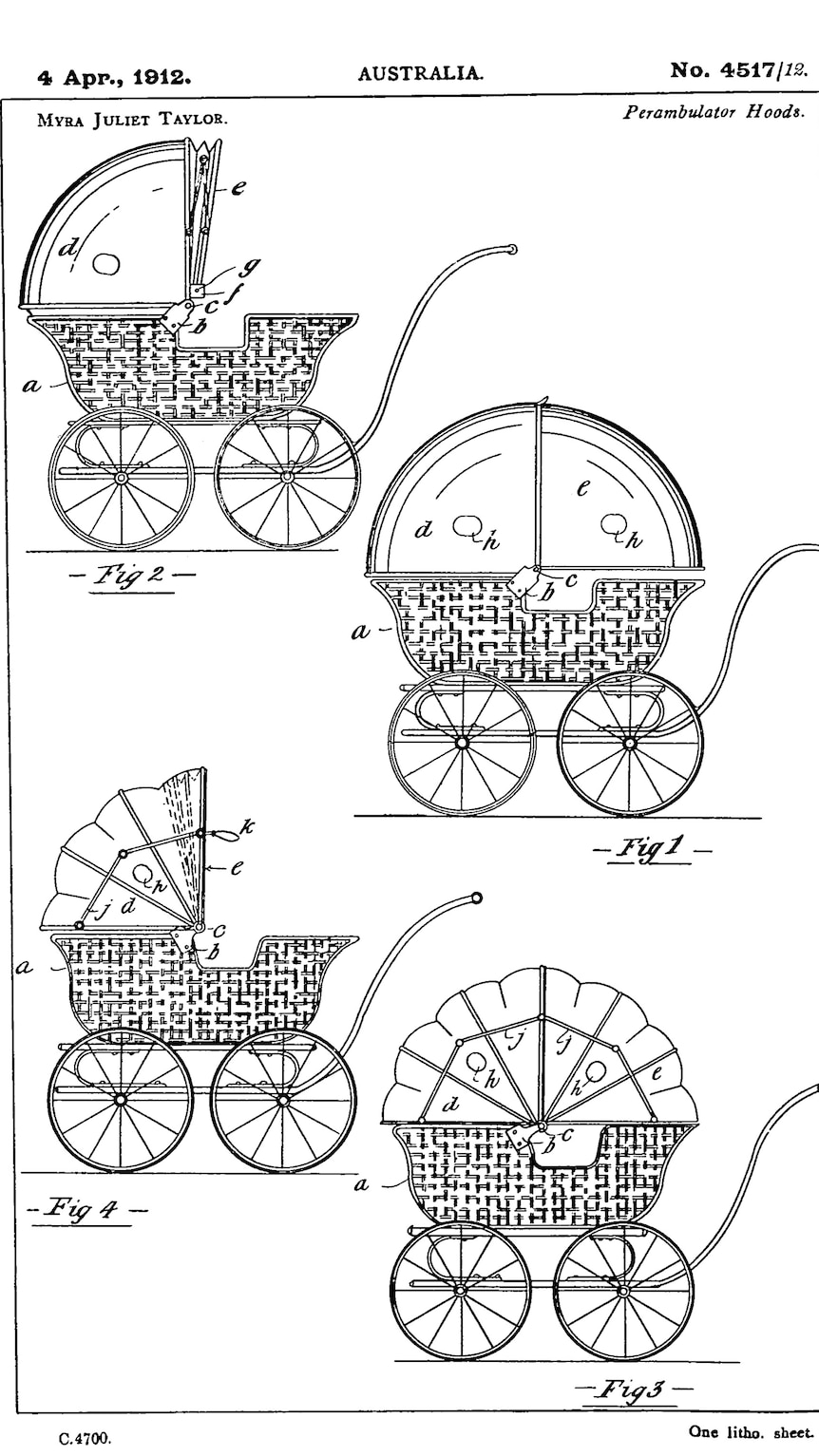
Ms Farrell’s plans for a pram hood improvement. (Supplied: National Archives of Australia)
Remarkable creative process
National Archives of Australia curator Lucie Shawcross said Ms Farrell was somnambulant — a sleepwalker.
“She would have a problem in her head before she went to bed and while she was asleep, she would figure out how to solve that problem and then she would write the solution backwards to the problem,” Ms Shawcross said.
She would scrawl anything from detailed designs to shopping lists on whatever material she could find — often walls or sheets or blankets.
“In the morning she’d have to hold up that writing to a mirror and transcribe it so she could write it properly.”
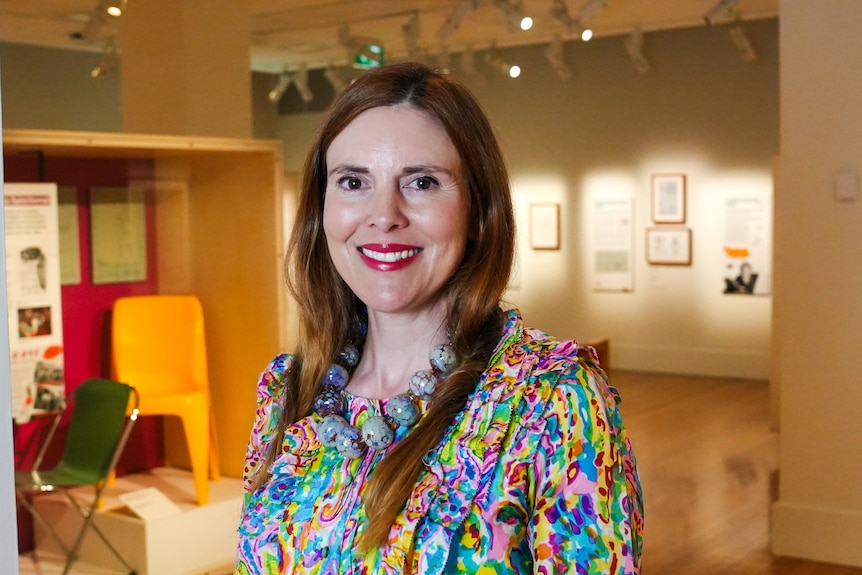
National Archives of Australia curator Lucie Shawcross said Ms Farrell would solve problems in her sleep. (ABC News: James Tugwell)
An article on page four of the Dubbo Western Age in August 1915 said Ms Farrell “might justly claim to be the most versatile woman in the Commonwealth”.
“The remarkable little lady has been inventing since she was a tiny child,”
the article said.
Myra Juliet Farrell’s patent for a boneless corset known as the improved accouchement recovery binder belt.
“She says she always felt as long as she could remember that she could see and do things which other people could not.
“Yet she dwells in our midst unknown, almost in obscurity.”
Ms Shawcross was surprised she had never previously heard of Ms Farrell and her inventions.
“Maybe she just didn’t have that marketing, or maybe they just weren’t at the right place at the right time. I feel there’s a bit of luck involved in it as well,” Ms Shawcross said.
In an article from the Sun in March 1945, Ms Farrell said as much.
“I have never made my fortune from them because I’m not a good businesswoman,” she said.
Australian inventors and patents
Ms Farrell is part of a new exhibition In real life at the National Archives of Australia in Canberra, featuring Australian inventors, patents and trademarks.
The exhibition showcases drawings and designs displayed beside the physical object.
“The whole idea is bringing our records to life and seeing our records in your life,”
Ms Shawcross said.
It includes items such as the Hills hoist, the goon bag, Tupperware, the half-flush toilet, the Sebel chair, KerPlunk, polymer bank notes, spray-on skin, the pedestrian push-button, the Ford ute, and a pineapple peeler.
Loading…
There is a section dedicated to the invention of the stump camera by Warren Berkery, who led TV coverage of the launch of World Series Cricket.
“The exhibition is about inventors, innovators and opportunists. I’m not sure which one of those applies to me,” Mr Berkery said.
“We just did something we considered had to be done.
“We built it, and it worked and it became part of cricket coverage, so I can’t whinge about that.”
These days, stump cam is an integral part of the coverage of the summer of cricket.
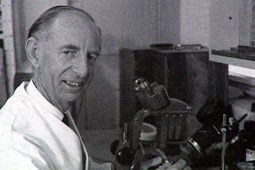
Doug Waterhouse, inventor of Aeroguard.
There is also a section of the exhibition dedicated to CSIRO-designed Aerogard, which became a household name after it was used by Queen Elizabeth II on her visit to Canberra in 1963.
At the time, journalists reported on a distinct lack of flies around the monarch.
“If the queen uses it, so should we,”
Ms Shawcross said.
“After that it became quite popular.”
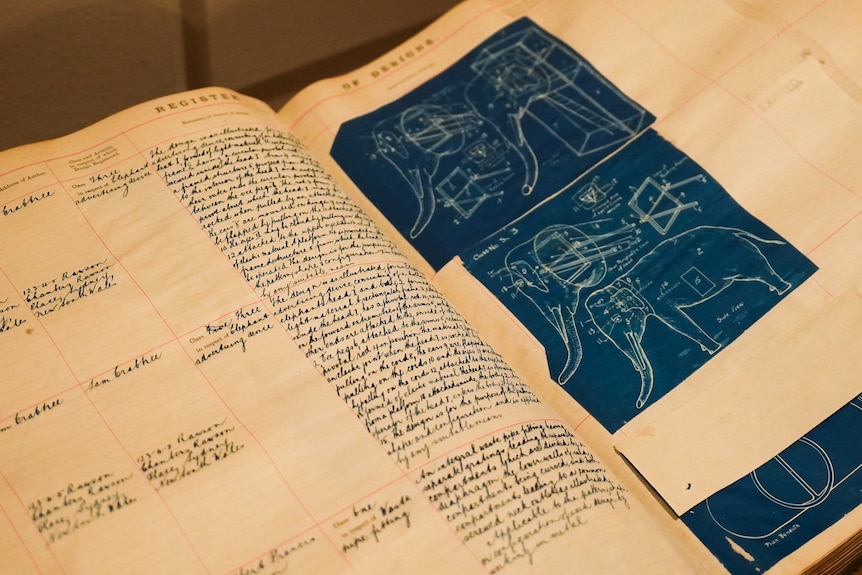
Not all patents made it to the production phase. (ABC News: James Tugwell)
Not all of the designs on display made it to the construction phase: plans for a three-in-one kettle, table lamp and alarm clock were never made.
“As they go through the exhibition, people will see products they are familiar with, but they may not have known it was an Australian invention,” Ms Shawcross said.
“Often people feel like maybe archives are a little bit boring — maybe there’s not much in there for them. But, actually, in here, you’ll see it impacts us all.”
There’s a wall in the exhibition for young inventors to draw their creations of the future.
Ms Shawcross hopes they’re inspired by the Australian inventing spirit.
“Digging into the archives makes you think — what other stories are out there?” she said.
“What’s happening now that, in 100 years, you’re going to hear about this amazing person?”