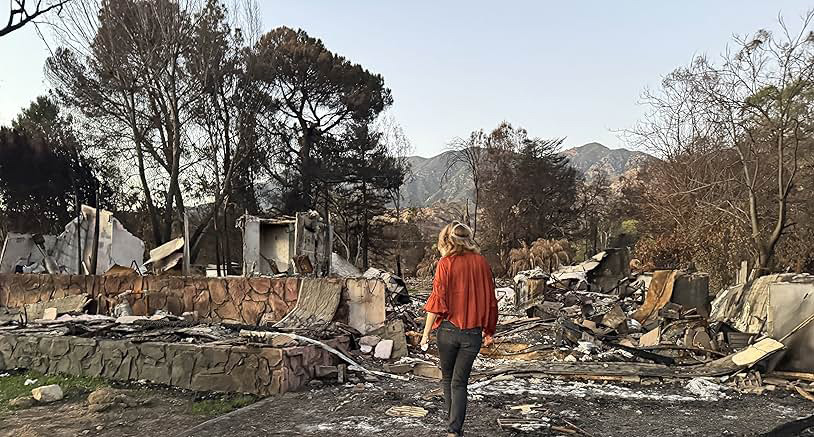
A year after the disastrous fires that flattened thousands of homes in west Altadena and took 31 lives, we have mostly silence from the elite creative class of Los Angeles. These are the folks who routinely fight for justice for victims halfway around the world but can’t seem to do the same for fellow Angelenos burned by a bureaucracy running away from accountability.
On the one-year anniversary of a nightmare, this is the news that matters most: the shameful failure of civic leadership to deal with an emergency made worse by sheer incompetence.
We can get a sense of that failure from an investigative report in The Los Angeles Times, which asks:
“Why were timely evacuation alerts not issued for west Altadena, which accounted for almost all of the Eaton fire deaths and experienced the most widespread devastation?
“Why were there almost no fire trucks in west Altadena, known to be a historically Black, less affluent section of the unincorporated town?
“And why have repeated probes resulted in almost no answers? No accountability?”
I saw the human cost of these failures in a private screening for a short but powerful documentary, “All the Walls Came Down.”
The filmmaker, Ondi Timoner, goes inside devastated Altadena neighborhoods to tell the stories of people who have lost their homes and are fighting a bureaucracy that shows little mercy. She has a personal stake: she lost her beloved home in one of the neighborhoods.
What stands out in the film is that despite the hardships and the outrage and the injustice, neighbors unite in hope and solidarity.
“The film began as a meditation on impermanence and the fragility of everything we assume to be stable,” Timoner writes in a personal account in The Times. “But then, amid the devastation, I found something remarkable: We became more aware and caring of each other as neighbors than we ever were when we lived next door to one another.”
This solidarity is made more poignant by a sense of urgency and even desperation. Homes must be replaced. Initial aid is running out. Mortgages turn into nightmares. Families need places to stay and money to buy food.
“I didn’t realize as I faced my own ruins, that I would end up documenting an urgent situation regarding the future of Altadena,” Timoner writes. “The story turned toward many long-established Black and Latino families who have called Altadena home for generations and now face displacement. That’s when I became determined to finish the film as quickly as possible, so that it could have an impact on the future of my community.”
The next few weeks and months will be critical in helping the countless Altadena victims who long to have their homes back, or at least a livable place for their families.
I understand why Pacific Palisades got so much more attention for its devastation. It is home to many of the Hollywood elites who themselves saw the crumbling and loss of their neighborhoods. The leadership failures that exacerbated the Palisades fires are no less than the failures in Altadena.
This offers a unique opportunity for civic solidarity. I hope Hollywood leaders will see “All the Walls Came Down,” and be moved enough to launch a solidarity campaign demanding justice and immediate assistance for the victims of Altadena.
It’s a good thing to care for flattened neighborhoods in places 8,000 miles away.
It’s also a good thing to care for the flattened neighborhoods of our fellow neighbors a few miles away, and let them know that we’re all in this together.
Visit allthewallscamedown.com to find screening times and more information about Altadena.