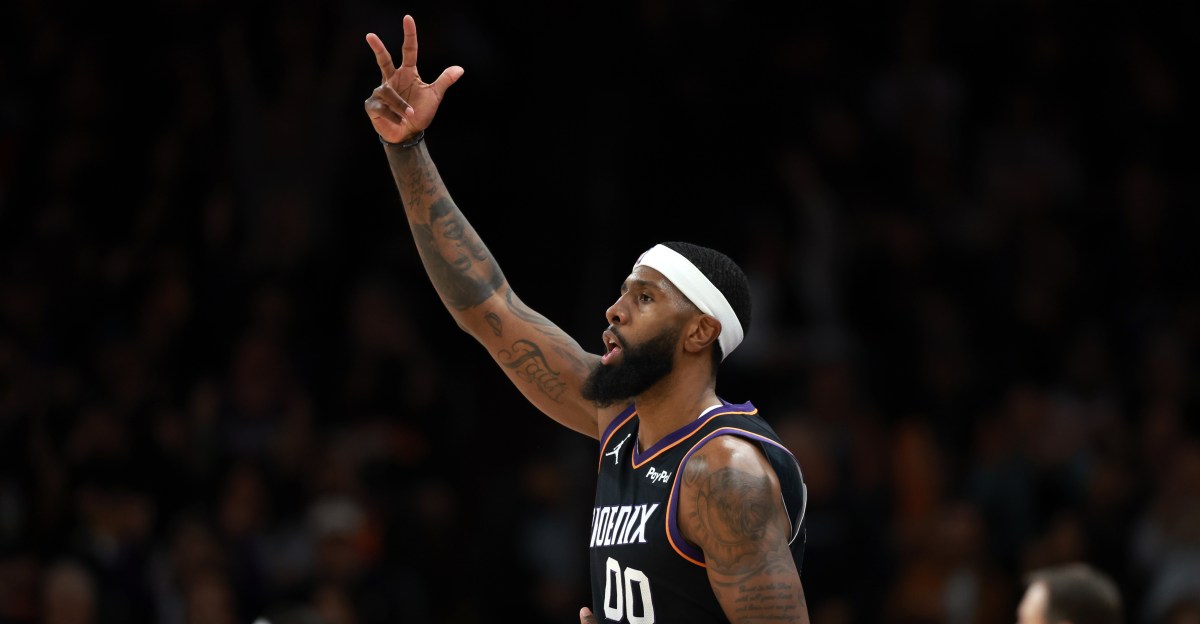
Phoenix takes care of business with a controlled 110–89 win, in a game they largely managed from start to finish, led by a season-high performance from Royce O’Neale with 19 points.
After a competitive first quarter, the Suns gradually imposed their tempo behind a fluid offense, a strong presence in the paint, and outside shooting that eventually broke Washington (32% shooting on paper, but it felt closer to 45%). The second and especially the third quarter created the real separation, with a clear rise in intensity on both ends and several decisive runs that blew the game open (64–39 for Phoenix across those two quarters).
Defensively sharp and extremely active, the Suns smothered the Wizards by forcing 22 turnovers and dominating the hustle areas, particularly on the offensive glass (15) and on second-chance and transition points (more than twenty combined). Despite a brief lapse early in the fourth quarter, the depth of the bench (47 points tonight) and full control of the tempo quickly shut down any comeback hopes, turning the final minutes into garbage time and sealing a convincing, collective victory.
The game opened in a balanced fashion, 7–7 after four minutes. There was some sloppiness on both sides early, but the pace gradually settled in: the ball moved well, intentions were clear, and both teams looked to play fast while already generating open looks.
As he often does, Jordan Ott pulled the trigger on the first timeout. With six minutes left in the quarter and Phoenix up 16–13, the Suns were starting to accelerate, but two straight sequences in the paint, where Alex Sarr punished them, forced a clearly adjustment-driven stoppage. Ott struck first to regain control of the tempo.
Offensively, Phoenix showed a real commitment to attacking the paint. Brooks and Booker found their spots in the short mid-range, while Williams was perfectly fed in the dunker spot. The plan was obvious: test the interior resistance of the Sarr–Bagley duo and see how long they could hold up.
It wasn’t flawless, though. A few lapses of focus gave Washington easy points at the rim, but the Suns’ defense remained solid overall. Rotations were clean, activity was high, with hands everywhere: four steals and six forced turnovers, clear signs of a defense locked in.
In that context, Devin Booker naturally took the reins. He orchestrated everything, already posting 8 points and 6 assists by the end of the quarter, setting the rhythm and bringing clarity to the offense. Phoenix closed the opening twelve minutes with a narrow but logical lead: 32–28.
The second quarter started with a bang: a massive tip-in followed by a corner three from Ryan Dunn. Phoenix struck immediately, went up 37–30, and forced Brian Keefe to call his first timeout.
Royce O’Neal followed suit early in the period. Already at 11 points with three triples, he embodied a Suns offense punishing from beyond the arc. As a team, Phoenix was sitting at a solid 8-for-20 from three, a volume that was beginning to weigh heavily on the Wizards’ defense.
Fueled by O’Neal’s shooting and Fleming’s energy, the Suns went on a real run. A well-constructed 10–2 stretch, built on pace, ball movement, and physical impact, pushed the lead to +13: 50–37 with six minutes left before halftime.
Across the entire first half, Phoenix also imposed itself in the hustle game. The rebounding battle was well controlled with 25 boards, and defensive intensity stayed high: 12 stocks and already 10 forced turnovers. The Wizards managed to stabilize things late in the half, but without ever flipping the momentum. The lead hovered between +13 and +15, a sign of overall control.
At the break, the Suns headed to the locker room with a deserved and well-managed advantage: 65–50.
The third quarter opened positively for Dillon, who quickly knocked down 5 points. A few small mistakes, avoidable turnovers, and a defensive lapse, slightly dampened the start and allowed the Wizards to claw back. Five minutes in, the lead was trimmed to 76–65, prompting Jordan Ott to call his third timeout to halt the momentum.
The response was immediate. Brooks and O’Neal took charge and made it rain. Between them, they now totaled 35 points, and the gap widened again: 88–67 with three minutes left in the quarter.
Offensively, the Suns pressed exactly where it hurt. The paint was under constant attack, the foundations of the White House began to crack, and openings appeared all over the floor. Phoenix punished Washington at every level, scoring on all three offensive tiers, and picked the perfect moment to put the hammer down.
Defensively, the contrast was stark. Pressure became suffocating, the Wizards were forced into charges, closeouts were automatic, and there were simply no easy baskets left. On top of that, Phoenix shifted into fourth gear in transition. The score ballooned to 93–67, forcing another Washington timeout — their fourth — with fourteen minutes still to play.
The closing stretch of the third quarter was one-way traffic. Over the final seven minutes, the Suns unleashed a devastating 20–2 run. Phoenix entered the fourth quarter with a massive cushion: +29.
The fourth opened with yet another Ryan Dunn tip-in, a symbol of continued dominance in effort plays. The Suns were now up to 11 offensive rebounds, converted into 21 second-chance points, clear proof of a physical and mental edge that was never truly challenged.
Phoenix pushed the lead to +30, but a major lapse followed. The offense stalled completely, no baskets for three long minutes, and the Wizards took advantage to cut it to -19 with 6:30 remaining.
One simple basket was needed to stop the bleeding. Livers delivered, breaking the bad momentum and logging the bench’s 39th point. Right after, Oso finished an alley-oop that gave Phoenix some breathing room and restored a +24 lead.
From there, the script flipped entirely. Washington fell into their own three-minute scoring drought, and the game fully slipped into garbage time. Maluach, Hayes-Davis, and Livers were on the floor, doing the job to close things out and seal the Suns’ win.
Final score in sight: 112–93.
Now it’s off to the East Coast, where a tough seven-game road trip awaits, starting with a showdown against a very smooth Miami Heat team in two days.