To enable an RGB-stripe subpixel and high refresh rates, LG Display said it increased “the proportion of the pixel area that emits light.”
Similarly, Samsung Display announced at CES that this year, Asus and MSI will release monitors with Samsung’s new QD-OLED panels, which use a vertical RGB subpixel structure the company has named “V-stripe.”
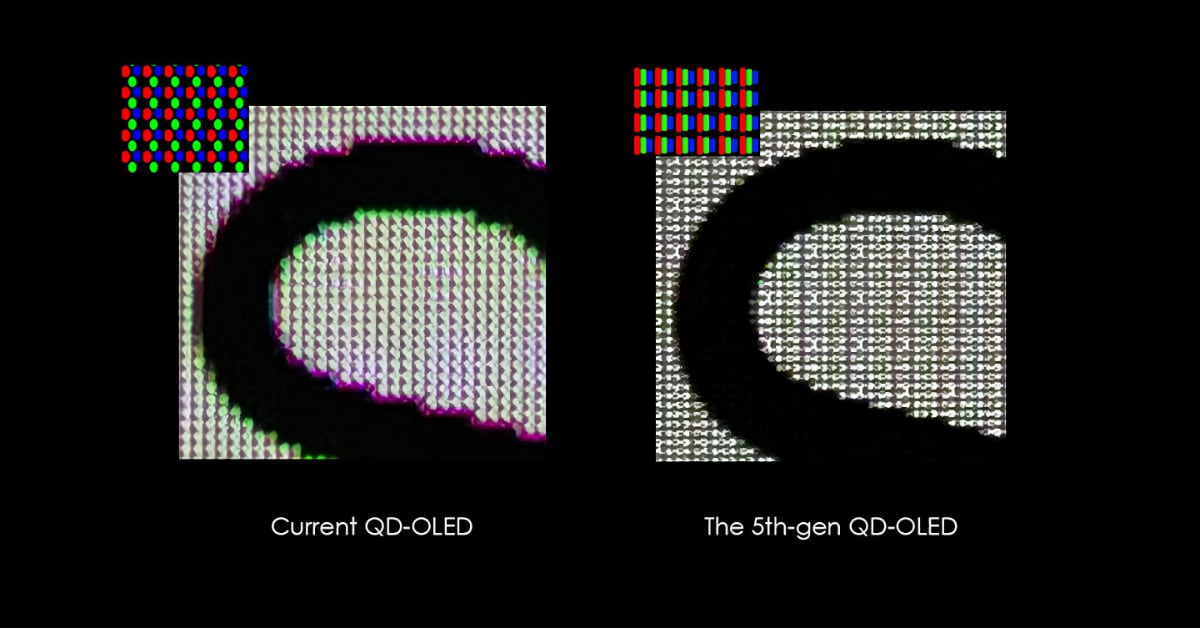
A depiction of text on a QD-OLED monitor with RGB subpixels in a triangular shape (left) and on QD-OLED monitor RGB subpixels in a vertical stripe (right).
Credit:
MSI
A depiction of text on a QD-OLED monitor with RGB subpixels in a triangular shape (left) and on QD-OLED monitor RGB subpixels in a vertical stripe (right).
Credit:
MSI
“The biggest technical challenges in mass-producing high refresh rate panels with a new pixel structure include reduced organic material lifespan, heat generation, and brightness degradation,” Samsung Display’s announcement said. “By leveraging QD-OLED’s top emission structure, which offers brightness advantages, along with improvements in organic material efficiency and design optimization, we were able to mass-produce a high-performance monitor.”
Some publications that demoed RGB-stripe OLED monitors at CES reported text looking noticeably better than on other OLED monitors.
LG and Gigabyte also announced that they will release OLED monitors with RGB-stripe subpixels this year.
Samsung’s 6K, 3D monitor
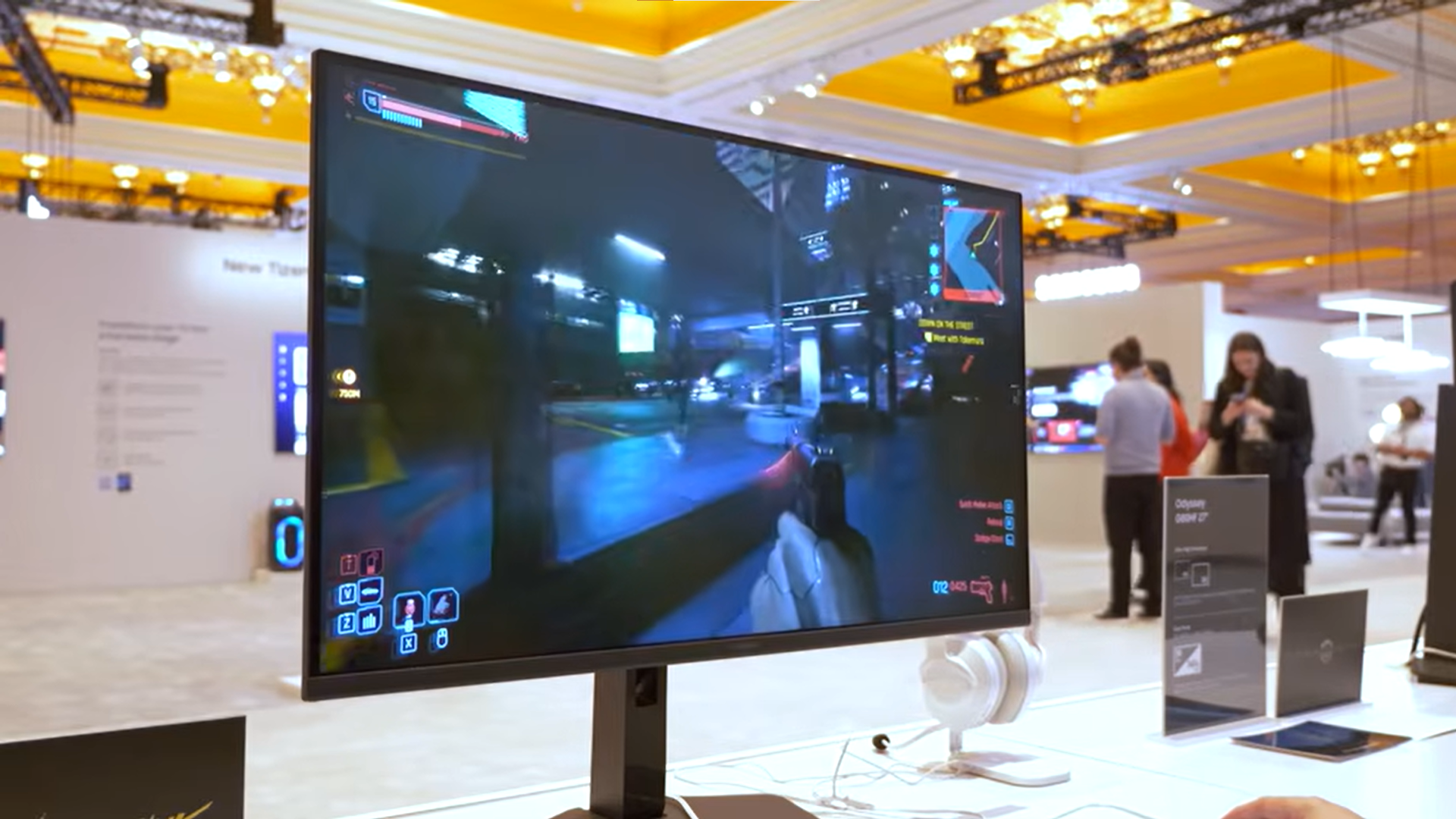
The IPS monitor has two ports: HDMI 2.1 and DisplayPort 2.1.
The IPS monitor has two ports: HDMI 2.1 and DisplayPort 2.1.
Credit:
Monitors Unboxed/YouTube
In true CES fashion, Samsung’s latest Odyssey 3D monitor one-ups its predecessor in every way it can.
Samsung launched its first Odyssey 3D monitor last year. We found that while the glasses-free 3D experience was impressive, the monitor was hard to recommend given its limited game support.
Back then, Samsung’s Odyssey 3D Hub app, which is used to launch stereoscopic content, had 14 games. As of this writing, there are 29 3D-supporting titles (you can see a full list at the Microsoft Store), but that still may not be enough to warrant a purchase price of what we expect will be over $2,000, based on the preceding Odyssey 3D’s release price.
The lack of applications for a glasses-free 3D gaming monitor didn’t stop Samsung from releasing a larger option, though. The Odyssey 3D that came out in 2025 has a 27-inch 4K IPS screen with a 165 Hz refresh rate. The 2026 model is 32 inches and supports 6K resolution (6144×3456) at a refresh rate of 165 Hz. The monitor is also supposed to easily drop down to 3K resolution (3072×1728), at which point it will run at 330 Hz. So although you don’t need glasses to get the most out of this monitor, you will need a decently powerful GPU.