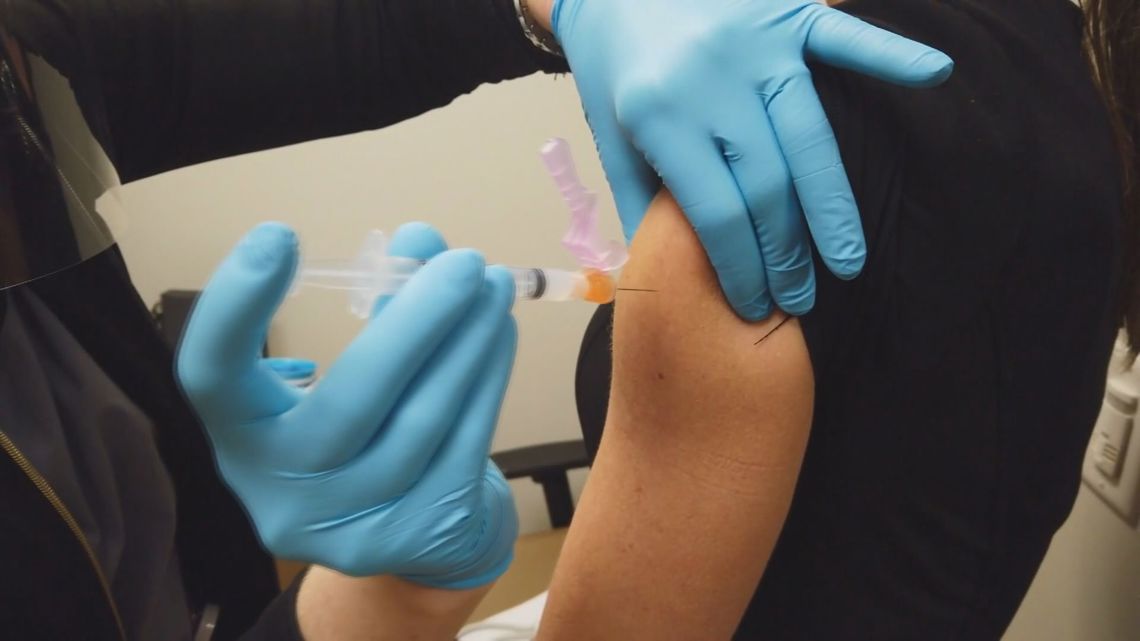
The agency rolled out new guidelines last Monday, which experts have called a significant change to decades of precedent and scientific consensus.
GRAND RAPIDS, Mich. — Medical professionals and healthcare networks across Michigan are pushing back on the new childhood vaccine schedule published by the Centers for Disease Control and Prevention (CDC).
The agency rolled out new guidelines last Monday, which experts have called a significant change to decades of precedent and scientific consensus.
For healthy children, the CDC is no longer recommending vaccines against six diseases that can be serious and even deadly: Hepatitis A, hepatitis B, influenza, meningitis, respiratory syncytial virus (RSV) and rotavirus.
“My estimate of this process has been that it is somewhat undisciplined and misinformed,” said Gregory Tiongson, the medical director for Bronson Children’s Hospital in Kalamazoo.
The Bronson Healthcare network — which serves southwest Michigan and northern Indiana — said in a statement that it will continue to follow the previous childhood vaccine guidelines, as recommended by the American Academy of Pediatrics.
Tiongson said the CDC’s decision was made without any new data or scientific consensus.
“What I see is undisciplined and somewhat uninformed decision making from folks at the CDC,” he said. “[It’s] based on what seems to be an uninformed and ignorant approach to public health that’s not based on science, not based on the evidence, and certainly not based on decades and decades of clinical experience and experimental evidence.”
Michigan is among a number of states pushing back on the new guidelines. The state’s Department of Health and Human Services recommends following the previous schedule.
“Why are we making a change? Tiongson asked. “It is not founded in even its own organizational data.”
The move from the CDC follows a directive from President Donald Trump to review the childhood vaccine schedule.
Department of Health and Human Services Secretary Robert F. Kennedy said the change aligns the U.S. with international consensus. Denmark, which vaccinates children against 10 diseases, was cited as a model. Experts in both countries have objected to the comparison, give that the European nation is significantly smaller and offers universal healthcare.
The new guidelines also split the vaccines into three categories: shots for all children, high-risk children, and based on guidance from a doctor.
“Which is significantly different from what the pre-existing immunization schedule [was],” said Tiongson.
For parents who may have concerns about vaccinating their children, Tiongson says to talk with a pediatrician.
“Our best response is to say, tell me why, or tell me what your concerns are, and to be someone who can offer them additional information or offer them some education around what is scientifically known about vaccinations and immunizations,” said Tiongson.