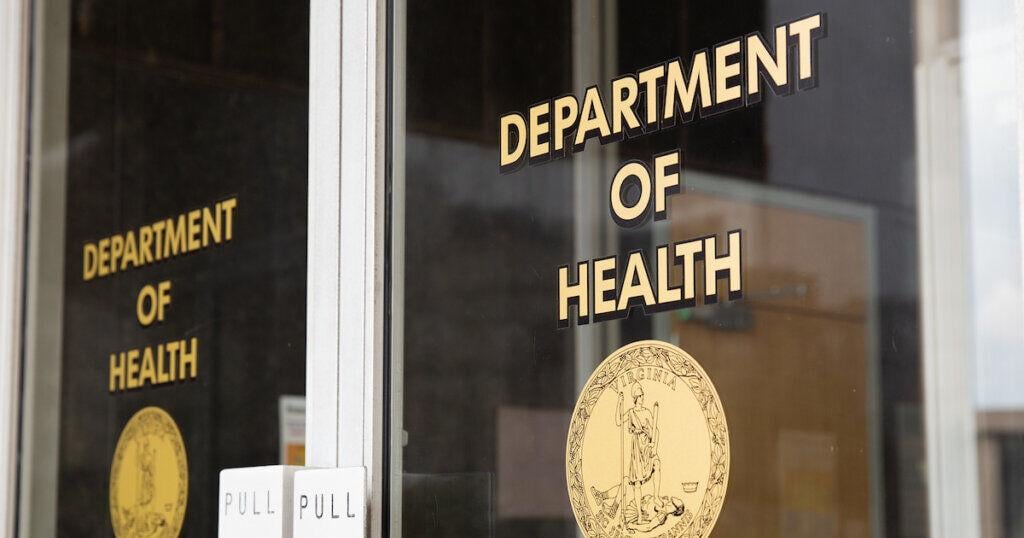
A preschool-aged child with measles potentially exposed others Friday at Fort Belvoir Community Hospital, the Virginia Department of Health said in a Sunday news release.
The patient is a child under four years old who recently traveled internationally, the VDH said.
State health officials are coordinating to identify people who might have been exposed, with one exposure site at Fort Belvoir Community Hospital (now called Alexander T. Augusta Military Medical Center) on Friday, Jan. 9 from 9:30 a.m. to 3 p.m. and 10 p.m. to midnight, the release said.
In addition to Fort Belvoir, there is potential exposure on a train that traveled through several nearby states and Washington, D.C.
Amtrak Northeast Regional Train 175 traveled from William H. Gray III 30th Street Station in Philadelphia at 9 p.m. on Wednesday, Jan. 7, arriving at Washington Union Station at 11:30 p.m., the VDH said.
Earlier this month, health officials confirmed the state’s first 2026 case of measles in another child under 4 years old in central Virginia. The VDH reported five cases of measles in 2025.
For anyone exposed in the Northern Virginia case, the most likely time you would become sick would be between Jan. 16 to Jan. 30, the VDH said.
What should you do if you were at the above locations on the day and time specified?
If you have never received a measles containing vaccine, you may be at risk of developing measles, the VDH said. Anyone at-risk should contact their healthcare provider immediately.
Watch for symptoms for 21 days after the date of your potential exposure. If you notice symptoms of measles, immediately isolate yourself by staying home. Contact your healthcare provider right away.
If you need to seek healthcare, call ahead before going to your healthcare provider’s office or the emergency room to notify them that you may have been exposed to measles and ask them to call the local health department. This call will help protect other patients and staff, the release said.
Anyone with an immunocompromising condition should consult with their healthcare provider if they have questions or develop symptoms.
If you have received two doses of a measles-containing vaccine, or were born before 1957, you are protected and do not need to take any action.
If you have received only one dose of a measles-containing vaccine, you are very likely to be protected and your risk of being infected with measles from any of these exposures is very low. However, to achieve the highest level of protection, contact your healthcare provider about getting a second vaccine dose.
Measles is a highly contagious illness that can spread easily through the air when an infected person breathes, coughs, or sneezes, according to the VDH. Measles symptoms usually appear in two stages. In the first stage, most people have a fever of greater than 101 degrees, runny nose, watery red eyes, and a cough.
These symptoms usually start seven to 14 days after being exposed. The second stage starts three to five days after symptoms start, when a rash begins to appear on the face and spreads to the rest of the body. People with measles are contagious from four days before the rash appears through four days after the rash appeared.