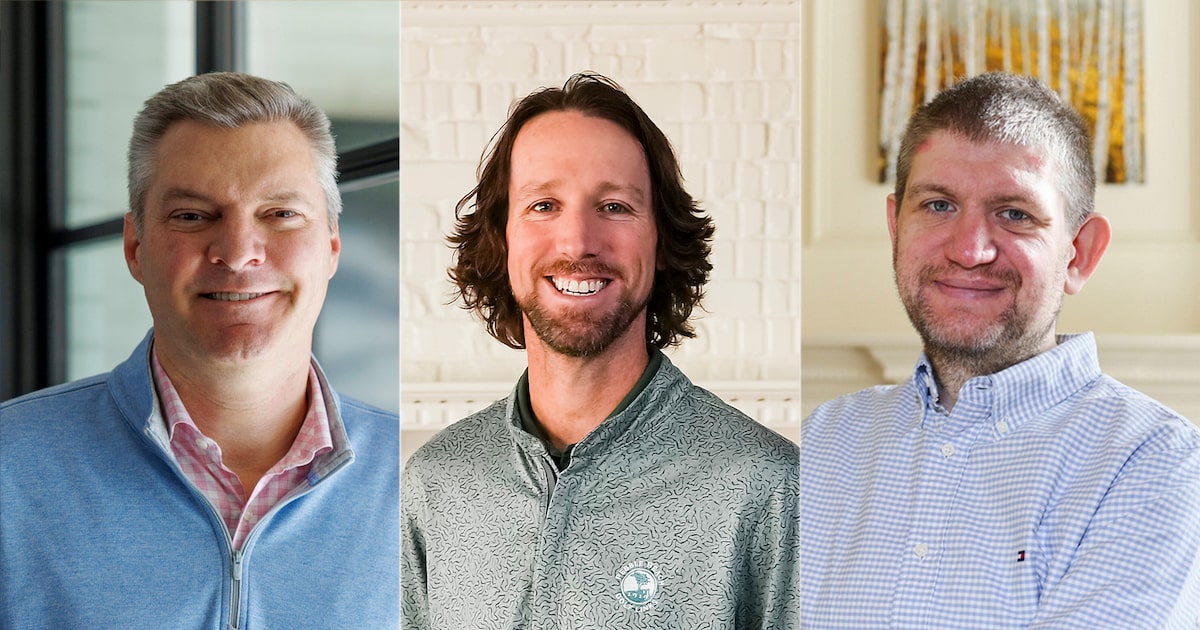
It was big news in Zack Kulesz’s group chat when Dallas sports broadcaster Jake Kemp told listeners he was back from rehab. This was October 2024, and the past month had been a guessing game in the chat about why Jake was missing from the sports podcast he co-hosts, The Dumb Zone. His reappearance on the show ended that mystery. At 39, he’d gotten sober.
For Kulesz, who was 41 at the time, the revelation felt strangely personal. He’d been listening to Jake since his days on The Ticket, where he was the young Turk on a popular Dallas sports station. Over the next two decades, both men hit markers of adulthood at roughly the same time. Marriage, then kids. Now one of them had left his drinking days, and the other had not.
Kulesz texted his group chat, “Maybe I should go to rehab ha ha.”
It was a joke, but it was also a troubled drinker’s classic deflection, a way to gesture at a problem without actually naming it. Privately, Kulesz had been worrying about his drinking for a long time. “I’d have five to six beers at the bar, then go home and start digging through the cabinet,” he said. “Once I started, I didn’t want to stop.” He kept promising himself he’d tackle the problem, but instead he started hiding it. “I loved picking up food for the family, because I could stop at a bar and knock back one drink, which turned into two.”
News Roundups
Drinking trends have been declining the past few years, but middle-aged men have proved something of a stubborn holdout. As younger generations passed on the heavy boozing that once defined the American coming-of-age, and early midlife (35 to 50) women decreased their consumption, men in that age group held steady. Even that demographic seems to be slowing down, though, as a new Gallup poll noted a plunge in middle-aged drinkers since 2023 and a dip in male drinking overall; the poll also reports the lowest rate of adults who drink alcohol (54%) in its nearly 90-year history.
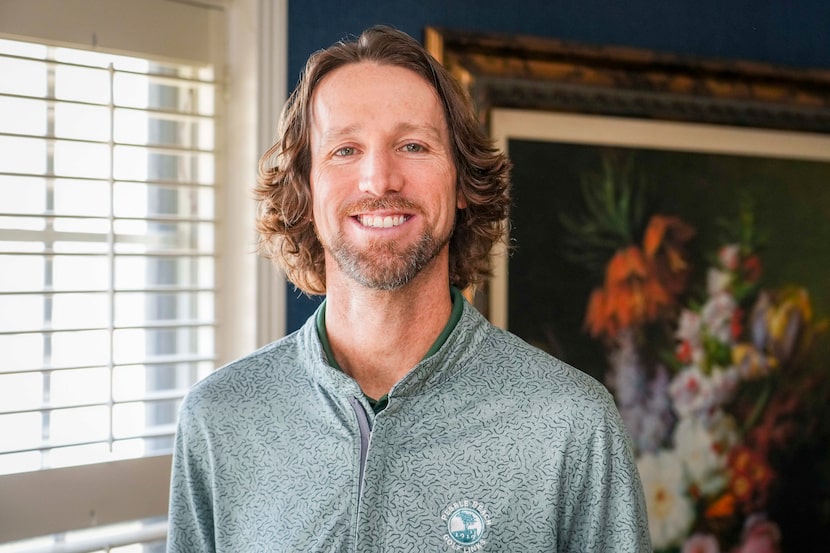
“I don’t know what my life would look like if Jake had not told his story,” said Zack Kulesz, 42, whose rehab stint was inspired by the Dumb Zone co-host.
Smiley N. Pool / Staff Photographer
Zack Kulesz is part of that statistical shift. In the weeks after Jake’s return, the broadcaster talked on-air about his time in rehab — or “the ’hab,” as he jokingly calls it. On a three-hour show covering sports, viral nonsense and news of the day, this was a small part of the program, often given comic topspin (in a running gag, co-host Dan McDowell and producer Blake Jones would tease him, “You’re so brave”), but it brought normalcy to a decision often spoken about in whispers.
In November, a month after Kulesz sent that half-jokey text about rehab to his group chat, he sent a sincere note to Jake through social media. It was one of those mornings when he felt the weight of letting people down. His family, his friends, his employer.
“Hey what’s the place where you went to rehab?” he wrote. “It’s been a long time since I’ve looked in a mirror.”
A few weeks later, he checked himself in.
‘I was needed, but I was inebriated’
I profiled Jake when he quit drinking in 2024. (Kemp is a friend, and I’m an occasional guest on his podcast.) Over the next year, I noticed changes in him common to people in recovery. He dropped weight and went hard at the gym; he sounded sharper on-air. Vape pens and nicotine pouches were scattered around his desk.
There was a change I wasn’t tracking, though. Some Dumb Zone listeners were renegotiating their relationship with booze. One of them, named Rick, reached out to me over email. “I have hope and clarity I do not think would be possible without Jake telling his story,” read a note he sent me a few months ago. “I know I’m not alone.”
Rick is a Dallas-area father in his early 40s who didn’t want to use his last name; work doesn’t know about his drinking. As with everyone I interviewed for this story, Rick’s consumption ramped up during college, and he carried the habit into his 30s, but late nights got harder when he became a father of four. “There are few things less hangover-tolerant than a 2-year-old,” he said.
His drinking spiked during the pandemic, as his social circle shrank and remote work allowed for a 3 p.m. cocktail. His wife has a chronic illness, so much of the child care fell to him, but the more he escaped through booze, the less available he became for his kids. “I was needed,” he said, “but I was inebriated.”
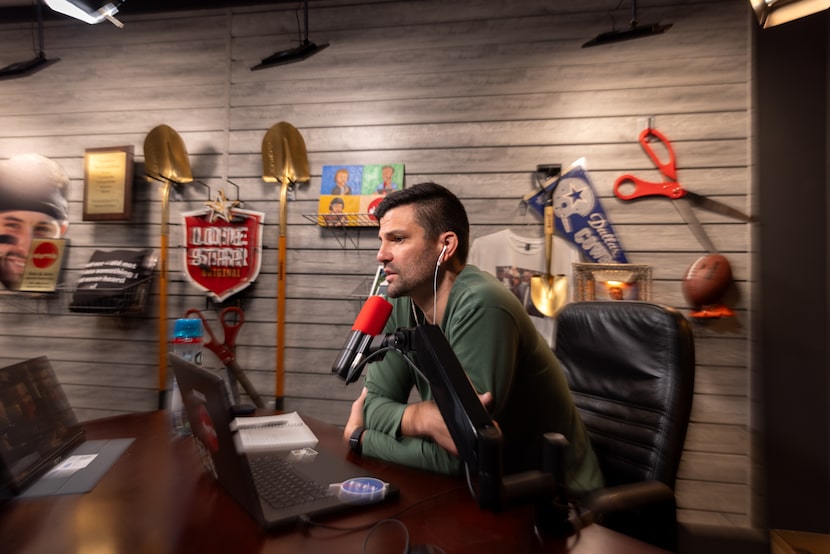
Jake Kemp in The Dumb Zone studio, about a month after coming back from rehab, on Nov. 25, 2024.
Azul Sordo / Staff Photographer
Rick was trying to figure out a way through this when he heard Kemp on the podcast. “It was inspiring,” he said. “You could hear a change in his energy.”
Rick didn’t go to rehab, which would have been challenging given his family situation, but he did start going to AA meetings, which he found helpful. Ultimately he decided he wanted a moderate relationship with alcohol, not total abstinence. “If you compare my drinking 13 months ago to what it is today, it’s not even close.”
Rick never reached out to Jake about this (“those guys get enough emails”), but I was curious who had. Jake told me he’d ballpark about 50 people had contacted him to talk about drinking problems. Several went to rehab and at least half a dozen (including Kulesz) checked in to the same rehab he had, Banyan Treatment Center in the Hill Country.
Related
 ‘I don’t really talk about this stuff’
Sports shows may seem an unlikely place to spark discussion about men’s drinking, given that alcohol companies often sponsor the programs, and sports and booze are so entwined. But that makes these shows a great place to talk about drinking; the hosts are funny, relatable and trusted as straight shooters. When I asked guys I interviewed why they listened to The Dumb Zone, which invariably became a question about why they also listened to The Ticket (since Dan and Jake’s show started there), they said it was like hanging out with friends.
Jake remembers the impact of Ticket host Gordon Keith writing about drinking in The Dallas Morning News. Jake was in his late 20s then, not ready to quit, but by his early 30s, he ran the board on The Ticket’s afternoon show, The Hardline, where commentator Joel Klatt, who’d spoken about his sobriety, was a frequent guest. Troubled drinkers often keep a close eye on the timeline of former drunks’ lives: How old were they when they quit? Do I still have time to straighten myself out? Jake remembers Googling how old Klatt was when he gave up booze, which was in his late 20s. Dang it, he was already past that age.
The anguished mental tabulation of how much is too much, when a harmless habit tips over into a problematic one, can be easier when a person opens up the bathroom cabinets, metaphorically, to give passersby a peek at what’s inside.

“I don’t really talk about this stuff with family or friends,” said Chris Halverson, 51, of the drinking problem sports broadcaster Jake Kemp helped him confront.
Elías Valverde II / Staff Photographer
As a married father of two, Chris Halverson, 51, had been trying to get hold of his consumption for a while. Drinking was part of his job in sales, but it was also the way he unwound. “Tito’s was my drug of choice,” he said. As stresses mounted, so did the booze. “Drinking on the road, drinking at home, day drinking.”
He went to a psychiatrist, who diagnosed him with depression and substance use disorder. He was trying different ways to cut back when he heard Jake talk about rehab on The Dumb Zone. Kemp also recorded a few break-out episodes about rehab, sharing his comic travails as well as the nuts and bolts of what it’s like inside, and Halverson listened to them. He played portions for his wife, and it started a dialogue that can be hard to broach. “I don’t really talk about this stuff with family or friends,” he said.
He found a rehab called The Arbor in Georgetown that specializes in dual diagnoses. “I was more comfortable going because I knew what to expect from listening to Jake’s experience,” he said. “Jake’s description of the ’hab, as he calls it, was spot-on. Everyone just vapes nonstop.”
He went in October 2025 and returned to work in mid-November. He could have made an excuse for the absence, but he chose to be honest about it. He was surprised by how many people reached out to share their own experiences, often about family members who’d dealt with substance abuse. “People are coming out of the woodwork,” he said. “I had no idea.”
Related
 ‘A dark cave you start wandering down’
Another listener who found himself motivated to make a change was Tim Schwartz, 37. Schwartz began as a social drinker, but over the years, he turned into a solitary one. “I would think, I’m home, and I have nothing else to do. I’m just going to drink,” he said. “That’s a dark cave you start wandering down, and you don’t know how to get out of it once you’re in there.”
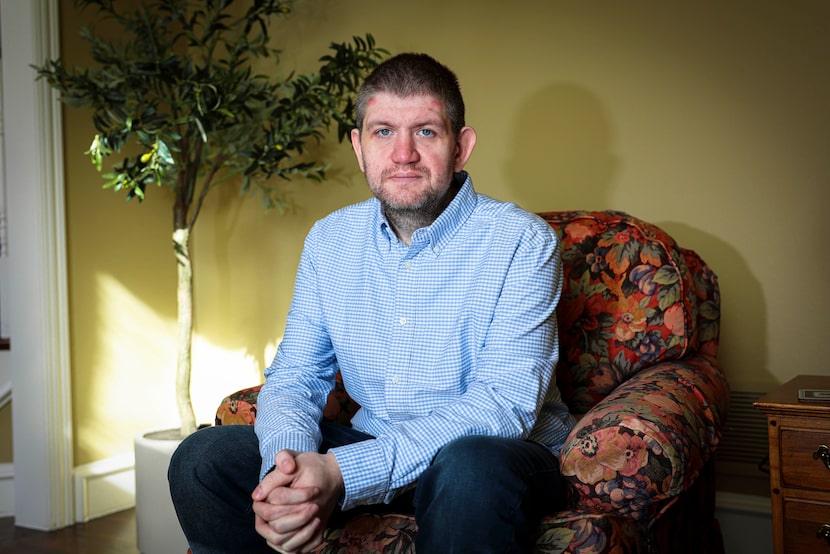
Tim Schwartz, 37, checked into rehab a few weeks after Dumb Zone host Jake Kemp returned from his stint.
Shafkat Anowar / Staff Photographer
By 2018, Schwartz had become such a heavy daily vodka drinker that he checked into a two-week detox to kick the habit. He kept drinking though, just not vodka. He liked Four Loko, a malt beverage known for high alcohol content. That was ramping up into trouble territory by the time he heard Jake talk about rehab. The moment energized him. If Jake had the courage to admit this problem, Schwartz thought, why couldn’t he? He checked into a rehab a few weeks later.
That was 14 months ago, and he hasn’t had a drink since. “One really great thing is I never have to worry, what did I do last night? What did I text to someone? Is today the day my body is going to give out? There’s a lot of peace that comes with the decision to quit drinking,” he said.
Related
 ‘It’s about fighting for your life or giving up’
The whisper network of drinkers reaching out to former drinkers stretches far beyond one local sports podcast, but the story of Jake Kemp’s experience offers a glimpse at how one person publicly staring down their life can inspire others to do the same.
Schwartz’s sister reached out when her brother went to rehab to ask Jake if he’d write a note of support, which he did. Jake was surprised, though, when a year rolled around, and Tim’s sister appeared again to ask him to write a note to celebrate her brother’s first anniversary of sobriety.
“I was like, whoa,” said Kemp. He typically doesn’t know how these exchanges turn out. Strangers reach out to him, often in the late hours; he responds to them, often in the early hours, when he’s starting his day. It’s a mutually gratifying back and forth shared across recovery programs, across private afflictions, the simple act of showing up for each other.
For Kemp, the exchanges are not about getting sober, per se. He has no investment in how other people drink. “It’s about fighting for your life or giving up,” he said.

Zack Kulesz pictured at his Arlington home with his wife, Lauren, daughter, Grace, and son, Griffin.
Smiley N. Pool / Staff Photographer
That’s a message that resonated with Zack Kulesz, who once joked he should follow Kemp to rehab — and then did. He’s been sober more than a year, and the changes are profound. “I feel super healthy, clear-headed,” he said. He still hangs with his buddies at the bar, where he drinks the nonalcoholic Athletic brew, but he’s been more present with his family. On New Year’s Eve, his daughter asked for gravy on her meal. Sorry, kid, they had no gravy at home. Then it hit him: He could make gravy. It felt good to do something small and useful on a day he’d normally be distracted by booze.
“I don’t know what my life would look like if Jake had not told his story,” said Kulesz. “I needed someone I knew, who I’d grown over time to trust, to assure me if he can do it, I can do it.”
 Hepola: A Dallas man wrote hundreds of letters to his future wife. Then he met her
Laterras R. Whitfield became a viral sensation with his “Dear Future Wifey” podcast. More than five years after its launch, he found his happy ending.
 Carla Rockmore went from Dallas carpool mom to fashion force
Q&A with the TikTok queen of dressing up, who escaped into her Preston Hollow closet and found her calling.