Hook Creek Boulevard may just be the worst road on which I’ve ever driven, and I’ve driven on it a lot. It runs north and south, bordering the Rosedale section of Queens, where I lived most of the first half of my life, and Valley Stream, where I’ve lived most of the second half.
Until relatively recently, Hook Creek was notorious for being infested with potholes, cracks and divots that claimed at least one of my hubcaps, and maybe an axle too.
Considering how fraught it is whenever someone suggests that Long Island could learn something from New York City, it’s fitting that the dividing line between the two localities would be a bumpy road.
The new year brought with it two very different stories about the progress, or lack thereof, to address deadly crashes in the region. In Nassau County, traffic fatalities rose from 67 in 2024 to at least 78 last year — the highest since 2022, according to data from Newsday’s fatality tracker.
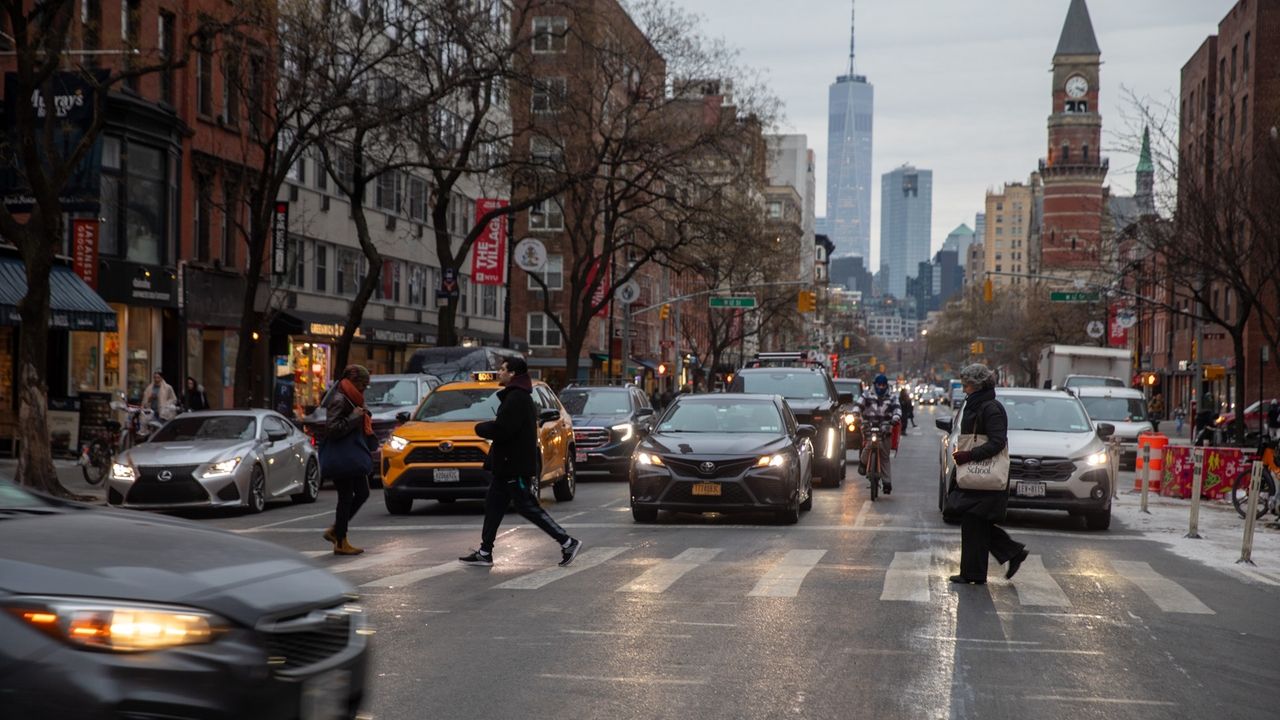
Meanwhile, New York City last week reported a 16% decline in traffic deaths, from 253 in 2024 to 205, last year — the lowest in recorded history. Crashes had already been trending downward since the city’s adoption of its “Vision Zero” initiative in 2014, and fell further with the advent of congestion pricing, which reduced the number of cars entering Manhattan by 73,000 each day since launching one year ago, according to officials.
Kate Slevin, executive vice president of the Regional Plan Association, believes Long Island officials could stand to learn some lessons from their neighbor to the west.
Reduced traffic can lead to fewer crashes and better public health, he said. “What Long Island can learn is to continue efforts to bring traffic down.”
Lest anyone panic over the notion of New York City’s congestion zone being expanded to the 516 area code, Slevin said that effectively reducing traffic is as much about carrots as it is about sticks.
“It’s about providing better options, investing in downtowns, in walkable areas, investing in areas near transit, so new housing and new development can go in places where people are less likely to have to use a car for every trip,” Slevin said. “There are a lot of different strategies that go into reducing traffic and making communities safer and more livable.”
While New York City’s congestion pricing model may not be a good fit for Nassau or Suffolk, Slevin said that the concept of charging vehicles for driving on public roads — like the New York State Thruway or New Jersey Turnpike — should not be ruled out as part of a broader effort to address traffic on Long Island in the future.
“Our roads and highways are scare resources, and right now there’s too many people using them at the same time,” said Slevin, adding that any tolling plan would have to come with improved transit options. “You can’t just do that in a vacuum. You have to give people other options to get around.”
Readers speak up
This week’s email comes from someone who has been driving on Long Island’s roads for more than half a century, and believes they wouldn’t be so dangerous if drivers simply followed the rules, including stopping at stop signs, adhering to speed limits and only changing lanes when it’s safe to do so.
We live in an area where communities were built before highways, for the most part, so our roads are engineered differently than in other parts of the country. Quite frankly, as someone who, before I retired, commuted on the Southern State for over four decades, if we adjust our driving to the limitations of the roads, the roads are perfectly safe.
Leonard Cohen, Wantagh
Do you agree that Long Island’s roads are safe for those who follow the rules of the road? Let us know at roads@newsday.com.

Alfonso Castillo has been reporting for Newsday since 1999 and covering the transportation beat since 2008. He grew up in the Bronx and Queens and now lives in Valley Stream with his wife and two sons.