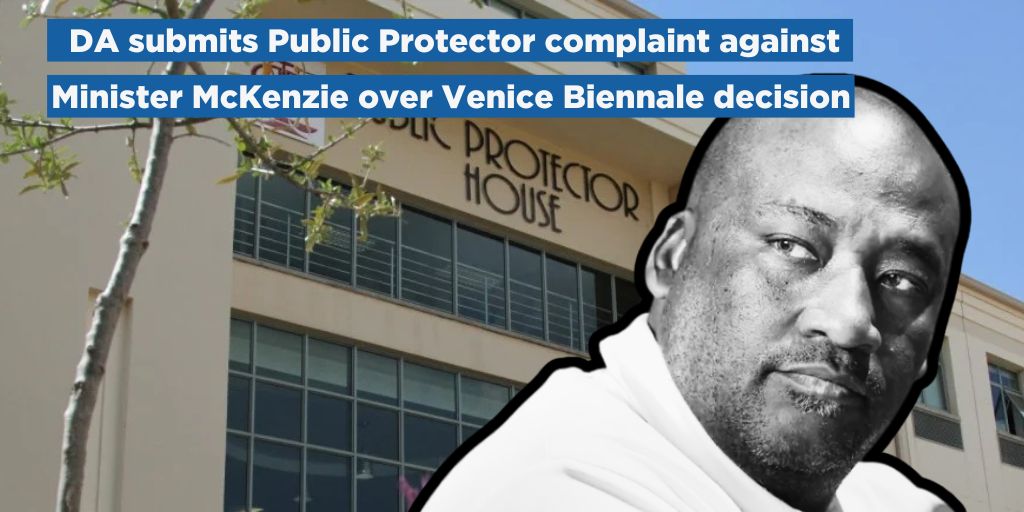
- The DA has reported Minister McKenzie to the Public Protector for overturning a lawful Venice Biennale process.
- His interference undermines due process and threatens freedom of artistic expression.
- By censoring the submission, he abused his powers and violated his constitutional oath.
The Democratic Alliance confirms that a formal complaint was submitted yesterday to the Public Protector against Minister Gayton McKenzie.
This complaint follows widespread media reports confirming that the Minister withdrew South Africa’s official submission to the 2026 Venice Biennale after a lawful, independent selection process had already been finalised.
The DA alleges that the Minister replaced a properly constituted institutional process with his own personal or political preference. Once such a process has been concluded, a minister does not have the authority to intervene simply because he disagrees with the outcome.
This decision has serious implications beyond a single exhibition. It risks creating a chilling effect on constitutional rights, including freedom of expression and freedom of opinion.
If a minister can retroactively overturn artistic decisions, then all future cultural work supported or facilitated by the State becomes vulnerable to political interference, regardless of viewpoint or ideology.
The DA has therefore asked the Public Protector to conduct a full investigation into whether the Minister’s conduct amounts to:
- Maladministration;
- An abuse or unjustifiable exercise of power; and
- An act or omission by a person performing a public function that resulted in unlawful or improper prejudice to others.
South Africa’s creative sector depends on clear rules, institutional independence and fair process. When political actors intervene after the fact, it undermines trust in public institutions and damages South Africa’s standing internationally.
Minister McKenzie’s actions make a mockery of South Africa’s constitutional commitment to freedom of expression, including the freedom of artistic creativity.
He swore an oath to uphold the Constitution, yet by censoring South Africa’s Venice Biennale submission our complaint alleges that he has violated that oath, breached his constitutional obligations and abused his ministerial powers.
He is not a law unto himself, and he would do well to remember that being in office is not a popularity contest, but a responsibility governed by law.