VICTOR J. BLUE/THE NEW YORK TIMES
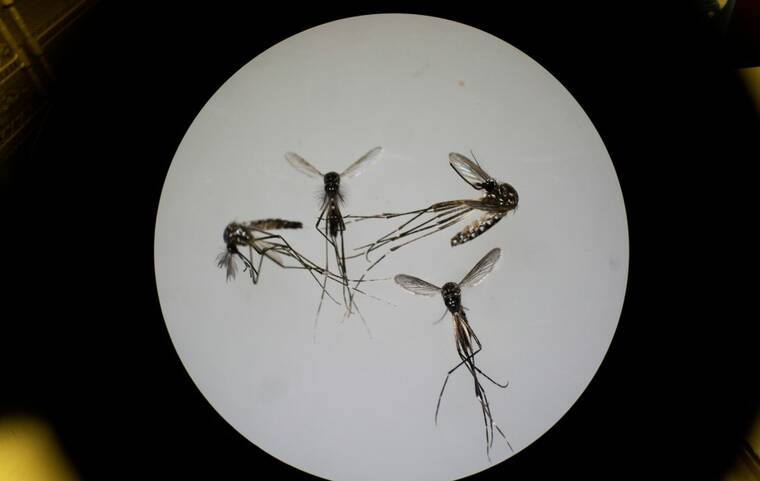
Aedes aegypti mosquitoes, a breed that carries the Zika virus, at the Centers for Disease Control and Prevention’s Lab in San Juan, Puerto Rico, in February 2016. The Hawaii Department of Health said a travel-related Zika virus case has been confirmed on Oahu.
The Hawaii Department of Health said a travel-related Zika virus case has been confirmed on Oahu.
It is Hawaii’s first confirmed Zika case this year. Another travel-related Zika case was reported in Hawaii, also on Oahu, in May of last year.
DOH said travel-associated cases were more frequently reported in Hawaii between 2015 to 2019, when Zika was circulating globally, and peaked at 25 cases in 2017. To date, no locally acquired cases have been documented in Hawaii.
The Zika virus – like dengue — spreads primarily through the bite of an infected mosquito. While Hawaii has the mosquito species capable of transmitting Zika, the virus is not established in Hawaii.
It can also be spread through sex, or to a fetus during pregnancy, according to the Centers for Disease Control and Prevention – and infection during pregnancy can cause serious birth defects and is linked to complications, including miscarriage, stillbirth and preterm birth.
The most common symptoms of Zika include fever, rash, headache, red eyes and joint and muscle pain. Many people infected with Zika, however, will have no symptoms or only have mild symptoms, CDC said.
Don’t miss out on what’s happening!
Stay in touch with breaking news, as it happens, conveniently in your email inbox. It’s FREE!
Separately, DOH also confirmed another travel-related case of dengue on Oahu, which will be counted as the 15th case of dengue in Hawaii in 2025 based on when the symptoms began.
Symptoms of dengue include fever, rash, nausea, vomiting and aches and pains, including eye pain.
The cases are not related to one another, according to DOH, and affected individuals were exposed while traveling in regions where the viruses are known to circulate.
”DOH teams have been deployed to conduct outreach, inspections and implement mosquito control measures in the affected areas,” the department said. “Because both Zika and dengue are transmitted by mosquitoes that exist locally, controlling mosquito populations in the affected areas is critical to preventing spread.”
DOH said it would continue to monitor mosquito numbers in the affected areas, but did not disclose what parts of Oahu were impacted.
CDC advises travelers to check Zika and dengue risk information before departure. Anyone experiencing symptoms within two weeks after visiting an area with risk of Zika or dengue should consult their doctors and inform them of possible exposure.
Health care providers and anyone who suspect Zika or dengue infection should also call the Disease Reporting Line at 808-586-4586.