By Shaun Ryan
Those who believe human trafficking is something that happens in big, far-away cities may be surprised to learn that Jacksonville ranks 48th in reported cases. As a state, Florida ranks third.
Locally, the highest rates of human trafficking occur in places local residents drive through daily, areas where JTB and Baymeadows Road intersect with I-95.
“This is real — our city, Jacksonville, Florida,” said Kristin Keen, founder and CEO of Rethreaded, an organization that helps survivors put their lives back together.
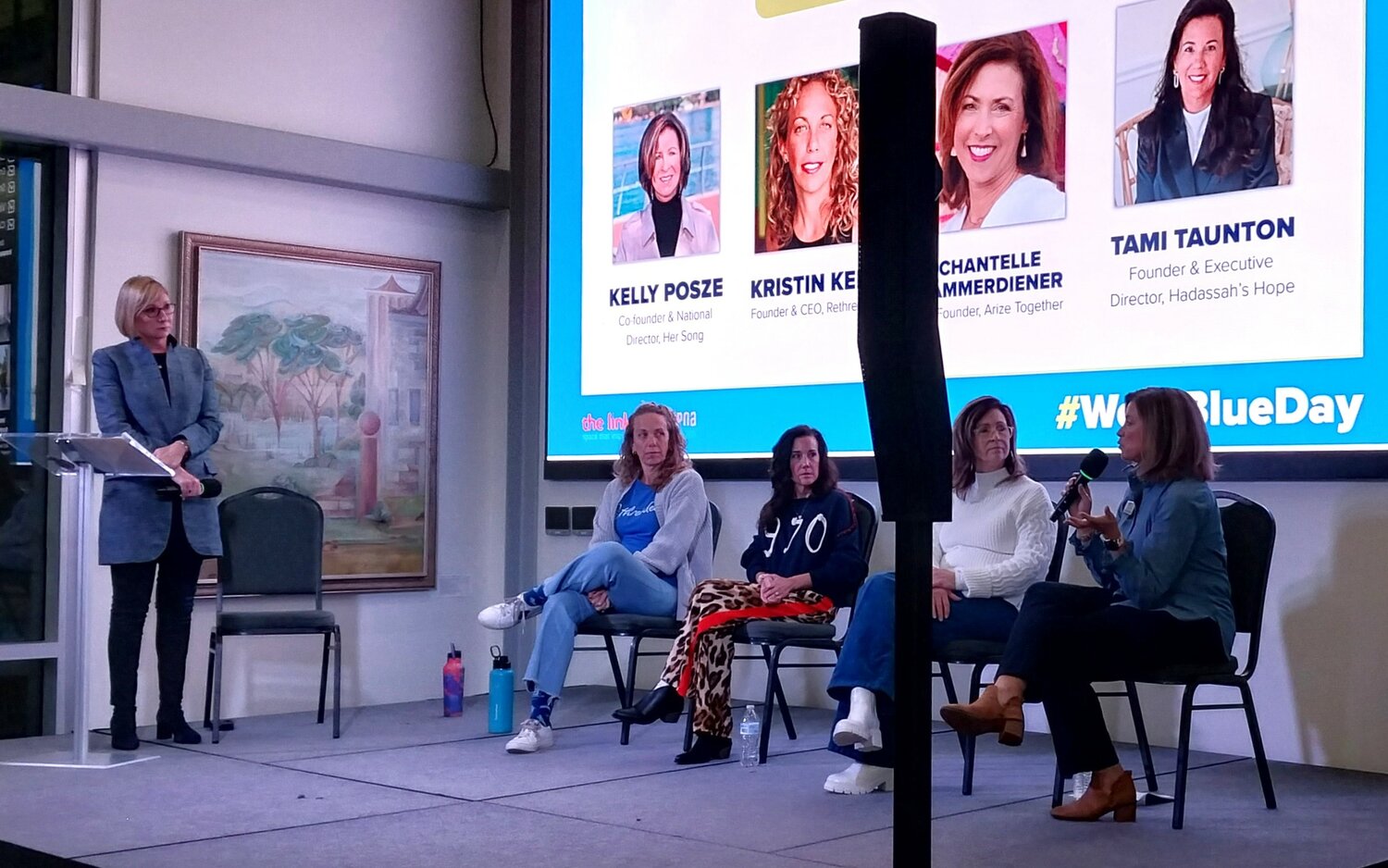
Keen was among a group of experts invited to speak Sunday, Jan. 11, at the link in Nocatee for a human trafficking awareness event, the first offering in the link’s Humanity Lab Series. The series is dedicated to supporting nonprofit organizations and the work they do.
“The Humanity Lab is a series where awareness turns into action,” Gurpreet Misra, co-founder of the link with husband Raghu, told attendees.
And awareness is one of the biggest components of a solution to human trafficking. Those attending the series’ inaugural event came away with a much greater understanding of the problem, perhaps motivated to advocate for those solutions.
The statistics are sobering. The U.S. State Department estimates that human trafficking is a $150-billion business worldwide, annually. Some sources put that number much higher.
The core of trafficking, Keen said, is greed. It’s a factor that must be addressed if human trafficking is to be stopped.
Toward that end, the City of Jacksonville has created a No Trafficking Sports and Entertainment District. This is especially appropriate because trafficking increases dramatically during events.
A phony advertisement placed locally for one day, even without promotion, in an attempt to net perpetrators, attracted 185 purchase attempts. That same ad, issued during a major sporting event, received 314 attempts.
Tracye Polson, director of state and federal advocacy in the Office of the Mayor of Jacksonville, said the city has posted signs at professional sports venues, targeting not just potential victims, but also the buyers of sex.
“This is part of ending the demand,” Polson explained. “Because if there’s no demand, there’s no trafficking.”
The signs help connect the public with victim advocates as well as law enforcement.
“Each of us has a role to play in prevention, support and long-term healing,” said Polson, who served as emcee for Sunday’s event.
One misconception many have is that human trafficking often resembles the plot of the 2008 film “Taken,” a point several of the event’s panelists mentioned.
“Human trafficking is really different than a lot of people think,” said Keen. “A lot of people think it’s kidnapping.”
In fact, just 5% of these cases involves kidnapping. Keen said 45% of victims are trafficked by family members, 39% by a “romantic” partner. She said between 75% and 95% of women who end up in the commercial sex trade “industry” have been victims of sexual abuse.
And exiting the life is not easy. Keen identified as many as 72 independent barriers these women face as they attempt to put their lives back together.
Kelly Posze, national director and co-founder of Her Song, a ministry of the Tim Tebow Foundation, answered the question many people have: Why don’t victims simply leave their traffickers?
“It’s not that simple,” according to Posze. “They’re controlling where you go, what you eat, when you eat, who you see. They’re controlling what you do. Traffickers are master manipulators.”
And exit, she said, is just the beginning of a long and arduous journey.
Toward that end, most of Sunday’s presenters are actively involved with helping survivors.
Some, like Hadassah’s Hope and Her Song, are outreach organizations, often making that first important contact that helps victims who haven’t yet made the break. Meanwhile, Rethreaded and Her Song provide a critical restorative element — the former especially focused on training and employment, the latter offering residential survivor care. Finally, Arize Together gives survivors what co-founder Chantelle Kammerdeiner called “a forever community.”
Because traffickers prey on victims’ vulnerabilities, narcotics are often used.
Posze said, “I’ve had a lot of women tell me, ‘The first person to stick a needle in my arm was my trafficker; after that, I would do anything that they were asking me to do because they were numbing the pain.’”
St. Johns County Sheriff Robert Hardwick described how his office is addressing this issue through a multi-pronged approach. He alerted parents to an oft identified, yet underappreciated, risk: the smart phone.
Holding his up, Hardwick said, “This amazing device opens you up to the world … but then, it opens the world to you.”
A child innocently sending a photo to a friend may fall victim to extortion.
Those wishing to know more about, or support, organizations that help survivors can do so at the following websites:
- Rethreaded: https://rethreaded.com
- Hadassah’s Hope: https://www.hadassahshope.com
- Her Song: https://www.hersong.org
- Arize Together: https://www.arizetogether.org