We have exciting news about PBS News and two new programs. These are two original productions that expand the depth and reach of our journalism. Hosted by William Brangham, “Horizons from PBS News” explores the science, health and technology news making headlines each week. “Compass Points from PBS News,” hosted by Nick Schifrin, analyzes global affairs and their implications for Americans.
Geoff Bennett:
We have exciting news about the future of PBS News and two new programs you can watch here on PBS and on YouTube and listen to as podcasts.
These are two original productions that expand the depth and reach of our journalism. “Horizons From PBS News” hosted by William Brangham will explore the forces shaping our daily lives, from environment and health to science and technology. Each episode features in-depth conversations with leading experts and innovators, bringing clarity to the breakthroughs and challenges ahead.
Amna Nawaz:
And “Compass Points From PBS News” hosted by foreign affairs and defense correspondent Nick Schifrin will examine America’s place in a rapidly changing world, unpacking global events and what they mean here at home.
These new programs are the result of a reworking of our resources, a commitment to meet this moment by investing in fresh reporting and new formats, even after difficult federal funding cuts.
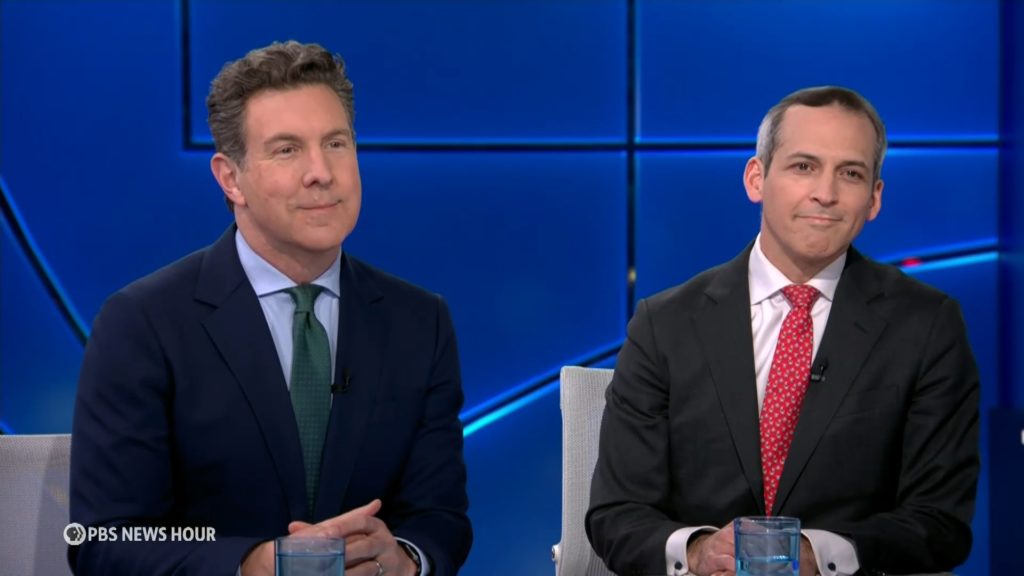
And William and Nick are here with us now to tell us about this weekend’s debut programs.
Welcome to you both.
William, let’s start with you.
Your debut this weekend focuses on a big issue in the headlines right now, ultra-processed foods. Tell us about that.
William Brangham:
That’s right.
Ultra-processed foods, as we have reported on this show, are complicit in why America has such shockingly high rates of chronic diseases, hypertension, diabetes, obesity. And so we wanted to do a program that looked at, why is it that we have built a food system that makes us so sick?
Now, we know the MAHA movement headed by RFK Jr. has proposed solutions to that problem, and so we wanted to examine, what are they proposing and what would it take to really make America healthier again?
One of the people that we spoke to is Ashley Gearhardt. She is at University of Michigan she studies food and addiction.
And, in this clip, this is her describing the kind of design that goes into food products by these — some of these big food companies.
Ashley Gearhardt, University of Michigan: Many of the products that we see in the grocery store, although we call them food, actually resemble much more of something like a cigarette or an alcoholic beverage on their impact on the reward centers of the brain than they do a fruit or a vegetable.
William Brangham:
In that they are designed to not just be nutritious and filling, but they’re designed for other purposes.
Ashley Gearhardt:
Absolutely. I read a lot of food industry trade letters, and some of the things they talk about is turning cravings into corporate wins.
William Brangham:
Cravings.
Ashley Gearhardt:
Cravings, doing indulgence as a main profit engine for them.
Geoff Bennett:
And Nick, there has been no shortage of international news this. Week what can we expect from “Compass Points”?
Nick Schifrin:
Yes, Geoff, I mean, you and I talk about all the time, right, the global order is changing rapidly right before our eyes.
And we don’t really know how it’s going to end, but there is a lot going on. So, every week on “Compass Points,” we’re going to try and give some direction, if you will, to a rapidly changing world. And we’re going to turn to experts who will have an all-encompassing look, if you will, at one critical issue and how it affects Americans at home.
So, this week, it’s Trump on the world stage, Trump the disrupter, as I put it, for this episode. And we have got three fantastic guests this week who I think reflect not only the debate in Washington, but also within the administration itself, Victoria Coates of The Heritage Foundation, who helps us understand the president’s perspective, Kori Schake, a former national security official who represents a more traditional foreign policy, and Jennifer Kavanagh of the think tank Defense Priorities, who advocates for restraint.
Jennifer Kavanagh, Defense Priorities:
There are other limits on American power. And that is overextension.
One of the big reasons that the United States did not take action in the Middle East this week is because it doesn’t have the assets in the region. And why not? Because they’re in Latin America. So already we’re seeing that there are limits to American power.
And those limits will only become more pronounced when we start talking about more serious threats, for example, Russia and China. Hitting adversaries that can’t hit back isn’t hard. It doesn’t show that we’re powerful.
Geoff Bennett:
And you can watch “Horizons” with William Brangham on Saturday and “Compass Points” with Nick Schifrin on Sunday on your local PBS station. Check your local listings.
And you can also find them on your PBS News YouTube page and wherever you listen to podcasts.