Lawyers, human rights advocates and civil libertarians have appealed directly to the NSW Police Commissioner, urging him not to extend a ban on authorised public assemblies in Sydney when it lapses on Tuesday.
Commissioner Mal Lanyon declared the first 14-day ban on Christmas Eve, using new powers created in response to the Bondi terrorist attack on December 14, before extending it on January 6 for another fortnight.
In a letter to the commissioner, civil society organisations led by the Australian Democracy Network (ADN) raised concerns about the ramifications of a further extension on annual Australia Day protests.
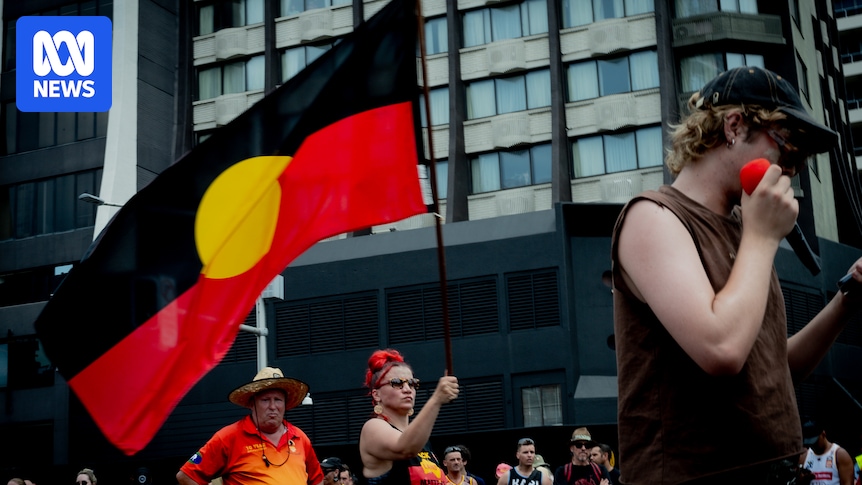
“We are concerned about the impact these restrictions will have on the capacity of communities to gather, particularly around the traditionally significant First Nations protests on January 26,” the letter states.
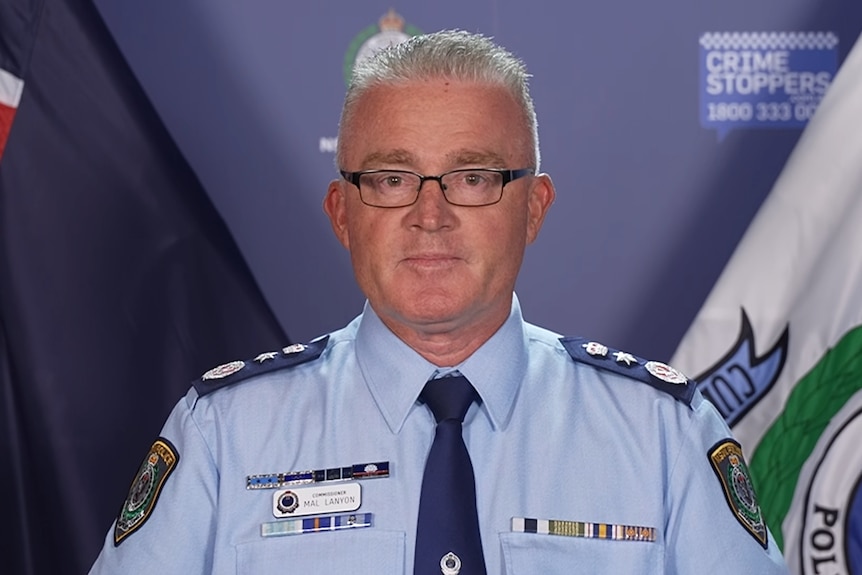
The initial restriction was extended by another 14 days by NSW Police Commissioner Mal Lanyon. (ABC News)
A NSW Police spokesperson said the commissioner was yet to make a decision on whether to renew the ban, which can be extended for up to three months following a terrorism event.
“The declaration will be reviewed closer to the end of the 14-day period with consideration to the ongoing community safety impacts of further protests,”
the spokesperson said.
In a statement, Paul Scully, the acting minister for police and counter-terrorism, said that all decisions are made through the “lens of public safety”.
“Any change to the Public Assembly Restriction Declaration will be considered by the Police Commissioner over the coming days,” he said.
“Operational decisions of this nature are rightly made by the NSW Police Force, based on intelligence, risk assessment and their on-the-ground understand of community safety.”
Letter backed by eight organisations
The groups argued Australia’s obligations under an international human rights treaty required police to ensure any restrictions on protest were “necessary and proportionate”.
The letter referenced the International Covenant on Civil and Political Rights, which only allows restrictions that are vital for maintaining national security or public safety, public order, public health or morals, or the protection of others’ freedoms.
First Nations rally organiser vows to defy NSW protest laws
“An unspecified risk of violence, or the mere possibility that the authorities will not have the capacity to prevent or neutralise the violence emanating from those opposed to the assembly, is not enough,” the letter states.
“The State must be able to show, based on a concrete risk assessment, that it would not be able to contain the situation, even if significant law enforcement capability were to be deployed.”
The letter was backed by the Inner City Legal Centre, Sydney Peace & Justice Coalition, NSW Council for Civil Liberties, Redfern Legal Centre, Australian Lawyers for Human Rights, Amnesty International, Fair Agenda, and the Media Entertainment & Arts Alliance.
While the declaration prevents assemblies from being deemed “authorised”, it does not mean protests are unlawful. But those participating in an unauthorised protest may be liable for offences like blocking traffic.
‘No safeguards’ on how police make decisions
ADN protest rights campaigner Anastasia Radievska told the ABC the declaration had the effect of preventing large-scale protests that spill onto roads from taking place lawfully.
“We want there to be protection for people who are participating in those protests,” Ms Radievska said.
“We don’t want them to be wondering whether they’re going to get arrested for being on a road or in fact for taking up space on a footpath.”
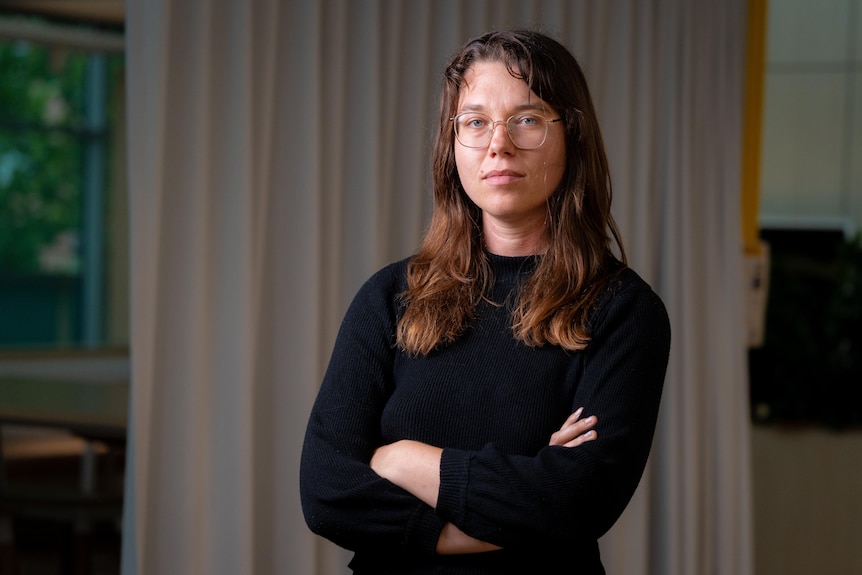
Anastasia Radievska says there needs to be protections for people taking part in large scale protests. (ABC News: Jack Ailwood)
To make the declaration, the commissioner must be satisfied the holding of public assemblies would be likely to cause a reasonable person to fear harassment or for their safety, or cause a risk to community safety, including the safety of participants.
Ms Radievska said this was a “very low bar” and there was no way to appeal that decision through the courts.
“At the moment there are no safeguards in NSW for the way that police make decisions around restricting protest, and that is really concerning,”
she said.
The constitutionality of the laws have already been challenged in court, with the matter next due to be heard at the end of the month.
Despite the restrictions, a stationary rally against both Israel’s actions in Gaza and the new protest laws themselves was held in Sydney’s CBD on Friday night.
Large numbers of police, including the riot squad and officers on horseback, monitored the crowd assembled in the square next to Town Hall.
Police said four people were spoken to and removed to prevent a breach of the peace.
A counter protester who carried a piece of cardboard with the words “Blame Hamas” was arrested but released without charge.