In recent years, North Texas has emerged as one of the nation’s most important centers of capital, finance and investment. New stock exchanges are choosing Dallas as home. Major financial institutions are expanding their footprint here. Capital is flowing into the region at a pace once reserved for coastal markets. This momentum reflects an economic model grounded in predictable laws, responsible governance and respect for private investment.
That progress should not be taken for granted.
Recently, the Dallas City Council began advancing a zoning process that could force long-established, lawful businesses off their properties. While framed by some as a narrow local issue, the implications reach far beyond a single neighborhood or city block. The path Dallas is now considering risks undermining the very certainty that made this city attractive to investors, employers and workers in the first place.
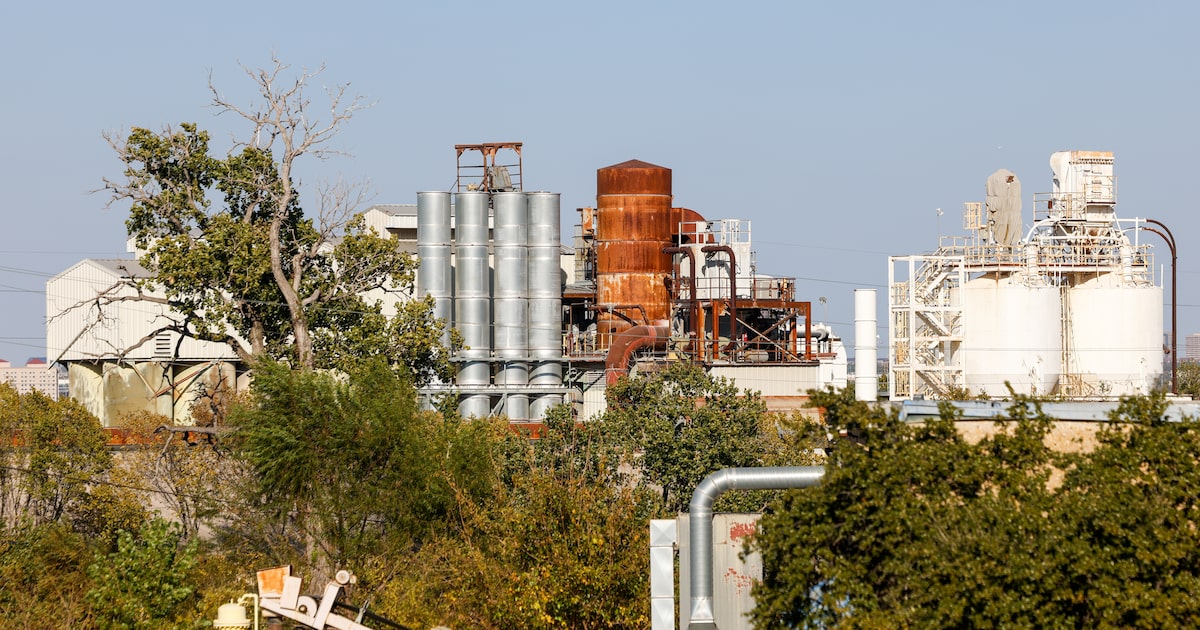
At issue is whether the city should employ a process called amortization to force two industrial plants to uproot their longstanding operations.
The council’s decision whether or not to hire a consultant to estimate potential compensation obligations in those cases is not symbolic. It would be the first concrete step in a process that could expose the city to massive financial liability. Relocation and replacement costs in cases like this can easily reach hundreds of millions of dollars — sums that Dallas has not set aside and cannot absorb without serious consequences. Dallas does not maintain a funded amortization account, and absorbing a large, unplanned liability would place pressure on reserves, crowd out core services and increase long-term risk.
Opinion
Credit rating agencies pay close attention to precisely these kinds of decisions. A city that creates sudden, legally mandated obligations without a funding plan invites higher borrowing costs that ultimately fall on taxpayers.
Dallas’ recent success did not happen by accident. It rests on a reputation for stable rules, predictable zoning and confidence that lawful compliance today will not be retroactively penalized tomorrow. That predictability is the foundation of capital formation, and it is exactly what Texas has worked to strengthen at the state level.
During the most recent legislative session, I led a comprehensive legislative package designed to position Texas — and Dallas in particular — as the nation’s premier destination for financial services. That package reinforced protections against future financial transaction taxes, strengthened corporate governance certainty, clarified regulatory frameworks and sent a clear signal to investors: Texas intends to lead in modern capital markets.
Those reforms complement what Dallas itself is now experiencing. As The Dallas Morning News recently reported, North Texas has rapidly become Y’all Street, with new stock exchanges, expanded banking operations and billions in capital investment converging in Dallas and surrounding communities.
That is why the city’s latest trajectory is so concerning.
When a major city signals that lawful businesses can be targeted through retroactive zoning actions, investors notice. So do relocation consultants, site selectors, lenders and employers deciding where to place their next facility or headquarters. The message such actions send is damaging: Long-term investments are politically fragile, and compliance does not guarantee stability.
Supporters of the council’s approach argue that this is about responding to community concerns about air quality. Those concerns deserve to be taken seriously. However, durable solutions require collaboration, sound science and respect for established legal frameworks — not actions that gamble with a city’s fiscal health and economic reputation.
Dallas can continue to address community concerns while protecting fiscal stability and economic credibility. But doing so requires choosing predictability over politics — and reaffirming the principles that made this city a destination for opportunity in the first place.
Republican Tan Parker of Flower Mound represents District 12 in the Texas Senate.