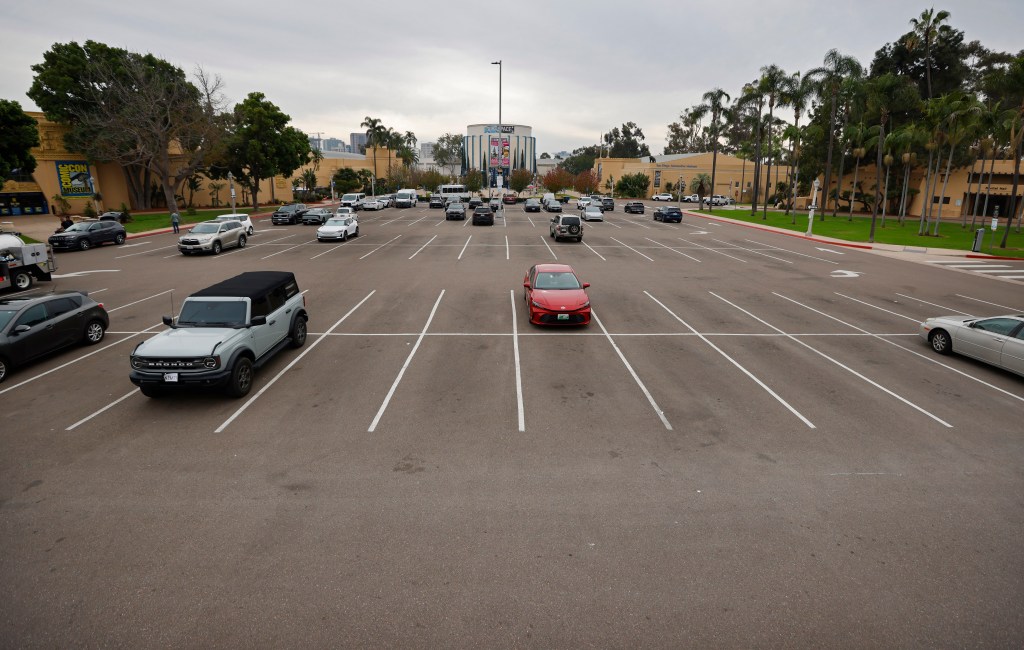
Leaders of Balboa Park museums and other organizations are calling on San Diego officials to immediately reconsider and possibly eliminate parking fees because of a sharp decline in park visits since the fees began Jan. 5.
They say declines in park visits, which range from 20% to more than 50% depending on the specific day and attraction, could reduce overall annual revenue between $20 million and $30 million.
“The volume, consistency and intensity of public feedback have made clear that this program is causing significant harm to park access, public trust and the sustainability of Balboa Park’s cultural institutions,” the Balboa Park Cultural Partnership said in a letter Wednesday to city officials.
The partnership, an umbrella group for organizations within the park, said in the letter to Mayor Todd Gloria and the City Council that paid parking could force institutions to lay off workers and reduce exhibitions.
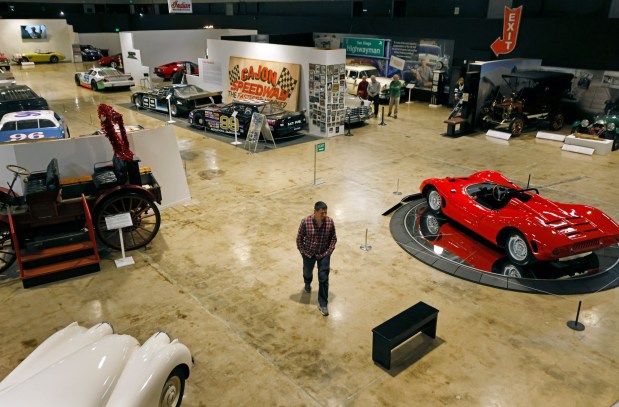 Visitor Seth Green walks through a nearly empty San Diego Automotive Museum in Balboa Park on January 21, 2026 in San Diego, CA. The city recently implemented paid parking in the park and museums have a seen a decline in visitors. (K.C. Alfred / The San Diego Union-Tribune)
“The paid parking program is eroding public trust, limiting access and destabilizing the very institutions that bring the park to life,” the letter says. “The reduction in attendance is not just a downward spiral — it is a potential death spiral where declining earned revenue drives reduced programming and further suppresses visitation, destabilizing already fragile operating budgets.”
A spokesperson for the mayor said it’s too soon to consider eliminating a new program before meaningful, long-term trends can be evaluated.
“The city will continue to monitor performance closely, make adjustments where appropriate and work collaboratively with park stakeholders,” said spokesperson Dave Rolland.
The partnership said the attendance and revenue numbers are based on direct comparisons to the same period in January 2025.
“Across the park, we have strong data showing declines in attendance at all of our organizations,” said Jessica Hanson York, chief executive of the Mingei International Museum. “This isn’t data compared to two weeks ago. We’re looking year over year.”
While the partnership declined to provide specific comparison data for the roughly 50 individual organizations it represents, some summary data from a few was revealed.
Attendance has been down about 23% at the Natural History Museum, said museum chief executive Judy Gradwohl.
“If this trend continues, many cultural institutions will have no choice but to cut their own programming, exhibits, education and even staff,” Gradwohl said at news conference in the park’s Alcazar Garden.
Michael Warburton, executive director of the San Diego Model Railroad Museum, said his attendance is down 49% and his revenue is down 29%.
“This is not theoretical,” Warburton said. “The downward spiral is happening now.”
Warburton declined to give the specific revenue and attendance numbers used to calculate those percentages, describing that information as proprietary.
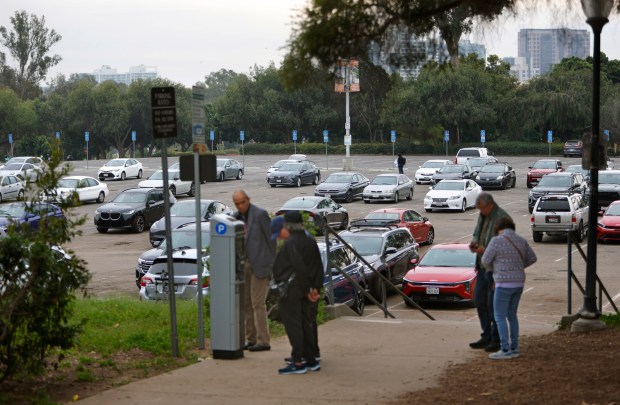 Visitors try to figure out a parking machine near a half-empty Organ Pavilion Lot in Balboa Park on January 21, 2026 in San Diego, CA. (K.C. Alfred / The San Diego Union-Tribune)
Peter Comiskey, the partnership’s executive director, said the impact has been bigger on local residents than tourists. He said attendance data from the Fleet Science Center during the first week of paid parking showed a 25% drop for local residents but only a 3% drop for tourists.
Rolland, the mayor’s spokesperson, said the partnership has declined requests from the mayor for more detailed data on early trends.
The partnership said paid parking is creating a financial barrier for seniors, students and low-income residents. People are canceling memberships in park organizations and citing the new fees as the primary reason, the partnership said.
The partnership is also raising safety concerns. While the city is allowing park workers and volunteers to park for free, they are required to park in lots roughly half a mile from the park’s center.
The partnership has created a new website, savebalboapark.org, and is encouraging opponents of paid parking to post there, urging city leaders to reconsider the fees.
Comiskey said that it’s crucial city officials, particularly the council, act now instead of waiting for more data. He said the trends are unmistakable and won’t reverse.
Rolland said more data is needed about paid parking before decisions can be made.
“It must be evaluated based on clear, long-term data — not a few weeks of initial operation,” he said. “Rescinding the program now, before meaningful trends can be measured, would put the park’s financial future at risk and return us to the very instability that has delayed maintenance and capital improvements for years.”
The partnership contends their financial losses will be larger than the revenue the city is projected to get from the parking fees.
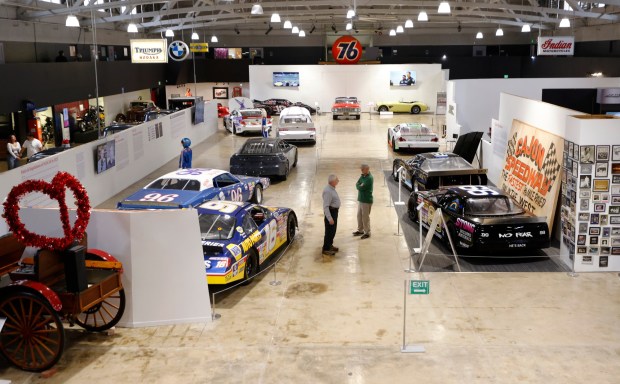 Visitors stand in a nearly empty San Diego Automotive Museum in Balboa Park on January 21, 2026. (K.C. Alfred / The San Diego Union-Tribune)
They say the estimate of $20 million to $30 million is based on across-the-board attendance drops of 20%, which they characterized as a conservative estimate. City officials have estimated annual parking revenue in the park at about $15 million.
The partnership said it has doubts the city will get that much revenue.
“Early revenue figures indicate that the paid parking program is generating only a small fraction of what was originally projected,” the partnership says in its letter.
The partnership doesn’t provide specific numbers to back up those claims.
The partnership said the city should search for other ways to solve its budget problems.
“We respectfully urge the city to reconsider the paid parking program and to pursue alternative budget solutions that do not compromise equity, access or the long term vitality of Balboa Park,” the letter said.
Comiskey said the council could potentially satisfy the partnership with something less than a repeal of the fees as long as the burden on county residents is eliminated, an indication the partnership could be OK with maintaining parking fees for tourists.
San Diego Councilmembers Kent Lee and Sean Elo-Rivera sent the mayor a memo earlier this month calling implementation of paid parking “haphazard” and “not ready for prime time.”
Lee and Elo-Rivera said the process for city residents to get approved for discounts was so complex, cumbersome and confusing that Gloria should waive fees for residents until they have had time to adapt and learn.
Gloria defended the rollout. But city officials said they would delay any citations for about a month from the Jan. 5 start date.
City officials have touted the parking revenue as a way to help fund renovations of many of the park’s older buildings.
The mayor’s spokesperson reiterated that Wednesday.
“Balboa Park is one of San Diego’s greatest civic treasures, and protecting it for future generations requires stable, reliable funding — not uncertainty,” Rolland said. “Many of the institutions raising concerns operate in city-owned buildings and do not pay rent. That reality makes it even more important that we maintain a sustainable funding source dedicated specifically to the care and preservation of the park they call home.”
But Comiskey said the city will just use the new parking money to replace general fund money it has been using for renovations.
“We should be clear and honest: paid parking does not bring new money into Balboa Park,” he said. “It simply substitutes for the general fund.”
City officials have said charging for parking near museums is common practice in other major cities like Los Angeles and San Francisco.
The complicated way city residents must apply for discounts has been a controversial topic.
City residents must apply for discounts online, pay $5 to have their residency verified, wait two days for that verification and choose the day they will visit in advance. No discounts for county residents have been established.
The paid parking system the city is launching is complex and features varying fees and discounts.
To park in the most centrally located lots — Space Theater, Casa de Balboa, Alcazar, Organ Pavilion, Bea Evenson, Palisades and South Carousel — the nonresident fees are $16 per day or $10 for up to 4 hours.
In Level 2 lots a bit farther away — Pepper Grove, Federal, Upper Inspiration Point and Marston Point — the fee is $10 per day for nonresidents.
Parking at Lower Inspiration Point is free for the first three hours and $10 per day after that. The dividing line between upper and lower Inspiration Point is President’s Way.
Residents get 50% off all parking fees. Frequent-user discounts are also available on a monthly, quarterly and annual basis.
Other opponents of the paid parking are organizing a Saturday rally that will start at the Organ Pavilion at 10 a.m.