Overview:
James Talarico, a political “daredevil,” emphasizes the importance of respect, connection, and bridging generational divides in politics. He believes that respect means treating everyone with dignity, focusing on substance rather than personal attacks, and calling out racism and misogyny. Talarico also emphasizes the need for in-person events and relationship-building, and sees faith as grounding rather than dogma. He encourages people to pause and center themselves, reframing civic engagement as sustainable rather than reactive.
Setting The Tone: What does respect really look like?
What does respect look like in today’s political arena, and who gets to define it?
That was the question hanging in the room as Dallas Weekly correspondents Krystal Lindsey, Contributor, and Junior Editor Ceara Johnson opened their conversation with Democratic U.S. Senate primary candidate James Talarico. The discussion came on the heels of recent national coverage scrutinizing tone, tactics, and treatment in Texas politics, especially as race, gender, and power collide in high-stakes races. Listen to it here.
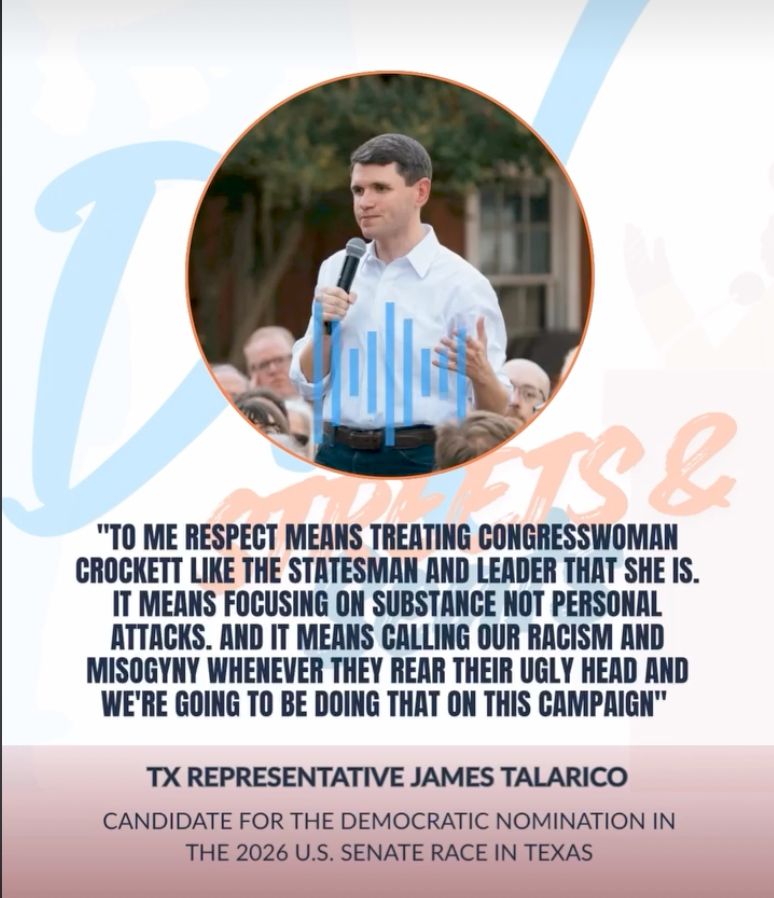
For Talarico, respect is not abstract. It is specific, visible, and accountable.
“To me, respect means treating Congresswoman Jasmine Crockett like the statesman and leader that she is,” he said plainly. “It means focusing on substance, not personal attacks, and it means calling out racism and misogyny whenever they rear their ugly head.”
For readers, the question becomes unavoidable:
What kind of political culture do we reward, and what are we willing to call out when it falls short?
Showing Up Where It Counts: Outreach Beyond the Numbers
Political strategy often starts with polling data. But what happens when candidates choose to go where the numbers don’t immediately favor them?
Talarico acknowledged that many Black Texans are still unfamiliar with his record, including his work defeating Republican extremism in Texas. Rather than viewing that as a liability, he framed it as a responsibility.
“I see it as the exact opposite,” he said. “It’s on me to introduce myself, to show up, and to listen.”
That commitment has already taken shape through targeted, ongoing outreach: meetings with Black business leaders in Dallas, Black community leaders in Houston, and Black faith leaders in Austin. These aren’t one-off photo ops, he emphasized, but the beginning of sustained relationship-building.
“If I want to be a Senator for all Texans, I need to be hearing from all Texans,” he said.
Into the Lion’s Den: Expanding the Political Battlefield
Talarico describes himself as a political “daredevil,” comfortable stepping into spaces many candidates avoid. From conservative media platforms like Joe Rogan’s podcast, to unscripted conversations with undecided voters, his strategy centers on direct engagement, even when it’s uncomfortable.
“I don’t believe in writing off voters,” he said. “Whether they’re in my party or outside of it.”
He traced this philosophy back to his own political origin story: flipping a Trump-held district by building real relationships across partisan, racial, and religious lines.
The broader implication for Texas politics is significant.
Bridging the Generational Divide
One of the most revealing moments in the conversation came when the discussion turned to generational differences- not as a wedge, but as a missed opportunity for understanding.
Talarico clarified that older generations often understand policy harm, but may not fully grasp how deeply it shapes young people’s lived experiences. Housing was a powerful example.
When Rep. Talarico referenced the idea of a “starter home” to Gen Z members of his own team; he was met with blank stares. The concept itself felt obsolete to his younger staff.
“That was a moment where I realized how locked out of the American dream many young people feel,” he said.
The takeaway wasn’t blame, it was humility. Different generations carry different realities, and without intentional conversation, those gaps widen.
Why In-Person Still Matters
In an era dominated by screens, algorithms, and outrage cycles, Talarico repeatedly returned to one core belief: connection requires presence.
“We are social animals,” he said. “We need to be in the flesh and blood with one another.”
He expressed concern about how social media can dehumanize civic life, flattening people into avatars rather than neighbors. His campaign’s emphasis on in-person events, he said, is intentional—and essential.
For us here at DW Streets and Seats, this theme hits close to home. Civic engagement doesn’t live only online or at the ballot box. It lives in conversations, meetings, sanctuaries, classrooms, and community halls.
Faith, Grounding and Civic Power
The conversation also explored the role of faith. Talarico invites us to see religion not as dogma, but as grounding. Talarico spoke openly about drawing inspiration from the Black church, particularly its historic role in anchoring social movements during the nation’s most difficult periods.
“If you’re going to fight for transformation, you have to be rooted in something timeless,” he said.
When asked what Gen Z, and all voters, can do now to strengthen their civic power, his answer was unexpectedly simple: pause.
“Prayer. Meditation. Silence,” he offered. “Whatever you call it—take time to center yourself.”
In a political moment defined by burnout and constant crisis, that advice reframes civic engagement as sustainable, rather than reactive.
Streets and Seats: An Invitation In
DW Streets and Seats is about more than elections. It’s about understanding power systems, demystifying civic structures, and reminding communities, especially young people, that politics shapes everyday life.
Talarico echoed that sentiment, recalling a lesson from his upbringing: “Politics is just another word for how we treat our neighbors.”
That idea sits at the heart of this new series.
So we leave you with the same questions that filled the room that day:
- What does respect look like in practice?
- Who is being heard, and who still isn’t?
- And how might our civic life change if we chose connection over convenience?
This is the first of many conversations. DW Streets and Seats invites you in. Not just to read, but to engage, respond, and help shape what comes next.
You’ve taken the first step to reclaiming your civic power. Now take the next one by registering to vote before February 2, 2026. Start a new voter application here.
Related