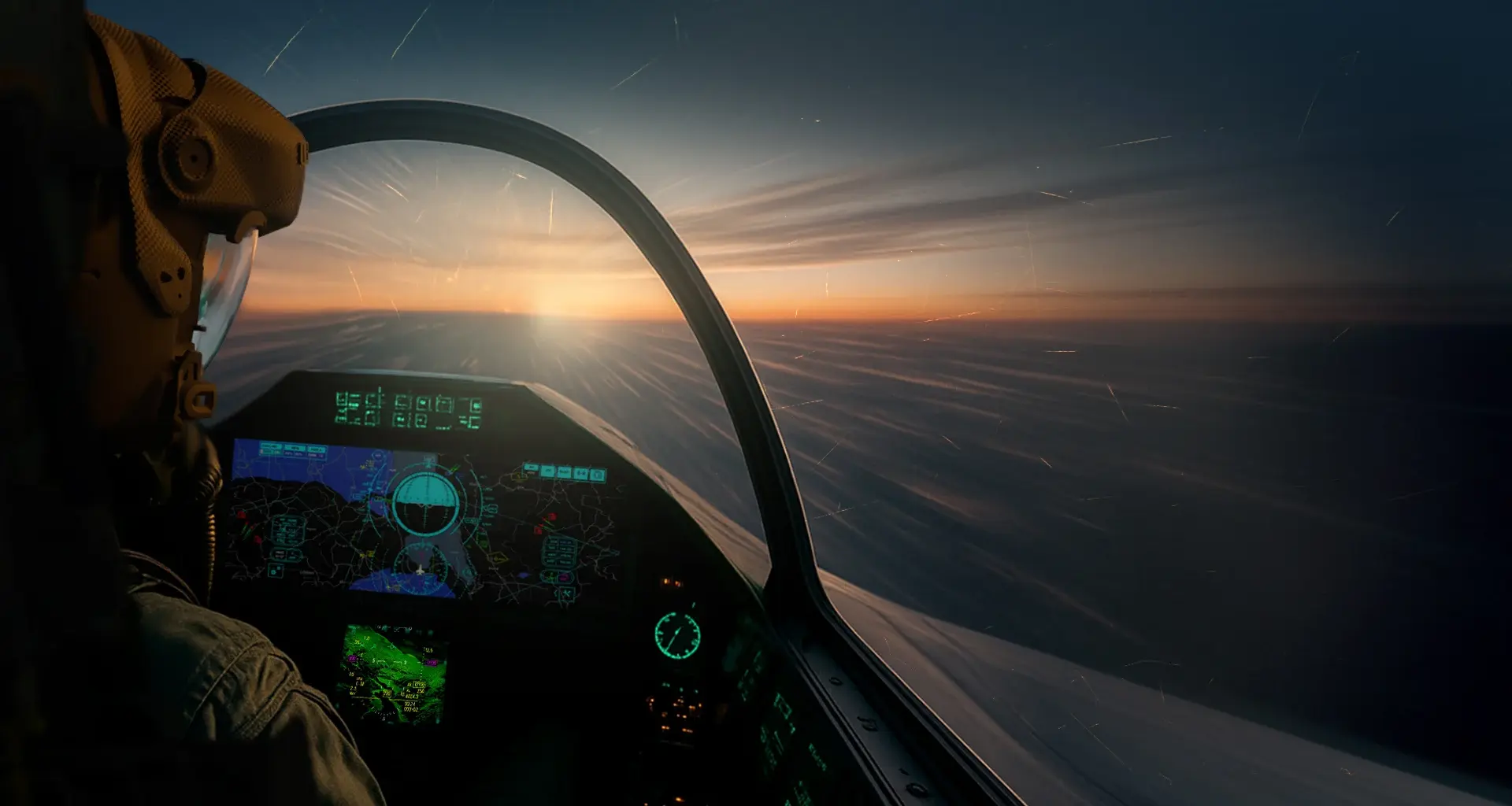
A state-of-the-art battle helmet with Fort Worth ties will soon be tested in initial operations.
A $16 million defense contract to build a battle system is paying off for Collins Elbit Vision Systems, a joint venture between Fort Worth-based Elbit Systems of America and Collins Aerospace, a North Carolina offshoot of Raytheon.
The helmet — formally called the Zero-G Helmet-Mounted Display System+ — recently passed its critical design review and will be used in initial operations in 2027, officials said.
The helmet projects a digital display of vital information onto a fighter pilot’s visor akin to the hero’s suit display in the Iron Man movies. The device will eventually be used on 750 U.S. Navy and Royal Australian Air Force Super Hornets and Growlers.
Collins Elbit officials said the sixth-generation system provides an immersive, high-definition view of a battlefield, enabling crews to make critical decisions at high speeds for superior situational awareness to enhance missions and survivability.
The Zero-G helmet will aid in making aircrew safety a top priority, said Capt. Joseph Kamara, program manager for Naval Aircrew Systems. Integrating the improved Joint Helmet-Mounted Cuing System will relieve aircrews of neck and back strain and improve ejection safety, he added.
“We are excited to be at the leading edge of safety and technology, and this important milestone is a critical step toward deploying this capability for our F/A-18 and EA-18 aircrew,” Kamara said in a statement.
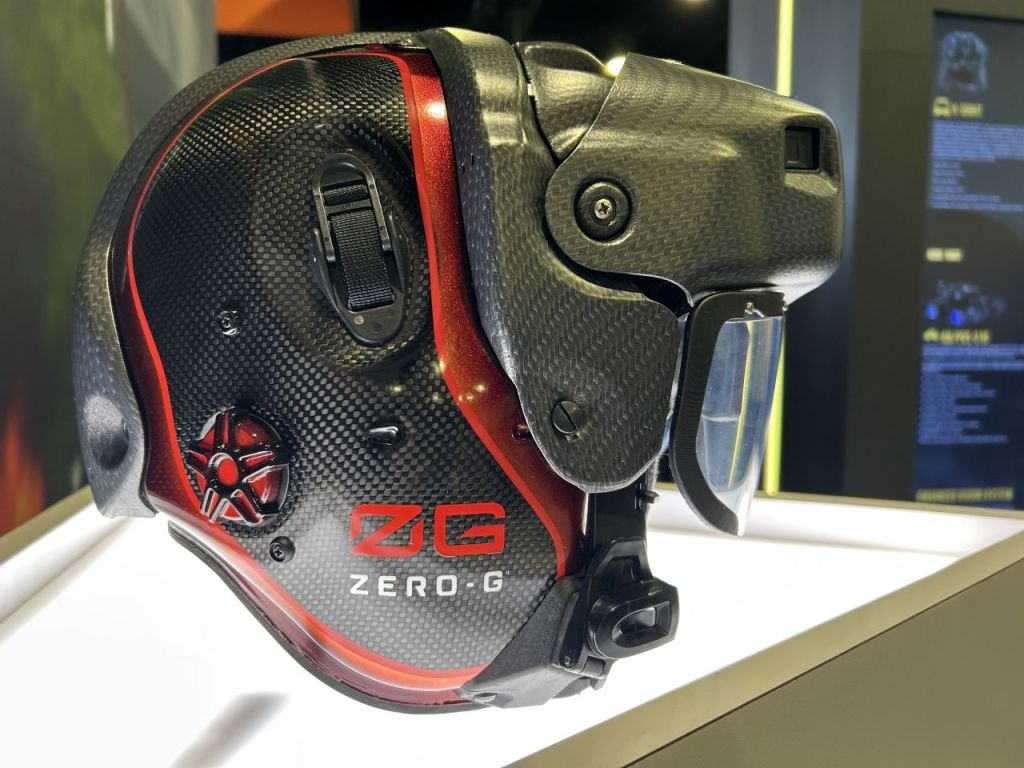 The Zero-G Helmet-Mounted Display System+ recently passed a critical review to be used in initial testing in 2027. (Courtesy photo | Collins Elbit Vision Systems)
The helmet system is superior to prior systems because it can fuse mission data, sensor video and weapon system information while serving as a primary flight instrument, officials said.
“Zero-G is providing sensor fusion at the edge,” Luke Savoie, Elbit America’s president and CEO, said in a statement. “This system is critical technology, while remaining lightweight. As fighter aircraft level-up, the (helmet-mounted displays) of those systems need to as well. Zero-G provides unmatched head-up, sixth-generation battle management capabilities.”
Savoie said Zero-G “is not just an incremental step, but a critical enabler of dominance in the next fight.”
Collins Aerospace associate director Daniel Karl, co-general manager of the Collins Elbit joint venture, said the helmet meets the goal of producing the safest, most advanced system on the market.
“This milestone confirms our helmet is ready for the next phase of development and brings us one step closer to delivering this advanced capability to naval aviators,” Karl said.
Officials said the next step for the helmet is to prove its airworthiness through testing and integration with aircraft avionics and mission systems in 2027.
Fort Worth, designated as the aviation and defense capital of Texas on June 17, 2025, is home to aviation and defense companies including Lockheed Martin Aeronautics Co. and Bell, as well as dozens of local firms dedicated to aircraft maintenance, repair and overhauling.
Collins Elbit also makes a helmet-mount display system for F-35 aircraft, which is assembled in Air Force Plant 4 at Naval Air Station Joint Reserve Base Fort Worth. That third-generation helmet allows pilots to “see through the plane” to provide a 360-degree view around the aircraft.
Eric E. Garcia is senior business reporter at the Fort Worth Report. Contact him at eric.garcia@fortworthreport.org.
The Report’s news decisions are made independently of our board members and financial supporters. Read more about our editorial independence policy here.
This <a target=”_blank” href=”https://fortworthreport.org/2026/01/28/16b-battle-helmet-program-with-fort-worth-ties-to-be-tested-by-pilots-in-2027/”>article</a> first appeared on <a target=”_blank” href=”https://fortworthreport.org”>Fort Worth Report</a> and is republished here under a <a target=”_blank” href=”https://creativecommons.org/licenses/by-nd/4.0/”>Creative Commons Attribution-NoDerivatives 4.0 International License</a>.<img src=”https://i0.wp.com/fortworthreport.org/wp-content/uploads/2021/04/cropped-favicon.png?resize=150%2C150&quality=80&ssl=1″ style=”width:1em;height:1em;margin-left:10px;”>
<img id=”republication-tracker-tool-source” src=”https://fortworthreport.org/?republication-pixel=true&post=386534&ga4=2820184429″ style=”width:1px;height:1px;”><script> PARSELY = { autotrack: false, onload: function() { PARSELY.beacon.trackPageView({ url: “https://fortworthreport.org/2026/01/28/16b-battle-helmet-program-with-fort-worth-ties-to-be-tested-by-pilots-in-2027/”, urlref: window.location.href }); } } </script> <script id=”parsely-cfg” src=”//cdn.parsely.com/keys/fortworthreport.org/p.js”></script>