While several steps remain before approval, proposed changes to the city of San Diego’s Land Development Code could lead to fewer requirements on parking space replacements, albeit under certain conditions.
The changes would take place as part of the city’s annual update of the code, which contains regulations for development and use of property, including zoning, subdivisions and other related activities.
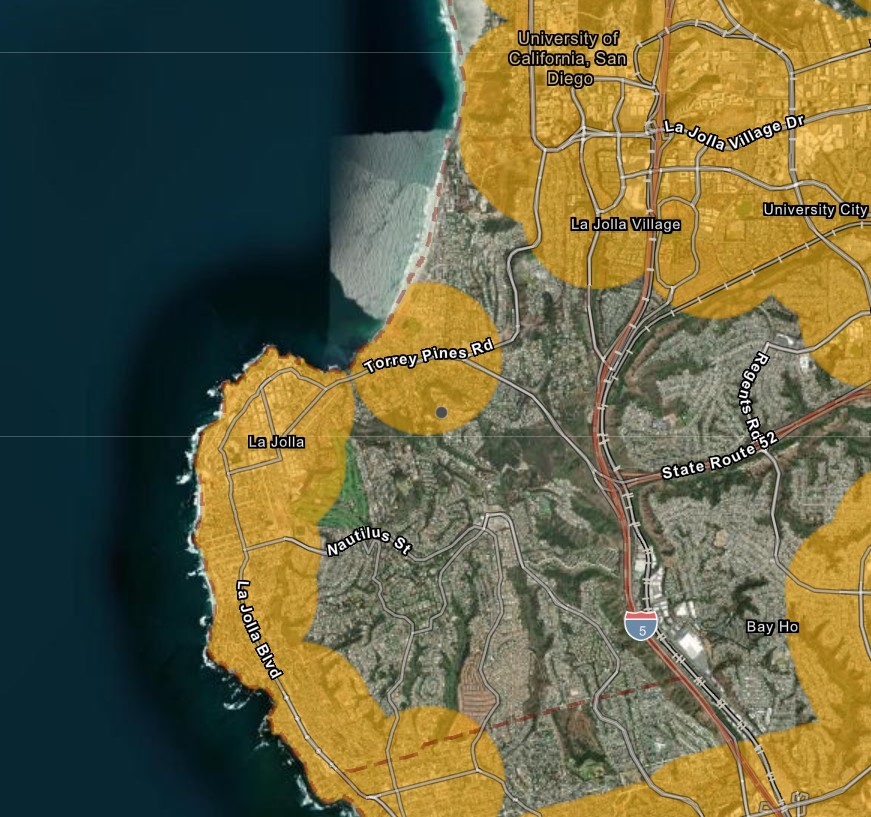
One amendment would help implement California Assembly Bill 2097, signed by Gov. Gavin Newsom in 2022, which prohibits minimum parking requirements for developments within a transit priority area, or TPA, defined as within a half-mile of a major existing or planned transit stop.
It would clarify that a requirement to replace public parking removed for “streetaries,” promenades and other outdoor dining on streets in the “beach impact area” — areas closest to the coast — “applies only when located outside the transit priority area.”
On Nov. 5, the city Planning Department released a draft list of 139 proposed amendments — 107 of which have citywide implications and 32 that pertain exclusively to downtown San Diego.
The Community Planners Committee, which consists of leaders of local planning groups around the city, met Jan. 27 to review the proposed code updates in full. A subcommittee of the CPC had met several times before the meeting.
Ultimately the group voted to approve the subcommittee’s recommendations, with a few requested changes. The item regarding parking replacement was one of several proposed amendments the committee said it did not oppose.
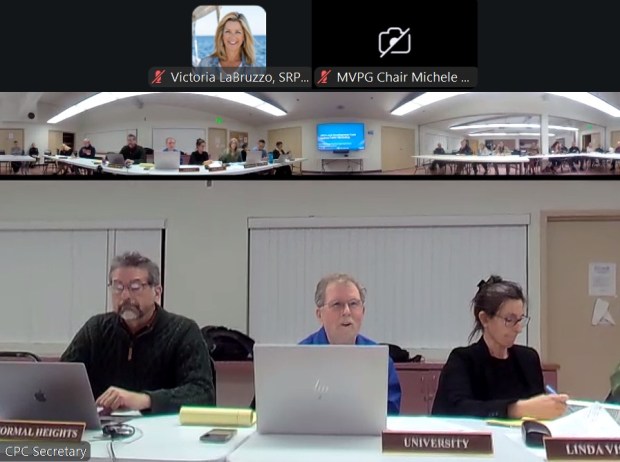 Chris Nielsen (center), head of a Community Planners Committee subcommittee that issued recommendations for the city of San Diego’s Land Development Code update, addresses the CPC at its Jan. 27 meeting. (Screenshot by Noah Lyons)
The replacement-parking issue has arisen in La Jolla with The Shores’ nearly 6-year-old outdoor street dining program on Avenida de la Playa between El Paseo Grande and Calle de la Plata. A right-of-way permit making the outdoor dining permanent was approved last year by the San Diego Development Services and Transportation departments.
In 2023, the San Diego City Council consented to new California Coastal Commission regulations requiring establishments closest to the beach to replace any public parking spaces taken by dining areas they operate on the street.
Organizers of the La Jolla Shores street dining have been working recently on plans to replace an estimated 11 spaces, down from an original estimate of 26.
La Jolla Shores residents renew parking concerns over outdoor dining promenade
The planned amendment “would make the Land Development Code consistent with state law, making it clearer to understand and implement,” said Seth Litchney, deputy director of housing policy and environmental analysis in the city Planning Department.
Exactly how much impact it would have on La Jolla remains to be seen, although much of coastal La Jolla and the area surrounding UC San Diego’s campus are located within a transit priority area.
“Since property owners would need to submit applications to implement promenades and streetaries, it is speculative to guess how this change could be used in the future,” Litchney said. “However, it could also make it easier for more businesses in these areas to choose to establish more outdoor dining and gathering spaces.
“Any proposed projects under review would still be required to comply with state law, so a development using the streetaries, active sidewalks or outdoor dining regulations in the transit priority area is not anticipated to be required to provide replacement parking. However, an applicant may also elect to opt into any new regulations adopted.”
The extent to which existing projects like Promenade de la Playa, which falls within a TPA, would be impacted by such a change is uncertain.
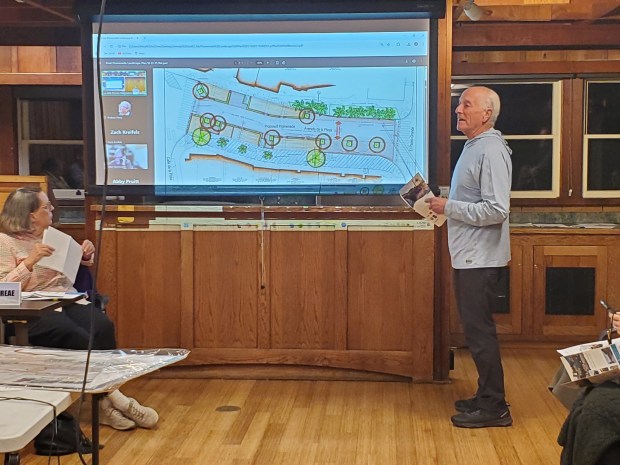 La Jollan Phil Wise presents a landscaping plan for Promenade de la Playa to the La Jolla Shores Association on Nov. 12. (Ashley Mackin-Solomon)
Lisa Kriedeman, who represents the La Jolla Community Planning Association on the Community Planners Committee, voted to approve the code recommendations with slight modifications. She said her vote was on the full package of subcommittee recommendations, not on an issue-to-issue basis.
“I would like to see that there’s more parking,” Kriedeman said. “I think [in] most of the areas they talked about, parking is an issue. But … it’s a state law.”
According to the city, Land Development Code updates are intended “to simplify and streamline the permitting processes, assure compliance with state and federal regulations, eliminate unnecessary barriers, redundancies and contradictions, and align the code with the city’s climate, equity and housing goals.”
The code update will next appear before the city Planning Commission and the City Council’s Land Use & Housing Committee in the first quarter of the year. The ultimate decision will be made by the full council during the second quarter. ♦