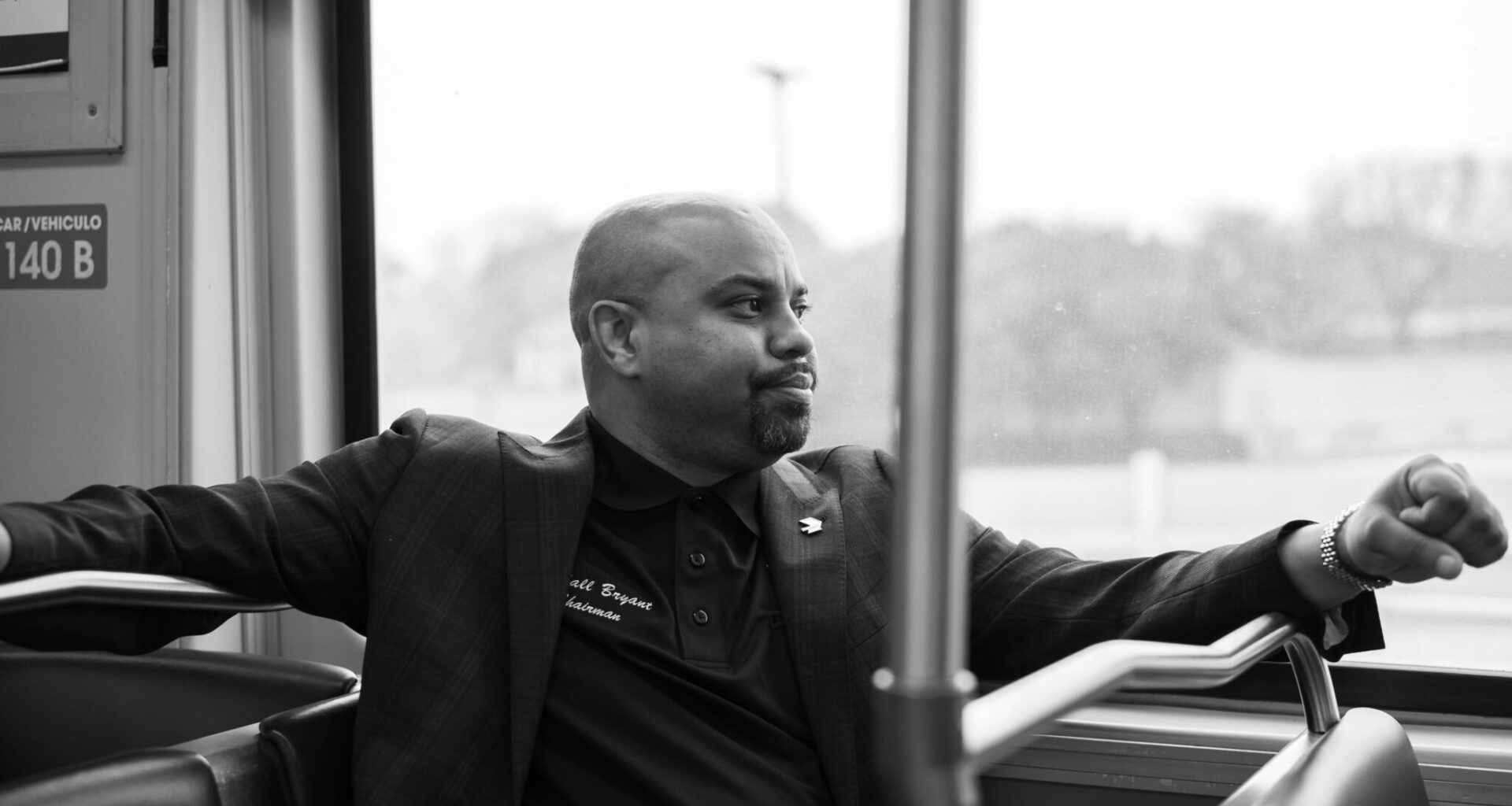
Do you remember your first train ride?
I remember opening day right here. We took the Red Line down to the Dallas Zoo on opening weekend and had the experience. Seeing it from a young age, how impactful it was, living with great-grandparents in their 70s and 80s and being able to use a service like this to alleviate the pressure of them having to drive across town — for me, that was very important.
We just opened the Silver Line two weeks ago, and it was almost the exact same feeling, a fresh experience. The train was completely clean. Every new rider has a new perspective for us, and I think it’s important that we continuously keep up with the cleanliness and the safety and all those components that are very important to the first impressions of the rider’s experience.
When were you called to civil service?
My grandmother did a lot of that same work. She was a consultant for Ron Kirk when he first ran in 1995 and again, my grandmother lived in Oak Cliff. My great-grandparents, her parents, lived in Hamilton Park at the time. And at 7 years old, she walked into the house (where he lived) with a box of literature. And Hamilton Park is 750 homes, and she said, ‘Have the whole neighborhood flagged by Sunday.’ That was me at 7 years old.
I think for me, it really clicked when you could see how policy could be shaped and policy could be moved to impact the people that don’t even know people exist that are working on their behalf. I fully understand the people that are impacted the most, and the people that need the outcomes that we vote on the most, don’t even know a DART board exists. So for me, it is a true labor of love for the communities.
Cities like Plano and Irving have raised concerns over funding inequities, among other issues. Are they justified, in your eyes?
I think all issues are justified. I’ve tried my best to have an attentive ear to those issues. Even prior to the withdrawal elections, the No. 1 thing I said I want to accomplish in these two years was fundamental changes to our governance and funding structures. It takes collaboration with both DART and all of our member cities, not just the ones that potentially have high-level issues. We have to be considerate of the cities that are also going to be impacted. And so we can’t do things that try to solve issues for a number of cities, whether they’re the majority or the minority, but then penalize those that have been allies or supporters at the same time.
So that’s kind of a balancing effect. My approach has been to truly try to understand. I’ve met with the cities that have called for their withdrawal elections directly and am trying to continue that dialogue with them. Now, they’ve taken their measures, and they have said that they will rescind them prior to March 18, if some compromises are agreed upon. And I think right now, it’s just ensuring that we fully understand what it is that they are looking to get out of the system going forward.