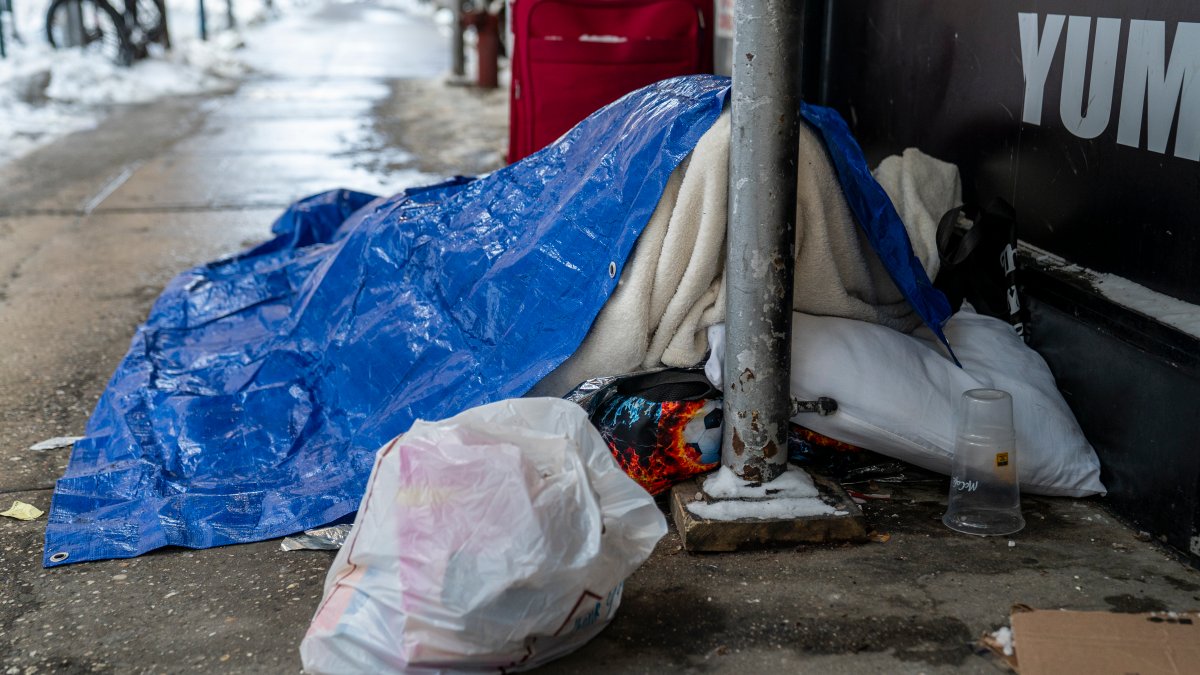
New York City confirmed three additional outdoor deaths have occurred since the snow and bitter cold temperatures arrived in the five boroughs a week ago, bringing the total number of deaths to 13.
A City Hall spokesperson announced the latest deaths Friday night, but did not provide additional details regarding where those who died were found or any causes of death. The spokesperson said the city has placed more than 800 people in shelters since they intensified their homeless outreach efforts in the lead-up to and aftermath of the storm.
At least six of the fatalities came early Saturday, as the temperature in the city fell to 9 degrees.
Mayor Zohran Mamdani added that six of the people found dead had been known to the Department of Homeless Services. The mayor noted on Wednesday that of the deaths in the city, hypothermia played a role in at least seven of them.
The city’s medical examiner will determine the exact cause of death for the 13 people, which could take up to a week to get results for each person.
“As part of our whole of government response to this weather crisis, we have opened a new low-barrier shelter and are utilizing on-call ambulettes that will go through the city and that will go directly to homeless individuals, encourage them to come into the unit for a meal and to warm up, and address any clinical needs,” said City Hall Spokesperson Dora Pekec.
The city said the Department of Homeless Services will continue its efforts to canvass each borough to find and talk with those who may need shelter. That includes increasing visibility of warming buses, posting clearer signs,
The weekend winter storm dumped anywhere from 7-15 inches of snow across Long Island, shutting down MacArthur Airport and leaving plenty of work for residents to clear their walks and driveways. Sadly, police said two deaths were linked to the storm. NBC New York’s Greg Cergol reports.
The rising death toll has prompted questions about whether Mamdani’s nascent administration could have done more to protect the city’s most vulnerable residents ahead of the Arctic blast and the snowstorm that hit early Sunday.
One man was discovered under a layer of snow on a park bench in Queens. Another was found just steps from a Manhattan hospital. Yet another was pronounced dead on the ground beneath an elevated train line in the Bronx.
One of the victims, a 52-year-old man living in Queens, was found Sunday morning with discharge papers in his pocket showing he had been released from Elmhurst Hospital, a city-run facility, on Friday, according to State Senator Jessica Ramos.
By the time of his release, the city had already activated its Code Blue protocols, a set of extreme weather policies that include precautions meant to ensure homeless patients are not released back onto the street.
It was not immediately clear if the man, who was originally from Ecuador, had been living outside at the time of his death. Inquiries to City Hall, the Department of Homeless Services and the city’s public hospital system were not returned.
The city has yet to release the names of any of those who died during the storm.
Ramos said the man discovered on the park bench was wearing only a thin jacket. His body appeared to be frozen when it was found by police under a layer of snow on Sunday morning.
“It’s devastating to know the government could have done more and didn’t,” she said. “There are real questions here that demand answers.”
Homeless outreach efforts have been intensified since the snow and frigid temperatures arrived, and continue to do so. Hundreds have voluntarily accepted shelter since the storm began. Warming centers are open. Mamdani said the city was instructing hospitals to limit discharges “to ensure that people who have nowhere to go are kept indoors.”
In the lead-up to the storm, city-contracted outreach teams fanned out across the five boroughs, attempting to coax residents to accept placements in shelters, transitional housing or even heated buses. Mamdani and his deputies have repeatedly urged New Yorkers to look out for those in need of help.
The city’s social services commissioner, Molly Wasow Park, said the city has also moved to involuntarily hospitalize a handful of people, including those who were wet, inappropriately dressed or “unable to acknowledge that there are real dangers.”
“Code Blue is not enough in a cold this severe,” said Mamdani, who has referred to the current weather stretch as “the coldest the city has seen in eight years.”
His office announced Tuesday it was stepping up its cold-weather protocols to help get more people off the streets. And to keep New Yorkers across the five boroughs regularly informed by text, email and social media.
“Extreme weather is not a personal failure, but it is a public responsibility,” Mamdani said on Tuesday. “We are mobilizing every resource at our disposal to ensure that New Yorkers are brought indoors during this potentially lethal weather event.”
Studies have shown that around 15 people suffer from cold-related deaths in New York City each year. But homeless advocates said they could not remember another storm in recent memory that resulted in so many deaths outside in such a brief period.
“The fact that this many people have passed away shows the city needs to do a much better job of making people feel safe when they come inside,” said David Giffen, the executive director of the Coalition for the Homeless. “It’s not that most of the people on the streets are unaware of the shelter system, but that they’ve had experiences there that make them not want to return.”
Weather-related deaths were reported on Long Island and in Verona, New Jersey. NBC News estimates the total from states affected by this blast of winter weather to be near 100.
NYC emergency officials warn of ‘life-threatening’ stretch
New York City’s Office of Emergency Management (OEM) is urging New Yorkers to take caution, as it warns of potentially “life-threatening” weather conditions that are set to worsen overnight and last for days.
As the five boroughs continue to dig out from the weekend snowstorm, officials have focused their attention on the extreme cold settling over the area.
🚨 Winter Weather Alert 🚨
Extreme cold is deadly. Cold temperatures are expected to continue through the weekend, with little to no snow expected. Conditions remain hazardous. Avoid unnecessary travel and use caution while walking or driving outdoors and cover exposed skin.… pic.twitter.com/wbjRgr10Ip— NYC Emergency Management (@nycemergencymgt) January 30, 2026
A surge of Arctic air will continue to linger over the tri-state for the weekend. Wind chills are expected to fall below zero, reaching up to 10 degrees below zero both Saturday and Sunday morning. That cold could kill people who are exposed to it for more than a short time. Cold advisories are in effect across the region.
“Being outside will feel painful. Exposed skin can freeze in minutes,” emergency officials caution. “Waiting for transit, walking, or working outdoors will be dangerous without full winter protection.”
It’s not just cold. Here’s what such low temps may affect
Beyond those concerns, officials say the cold weather will mean homes lose heat faster. Apartments with weak insulation or heating problems may struggle to stay warm. Pipes could freeze. Cars may have trouble starting.
NYC’s OEM says people without reliable heat, older adults, people experiencing homelessness, and those with medical conditions face the highest risk. Anyone who sees someone at risk outdoors is asked to call 311, and with a Code Blue in effect, Mamdani says that will route the call directly to 911.
Across the U.S., nearly 100 deaths were reported in states dealing with extreme weather, according to NBC News. The fresh influx of Arctic air is likely to sustain freezing temperatures in places already covered in snow and ice.
Jake Offenhartz of The Associated Press contributed to this report.