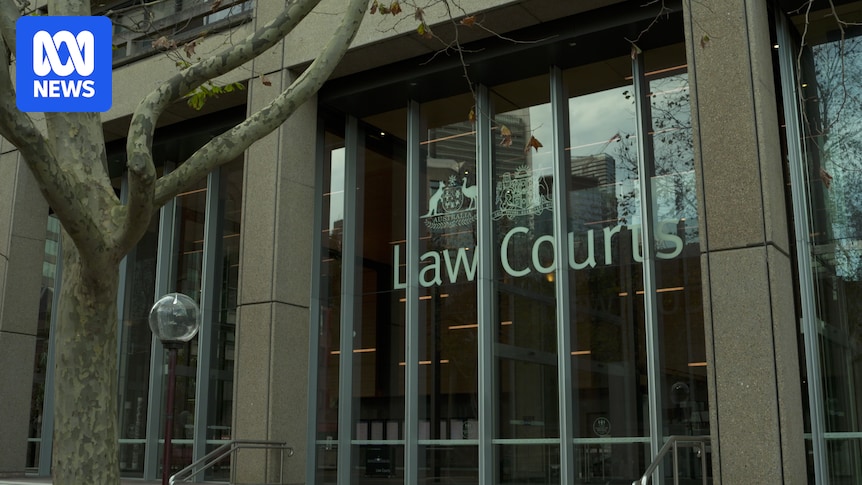
The use of “good character” evidence as a mitigating factor for offenders during sentencing proceedings will be abolished in NSW as part of a significant change to the law, which the government says will reduce trauma for victim-survivors.
The major reform, which the Minns government expects to introduce on Wednesday, responds to a report by the NSW Sentencing Council, which was asked to review the subject in April 2024.
Courts in NSW often hear evidence of a person’s good character before an offender learns their fate, which, if relevant, is taken into account by the judge along with other factors in determining the sentence.
It is currently a mitigating factor at common law and in statute, but the weight it receives in sentencing can vary depending on the circumstances of the case.
The Sentencing Council — an independent advisory body with members including judges, prosecutors, criminal defence lawyers, victims’ advocates and police — said the issues raised in its research and consultation were “especially complex”.
By majority, it recommended that good character be abolished as a mitigating factor, framing its suggested changes in a way that preserved “the ability of the courts to exercise discretion and to be properly informed by relevant evidence”.

Michael Daley says no offender should be able to rely on good character references to mitigate the consequences of criminal behaviour. (AAP: Bianca de Marchi)
The government said the change meant courts could still consider evidence of other relevant factors, such as a person’s prospects of rehabilitation, likelihood of reoffending, or lack of previous conviction.
“Victim-survivors shouldn’t have to sit in court and hear the person who hurt them or their loved one described as a ‘good person,'” Attorney-General Michael Daley said in a statement.
“We know some offenders try to use their reputations and social standing to commit serious crimes and then minimise their culpability.”
Good character references ‘re-traumatising’ victims
In 2008, an exception was introduced for child sex offenders that prevented good character evidence from being used as a mitigating factor during sentencing if it assisted the offender in committing the crime.
The council’s report, released on Sunday, noted the submissions from many victim-survivors who emphasised that hearing the offender described as a good person was “deeply re-traumatising” and sent a message that reputation mattered more than the harm caused.

The Sentencing Council recommended that good character be abolished as a mitigating factor on sentence. (ABC News: Jak Rowland)
The report said good character was not an appropriate mitigating factor because it was based on “a vague and uncertain concept” and was an “unjustified form of moral and social accounting”.
“There is no sufficient justification for allowing an offender’s good character to mitigate a sentence,”
the report said.
Good character evidence could give the appearance of offenders using their status and connections to obtain leniency, and some groups were more likely to have access to influential character references than others, according to some submissions to the council.
One chapter in the report, written by two members of the council who did not agree with the majority recommendation, argued that recognising good character could encourage an offender to maintain or return to lawful behaviour
That aligned with the justice system’s core purpose of rehabilitation, they said.
“In essence, good character as a mitigating factor allows the justice system to deliver more individualised and just outcomes,” the chapter read.
“Removing the requirement to consider evidence of prior good character is reactive to populist demands for, and likely to further encourage, a more severe approach to sentencing.”
A ‘dream come true’ for victim-survivor
Harrison James is a co-founder of the #YourReferenceAintRelevant campaign. (Supplied)
In his announcement, the attorney-general thanked Jarad Grice and Harrison James for their “tireless advocacy”.
The two survivor advocates co-founded the #YourReferenceAintRelevant campaign, which aims to remove the provision of good character references when sentencing convicted paedophiles.
Sexual assault support services:
- NSW Health Sexual Assault Services
- NSW Sexual Violence Helpline on 1800 424 017
- NSW Victims Services on 1800 633 063
- 1800RESPECT national helpline on 1800 737 732
- Sexual Abuse and Redress Support Service on 1800 211 028
- Bravehearts (support for child sexual abuse survivors) on 1800 272 831
- Child Protection Helpline on 132 111
- MARS Australia (for men affected by rape and sexual abuse) on (07) 3857 1222
- National Survivors Foundation on 1300 124 433
The men, who both endured child sexual abuse, transformed their pain into purpose.
“I did it for the little version of me, and for every child who might otherwise have to sit in a courtroom and hear how great their perpetrator was,” Mr James told the ABC.
“If you sexually abuse a child, you are not of good character. If you’re violent towards your partner, you are not of good character. If you sexually assault someone, you are not of good character.”
Mr James alleged his abuse began when he was only 13 years old at the hands of his stepmother.
His stepmother fled the country in 2019 and has never been convicted.
Mates on a mission to scrap good-character references for convicted paedophiles
“Jarad and I are survivors and we just wanted to ensure nothing like this happens to the next kid,” he said.
“We want to instil the confidence in victims of crime to pursue the court system because it’s so daunting.”
After four years of advocating, Mr James said he was proud to contribute to a historic shift in justice.
“Today is a dream come true,” he said.
“Changes of this magnitude are rare — it fundamentally alters how courts approach sentencing and transforms how they understand the dynamics of the crime.”
Hopes other states will follow suit
In December, the campaign’s efforts led to the ACT announcing it would legislate to remove good character references for perpetrators of child sexual abuse.
Mr James has travelled to every state and territory to meet with their attorneys-general.
“Each of the officials we met with said they were looking to how the NSW government would respond, so today’s announcement is going to really influence the other states and territories,” he said.

Karen Bevan from Full Stop Australia welcomes the reform. (Supplied)
Full Stop Australia was one of many organisations that made a submission to the Sentencing Council’s review.
The organisation’s CEO, Karen Bevan, acknowledged the work of Mr James and Mr Grice in championing change.
“The court system is re-traumatising for many victim-survivors of sexual assault who have sought accountability for the crimes committed against them,” she said.
“We heard over and again how much distress the use of character references in sentencing is causing and we welcome this change.”
For victim-survivors across the country, Mr James said: “Survival was never meant to be our whole story. That doesn’t mean to move on, but that we can grow beyond it and do incredible things.”
“If anyone is going to make an incredible impact, it’s a survivor.”