
A Winnipeg resident is disputing the assessed value of his home after it jumped close to 50 per cent out of fear of higher taxes, but he is already weary of the appeal process that has worn him down twice in the past.
“Frankly, it’s exhausting,” Jeremy Dias told CBC News on Saturday.
“It puts a lot of onus on the taxpayer to justify why they disagree and to provide metrics to create a better assessment,” he said.”I don’t think that’s fair.”
Dias has booked an appointment to contest the most recent estimated market value suggested by the city for his Charleswood home.
Like many other Winnipeg residents, Dias received a letter last week showing the “proposed assessed value” of his property for the 2027 tax year.
The city reviews the value of residential properties every two years and said the document was mailed to inform owners and give them an opportunity to discuss concerns on the assessment of their properties, before values are finalized.
In Dias’s case the proposed property assessment value for the house this year came at $593,000. He said that’s a shock given how the last property value assessment for his home ended up at $400,000 in 2024.
“It is nearly $200,000 over. The jump is just absolutely incredible,” Dias said. “They’re proposing that our home is worth nearly $600,000 — that’s quite literally 50 per cent more.”
3rd time disputing proposed assessed value
Property owners have until April 10 to schedule a call with city staff to voice concerns.
If a property owner is unable to book an appointment or is dissatisfied with the outcome of an appointment, they have another opportunity to discuss their property value when they receive their final assessment notice in June, a spokesperson for the city told CBC.
Dias has been through this stage twice before. In 2024 he managed to settle with the city over the phone to bring their proposed assessment from $500,000 to $400,000 — but the negotiation was far from desirable.
“At the city [they] are constantly pushing you to accept a higher valuation. They’re constantly pushing back on you to just compromise or meet in the middle. But that is not fair,” he said.
But in another recent instance he couldn’t settle his home’s property value through appointments with the city. He had to escalate the appeal process to the Board of Revision and file an application for revision.
WATCH | Proposed property assessments surprise Winnipeg residents: :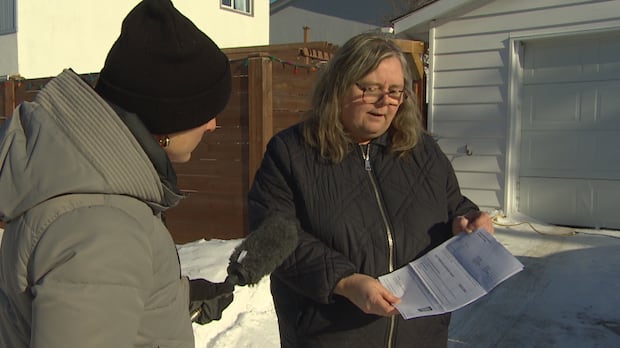
Proposed property assessments for 2027 surprise some Winnipeggers
Many homeowners in Winnipeg got a shock when they opened their proposed property assessments this week. Some home values are set to jump by tens of thousands of dollars, leaving homeowners wondering how their property taxes could be affected.
The city said the “impartial quasi-judicial body” appointed by city council can amend or refuse to change the property value.
The board reviews the city’s assessment and makes its decisions based on the evidence the property owner presents. Regardless of the outcome, there’s a non-refundable filing fee.
Dias argues that the city is proposing a higher market value for his home without listing specific reasons other than general market trends, which means he has to spend hours preparing documents to prove the assessment was wrong.
“I’m not a property assessor, I’m not a home builder. So they’re asking me to step well outside of my skills to provide information on things that they should already know about,” he said.
The city said applications for the Board of Revision can be filed between June 4 and 29 this year.
Dias is worried for those who have not had to deal with this before, those who can’t spend as much time preparing their case or low-income owners with limited financial bandwidth to go through the process.
“If you don’t understand the form, if you don’t understand the process, you automatically accept the default valuation and then you just pay more in taxes,” he said.
Fixing a mistake
Dias is dreading to fight the proposed market value of his home this year. But he has not done any repairs since the last assessment and it is concerned the hike could mean higher property taxes.
“Incomes don’t grow that quickly. We’re living in a really tough economic and political era. So the notion that our property taxes might jump so high it’s just ridiculous. It’s outrageous,” he said.
The change in value of an individual property is compared against the citywide average to calculate what the owner owes in municipal taxes.
If a specific property’s value has increased at a rate lower than the average home’s rate, a tax increase would likely be lower than the city’s general property tax hike.
The city said it won’t know the average increase until early next year, after it factors in the results of its appeal process as well as commercial property assessments.
In the meantime, Antoine Hacault, a lawyer focused on property valuation and regulatory work, said property value increases in cases like Dias are not considered “normal” but can have an explanation.
To calculate the property value of a home the city uses a software that collects data from similar properties that have sold, Hacault said.
However the computer modeling system doesn’t take into account the situation of particular homes, including their renovations or lack thereof, like in Dias’ case.
“So you may get pricing that isn’t consistent … depending on what’s selling in the market,” he said.
The mistake can be addressed through the appeal process, and it mainly depends on whether or not the owner can prove other similar homes — in both size and location — sold for a different price in and around April 1, 2025, the date picked for this year’s property assessment.
“That’s how people are able to convince either the assessor or the board of revision that the number attributed by the mass appraisal software is incorrect,” he said.
“If you don’t have that, you won’t be successful.”