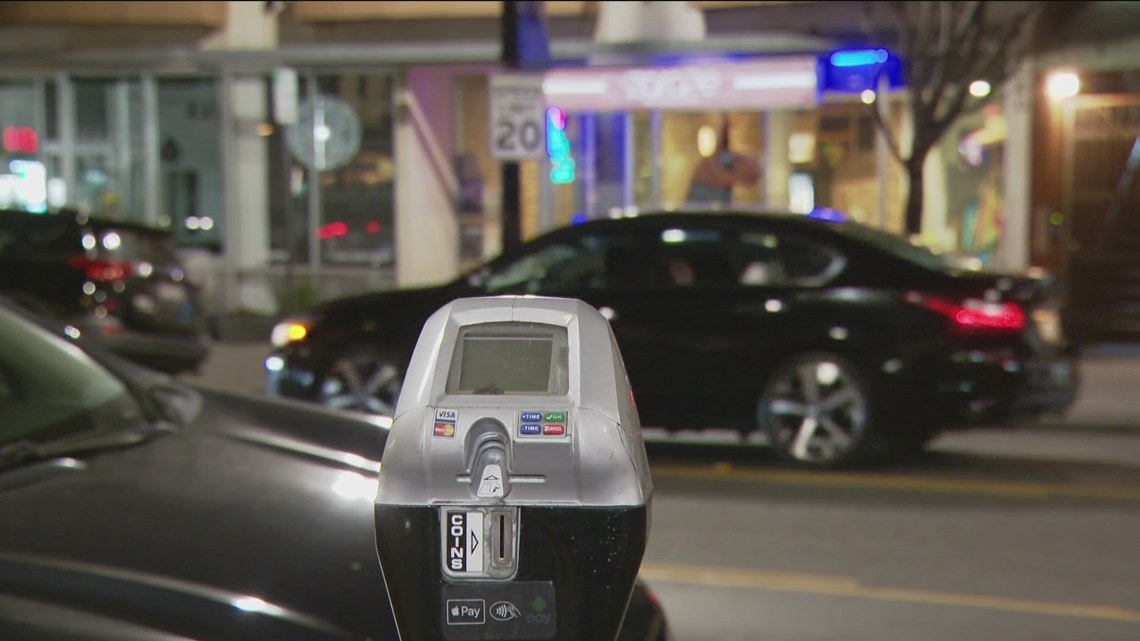
The city is adding meters in Normal Heights, Kensington-Talmadge and City Heights to increase parking turnover, drawing mixed reactions from residents.
SAN DIEGO — Drivers in several Mid-City neighborhoods will soon be navigating new metered, time-limited parking, as the City of San Diego prepares to roll out two and four-hour meters in Normal Heights, Kensington-Talmadge and City Heights.
The goal, city officials said, is to increase turnover and free up spaces along busy corridors where parking has long been a challenge.
A recent city parking study identified ten street segments with consistently high demand and long parking durations. Those findings prompted the move toward metered parking, which the city believes will make it easier for people to find available spaces. The meters will run from 8 a.m. until 8 p.m. Monday through Saturday. There is no set price yet, and the city said installation will begin this month.
The city said metered, timed-limited parking will be installed at:
- ·El Cajon Blvd (29th Street/Kansas Street – 37th Street)
- Adams Avenue (Hamilton Street – 42nd Street)
- Felton Street (~150’ north of Adams Avenue – alley south of Adams Avenue)
- 34th Street (~110’ north of Adams Avenue – Alley south of Adams Avenue
- Hawley Blvd (~100’ north of Adams Avenue – Adams Avenue)
- Park Place (Kensington Drive – Marlborough Drive)
- Terrace Drive (Adams Avenue – Park Place)
- Kensington Drive (Adams Avenue – Park Pl)
- Marlborough Dr (Alley north of Adams Avenue – Park Pl)
- 32nd Street, Bancroft Street, 33rd Street, 35th Street & Wilson Avenue (Alley north of Adams – Alley south of Adams Av)
Reactions from businesses, however, are mixed. David Harding, president of the Adams Avenue Business Association, said members are divided, leading the group to remain neutral.
“We have some members who believe this is just another cost that’s being passed on to consumers,” Harding said. “And others who believe that the parking meters will increase availability, making it easier for people to come down, find spots and use the area’s businesses.”
Harding said support often depends on the type of business.
“Businesses that have appointments that people need to make the appointment, that’s where it’s important that we have parking availability,” he said. “And there are more people who are pro the meters on that side.”
But others feel the meters could create new challenges. At Avalon Tattoo, artist Ryan Van Aken said the time limits don’t match the realities of the job.
“Think for a tattoo artist, you’re doing a tattoo, it’s longer than a two-hour tattoo, so [you’ve] got to stop so that you [can] go feed the meter or move,” Aken said.
Plus, people living on the metered streets could see the worst of it, unless they have their own parking spot.
Although the business association isn’t taking a formal stance, Harding said it will send recommendations to the city, including keeping neighborhood meters lower than downtown areas and focusing on good parking principles.
“Number one being that it’s very important that the city focus on parking turnover and that this not be a revenue generator,” Harding said.
According to the city, meter revenue won’t flow into the general fund. Instead, it must be reinvested directly into the same neighborhood, funding sidewalk repairs, street improvements and other parking-related projects intended to support the communities.