Allegany NY Chief of Police Paul Griffith: We already work with federal officers a lot
By Liv Veazey , NYFocus.com
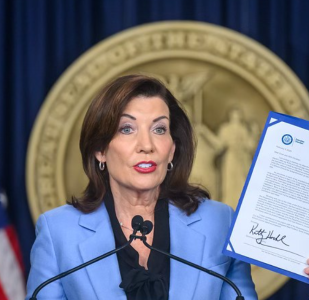
In a surprise move Friday, Governor Kathy Hochul proposed legislation that would ban New York cities and counties from entering into certain contracts with federal immigration authorities.
“They’re doing ICE’s job instead of focusing on their own job,” Hochul said, referring to local police who perform immigration enforcement on behalf of Immigration and Customs Enforcement.
The announcement marked a significant shift in the governor’s stance on protections for immigrants. Last week, she declined to support comprehensive sanctuary legislation, saying that New York’s current patchwork of policies are “working.”
The governor’s proposed Local Cops, Local Crimes Act would ban local governments from renting out jail space to immigration authorities until July 2029, significantly shrinking ICE’s New York detention network.
But Hochul’s proposal would not prohibit the many informal means by which local agencies work with federal immigration authorities, like by sharing intelligence or calling them when they arrest immigrants.

The Village of Allegany, in western New York, signed a 287(g) agreement with ICE earlier this month. New York Focus asked Police Chief Paul Griffith how Hochul’s proposal, which would void the agreement, would change his department’s practices.
“It wouldn’t,” he said. “All the 287(g) is doing is really just getting us reimbursed.”
“We already work with federal officers a lot,” Griffith said. That collaboration, he explained, has included transporting people to ICE’s detention center in Batavia and providing an “outer perimeter” when ICE conducts an arrest at someone’s house.
The village’s 287(g) agreement “is just getting us recouping some money,” he said.
What would Hochul’s proposal change, and how does it differ from other proposed legislation? Here’s what you need to know.
What are New York’s current rules around collaborating with ICE?
New York state limits state and local cooperation with immigration authorities through a piecemeal collection of executive orders, court rulings, and laws.
The most important anti-collaboration policy, an eight-year-old executive order signed by then-Governor Andrew Cuomo, restricts state agencies, including law enforcement, from asking about someone’s immigration status and from sharing information with federal authorities for the purpose of civil immigration enforcement.
That policy doesn’t apply to local governments, which retain broad discretion. A court ruling bars local officials from holding someone solely on behalf of immigration authorities, but most forms of collaboration — like alerting federal agents when someone is being released from jail, or disclosing an individual’s personal information — remain legal unless a locality has passed its own sanctuary policy.
Counties and municipalities can also sign 287(g) contracts, which allow local officers to work on behalf of ICE, and agreements allowing ICE to rent out jail cells. ICE paid New York local law enforcement millions of dollars to use their jail space in 2025.
In Nassau County on Long Island, County Executive Bruce Blakeman has trumpeted his collaboration with ICE. Under the county’s 287(g) and detention contracts, county law enforcement conducted immigration raids and detained some 3,000 people for ICE last year.

Blakeman has launched a campaign to challenge Hochul in this year’s gubernatorial election. The same day Hochul announced the Local Cops, Local Crimes bill, her campaign unveiled an attack ad against Blakeman accusing him of being “all in on ICE.”
For state agencies, Cuomo’s executive order doesn’t fully ban participating in immigration enforcement: They can investigate a person’s immigration status when that person’s status is “relevant” to alleged illegal activity.
It’s not clear how state agencies implement the caveat in practice. In early 2025, shortly after Trump’s second inauguration, Hochul released a list of ways in which state law enforcement could work with federal immigration agents. The categories were broad: Law enforcement could participate in immigration enforcement if an individual had been convicted of a state-level crime or if they were suspected of an immigration crime, rather than a civil violation.
How would Hochul’s proposal change the status quo?
Hochul’s bill would ban localities from entering into 287(g) and detention agreements until July 1, 2029, meaning that ICE wouldn’t be allowed to formally deputize local police or use New York county jails for holding detainees for that period. The provisions on detention are similar to those of the proposed Dignity Not Detention Act, a top priority of immigrant rights advocates.
During her press conference Friday, the governor also touted two immigration bills she had announced earlier this year. One would allow New Yorkers to sue federal agents for violating their constitutional rights. The other would enshrine “sensitive locations,” including schools, houses of worship, hospitals, and homes, as places federal immigration enforcement cannot enter to perform an arrest without a judicial warrant.
The governor has also proposed adding a stipulation to public safety grants from the state that would prohibit counties and cities from using grant money for civil immigration enforcement. Localities could still use their own resources to cooperate with ICE.