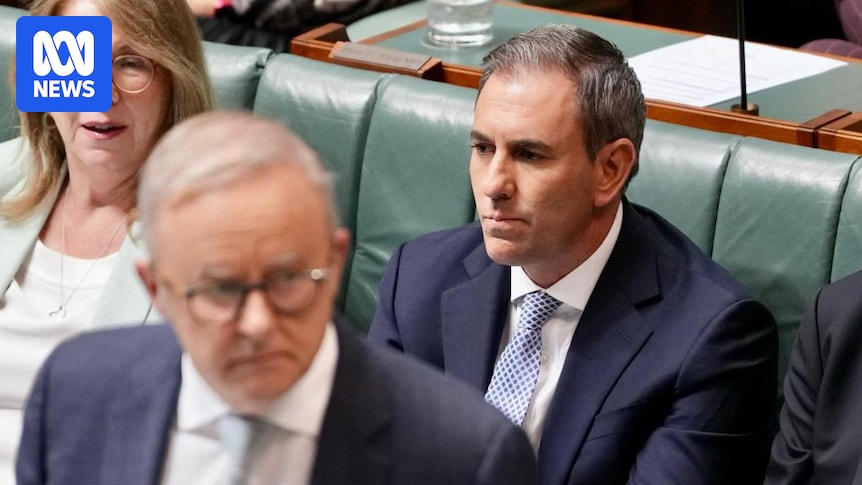
Jim Chalmers doesn’t think it’s fair to blame him for today’s rate hike. But life isn’t fair.
Treasurers are defined just as much by their luck as by their decisions. They ride that luck when it suits them, basking in good news. But they also have to wear the bad news.
For voters, whether the recent inflation pressure is the federal government’s fault is beside the point. It’s what the government does next that matters. Like parents whose kids are fighting, they don’t care who started it. They want it finished.
So Chalmers’ choice to focus on absolving himself in Question Time — even boasting that the Reserve Bank’s statement didn’t mention him — is not going to fly, especially if one hike is followed by another.
The treasurer has a point when he says that the private sector, not the public sector, is the main source of heat in the economy at the moment. RBA Governor Michele Bullock made a similar point, even as she dodged questions about government spending.
But she also made the pointed observation that it doesn’t matter much which sector caused the inflation. Her focus is keeping a lid on it, and the public will expect the treasurer to roll up his sleeves and help.
Whose trendline is it anyway?
Like the rest of us, Chalmers can be forgiven for a little whiplash. Just six months ago, in August, the RBA cut rates for the third time. If anything, inflation was falling surprisingly fast, and some within government were impatient for even more cuts.
What changed in the intervening period was that households started spending at a rate that took the RBA by surprise. By November, Bullock was sounding pessimistic and by December she was openly canvassing the prospect of rate hikes.
Where do you spend your money? Tell us
If you split the economy into public sector and private sector, households are on the private side of the ledger.
Which helps to explain why private sector spending is growing faster than public spending. A year ago, the opposite was true. But Chalmers says the reversal shows this recent inflation pressure is not his fault.
But of course, the government can influence household budgets and has in fact been making a concerted effort to do exactly that by handing out cost-of-living relief.
The government argued that relief was needed to help households struggling to cope with higher prices. And maybe it was. At a minimum, it was probably politically necessary given how angry voters were about their cost of living.
But any dollar put into the pocket of households is extra money they can spend. And this is plainly a hindrance, not a help, for the Reserve Bank when it is trying to bust inflation by curbing spending.
The cost of the cost of living
That doesn’t mean cost-of-living spending can’t be justified. As both Chalmers and Bullock often say, the government’s fiscal policy and the bank’s monetary policy have similar but not identical objectives when confronted with inflation.
It is the RBA’s job to use the interest rate — the one, blunt instrument it has — to ratchet down economic activity when it bubbles to unsustainable levels, recognising the profoundly destabilising effect that runaway inflation can have on any society.
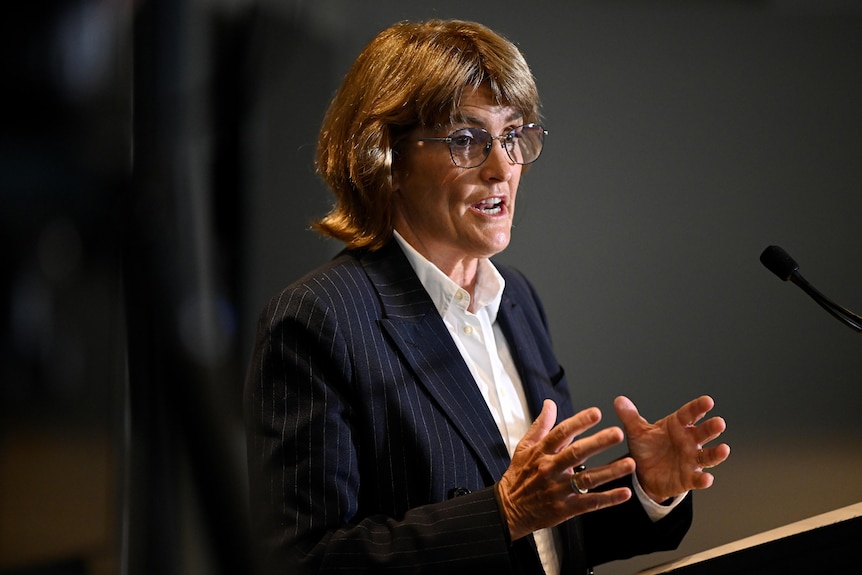
Michele Bullock avoided comment on whether government spending was contributing to elevated inflation. (AAP Image/Bianca De Marchi)
It is the government’s job to walk and chew gum — to help those it believes are unable to cope with inflation, but to remain mindful of how much it is spending overall, given that its enormous budget can easily fuel inflation if it does not show restraint.
Ever since his first budget, Chalmers has been criticised by the opposition and much of the economic commentariat, who have accused him of getting that balance wrong.
They do not necessarily think there should have been no cost-of-living relief, but have disapproved of Labor’s tendency to default to universal spending — such as energy bill relief for every household, which ended last month — or to subsidise the well off, such as with an EV tax discount.
This has always bridled with Chalmers, who has never missed an opportunity to stick it to those critics when falling inflation has seemed to vindicate his approach.
And for as long as inflation was gliding smoothly towards the RBA’s goal of 2.5 per cent, he could reasonably feel happy with the balance he had struck.
But now that inflation has stalled just above 3 per cent and rates have been hiked again, it is just as legitimate for the pendulum to swing the other way and for the government to take a fresh look at whether it needs to be doing more to fight inflation.
That is not the same thing as apportioning blame to the government. It is a simple reflection of the reality that, when the federal budget spends hundreds of billions of dollars every year, there will always be options available to make a difference.
As political chaos unfolds on the opposition benches, Chalmers has made a habit of remarking that he and his Labor colleagues are the “adults” by comparison.
An adult response might be to care less about the barbs of columnists and economists, and to rise above the Bart Simpson defence — “I didn’t do it”.