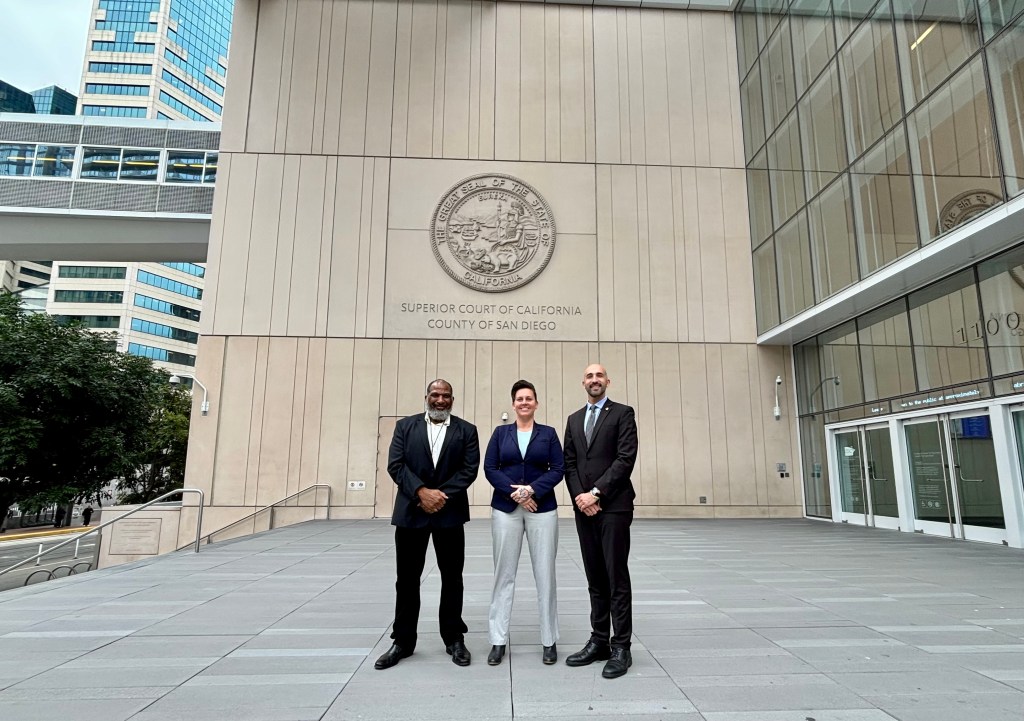
It can be rare in advocacy to know the exact impact you have on people, but sometimes you get to see it firsthand. That was the case when I attended a sentencing hearing for four individuals who pleaded guilty to a string of pellet gun shootings in September 2024. Police described the incident as hate-related, as the defendants targeted people outside popular LGBTQ+ businesses in Hillcrest. That incident was followed by several similar shootings over the last two years, part of an alarming increase in hate crimes nationally and locally.
The defendants, who were all 19 years old at the time, were initially charged with felony assault. As part of a plea agreement for a reduced sentence, they agreed to participate in a gun violence prevention program and engage in LGBTQ+ community education. This restorative justice approach focused on accountability, healing and connection, rather than punishment alone.
Since 2021, the “No Shots Fired” gun violence prevention program has paired participants with mentors for weekly sessions rooted in cognitive behavioral therapy. Through interactive journaling, support groups and guided reflection, participants examine the thoughts and experiences that contribute to criminal behavior. The young men were paired with mentors Alvin Hayes, James Bowser and Bishop Bowser. Restorative justice practitioner Amanda Brown was brought in to lead the LGBTQ+ community education component.
The challenge was that no formal LGBTQ+ education program yet existed. After meeting Amanda and sharing that I served on San Diego Pride’s board of directors, she asked if we could build one together. I was hesitant but agreed to meet with the young men.
I came in with an open mind, and after our first meeting, I saw that the social, personal and emotional learning embedded in No Shots Fired provided a strong foundation for the healing we were hoping to support. As I walked back to my car, one of the young men commented, “Hey, man, I really like your nail polish color.” That was the affirmation I was seeking.
Drawing on my experience providing LGBTQ+ cultural competency training, Amanda and I co-developed a curriculum focused on deepening understanding of the LGBTQ+ community and examining the real-world impact of the incident. Once a month for six months, participants reviewed materials from LGBTQ+ advocacy organizations and watched documentaries such as KPBS’s “San Diego’s Gay Bar History.” Topics included terminology, hate crimes, intersectionality, and the importance of LGBTQ+ spaces and celebrations like Pride.
The young men approached each session with openness. Conversations were respectful and nonjudgmental, and they often connected the material to their own experiences as members of the Latino community. A recurring theme was the shared impact of being judged or treated differently because of one’s culture or identity.
The program reinforced the goals of restorative justice by fostering accountability, empathy and meaningful learning. It created space for participants to confront assumptions, recognize the harm they caused and consider their role in building a safer, more inclusive San Diego.
When they had their day in court, one of the victims attended in person and offered a passionate testimony. Though he had been traumatized, he said he wanted something positive to come from the experience: “I hope these programs helped you understand the seriousness and impact of your actions, not just on my life but on many others in our marginalized community.”
Through their participation and letters to the court, the young men demonstrated remorse, growth and a desire to do better. Their charges were reduced to misdemeanors with one year of probation. The hearing ended with a powerful proclamation from the judge: “Every person makes mistakes. Every person in this room has made mistakes, but it is what we do with those mistakes in the future that define who we are.”
While I don’t know what the future holds for these young men, I do know that when accountability is paired with education and connection, we can break cycles of harm. Healing is possible, and when we create space for growth, we create the opportunity to earn a second shot at a brighter future.
Renner is the communications director for PATH, a statewide homeless services provider, and a board member of San Diego Pride. He lives in University Heights.