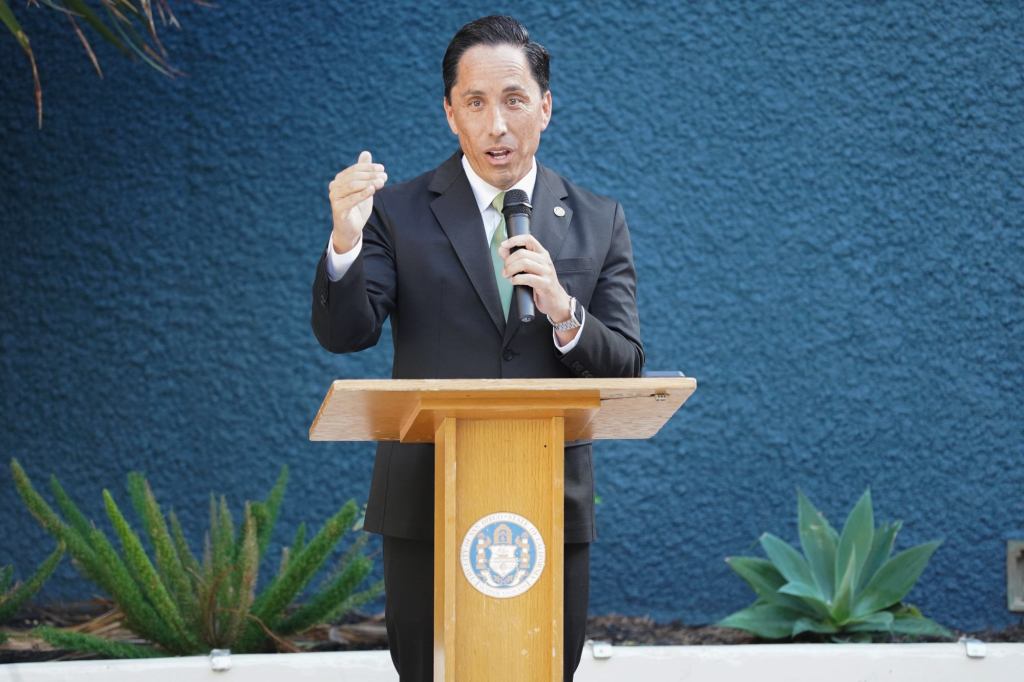
As the Great Recession took hold in 2008, the city of San Diego’s finances took a sharp turn for the worse. Plunging revenue forced Republican Mayor Jerry Sanders and the six Democratic and two GOP members on the City Council to figure out how to cover a $60 million shortfall in the 2009-10 budget. Their goal was to limit reductions in services and avoid being forced to lay off at least 400 city workers. In April 2009, a unanimous council — including first-year member Todd Gloria — embraced Sanders’ plan to impose a 6% cut in pay and benefits for city workers, cutting the shortfall in half.
Sanders and the 444 nonunion members under his purview also took a 6% cut in compensation. “I think what we’re saying is, ‘We’re going to suffer the same way you are,’” he said.
The contrast between 2009 and what’s happened over the past 16 months — as the city deals with its biggest budget headaches since Sanders was mayor — is striking. Instead of looking to broadly reduce compensation costs as a central part of efforts to cover red ink, Mayor Gloria, City Council President Joe LaCava and increasingly radical Councilmember Sean Elo-Rivera led the push to squeeze constituents.
The lowlights: using a 2022 ballot measure built on deception to impose new trash collection fees on more than 220,000 single-family homes; imposing first-ever parking fees at heavily used Balboa Park; doubling fees at all 5,332 existing city parking meters; and seeking to impose huge new taxes on homeowners who aren’t using their homes at least 183 days a year.
Residents aren’t the only target. There was also the City Council’s jaw-dropping decision in November to raise the annual fees for the two subsidized valet parking spots every hotel gets by 789% — from $634 to $5,000.
There is an exception to this pattern. On Wednesday, the mayor presented the latest version of his plan to close the $146 million deficit, with more than half covered by the savings from about 130 layoffs. But even as layoffs were proposed, a Monday report indicated the city was moving steadily toward a deal with more than 5,000 unionized white-collar workers that would give them three-year cumulative 10% pay raises, with some costs offset by mandatory one-week unpaid furloughs in the first two years. This is seen as a blueprint for other ongoing city labor negotiations.
If anything confirms the narrative that City Hall cares more about pleasing employee unions than the city’s 1.4 million residents, it is awarding a 10% raise to about 12,000 workers despite warnings that budget shortfalls are likely for years to come.
But unionized workers aren’t the only ones Gloria protects. He has dismissed criticism of the 461% increase in heavily paid middle managers in city government since 2011 — going from 70 to 393. San Diegans should look at this in the same way that a shareholder in a small company would evaluate that company when the number of midlevel bosses went from seven to 39 — even as the company’s overall workload remained about the same. That would only make sense if its performance had dramatically improved.
The city shows no such improvement. Pickleball players enthused over new courts are likely to be the only residents — outside of municipal employees — who think San Diego is even slightly better run now than in 2011. The rest of us feel like witnesses to the real-time decline of a major American city.