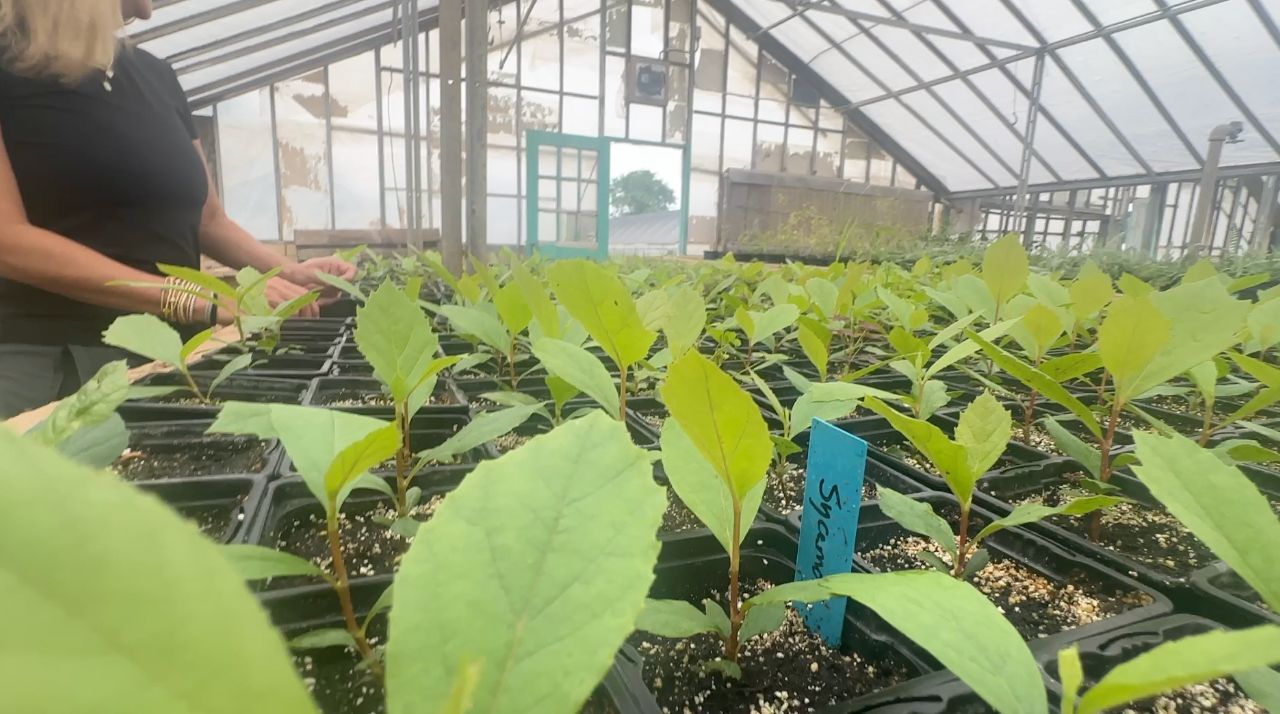
TEXAS — Erin and Brian Wofford own and operate the Mosty Brothers Nursery. Started by Erin’s great- great-grandfather in 1897, it’s the oldest in the state.
The 80-acre nursery sits in Center Point along the Guadalupe River, which made the Wofford’s decision to grow trees to replace those lost in last year’s floods an easy one.
“To be a part of this is really special to us because we live in the area,” Erin Wofford said.
“We had cypress trees that you couldn’t get your arms around them, and there isn’t anything there now,” Bryan Wofford added. “We love being a part of it. I mean, it’s going to take a long time, and you have to start somewhere.”
That somewhere was at the San Antonio Botanical Garden, which created the Texas Recovery for Ecological and Environmental Stability Initiative (TREES). The initiative’s five years, $5 million project aims to restore 50,000 native trees along the Guadalupe River in Kerr County following 2025 flood damage.
“We have at least 12 nurseries across the region that are growing these for us,” said Andrew Labay, San Antonio Botanical Garden’s chief mission officer.
The nurseries are growing cypress, sycamore, black walnut, and more varieties of trees from seeds. All the trees are native to the Texas Hill Country, which is an important factor.
“It’s not just pulling trees off the nursery market and going into these areas. It’s really keeping the genetics local,” Labay said. “You can’t just bring in a tree from East Texas or Louisiana like a bald cypress. Keeping the genetics local is truly the best way to have success on a project like this.”
“We’re shaking seed out, we were doing everything, we had tarps on the ground just collecting, and we collected hundreds of thousands of seeds,” said Doug Elkins, San Antonio Botanical Garden’s conservation manager.
Bryan Wofford said the team is borrowing a method from the Texas Parks and Wildlife Department when it comes to protecting their tiny trees from grazing animals.
“They’re going to cover them with cedar, debris, and basically give them a protective barrier for them to grow up through,” Bryan Wofford said. “That way, if a flood comes through, they can just put it back. They’ve had a lot of success with that before.”
It’s that commitment to the community that hasn’t gone unnoticed by locals, who realize there are people who lost a lot more than trees but truly appreciate the effort to restore a sense of normalcy.
But it will take time before these tiny trees grow as big as the ones lost last July.
“Maybe for our great-grandkids, our great- great-grandkids. Maybe for them,” Erin Wofford said.