
The seven-strong ultra-Orthodox United Torah Judaism (UTJ) party said Tuesday that it would seek to dissolve the Knesset and trigger early elections, because of the coalition’s failure to pass a law enshrining the decades-old exemption of Haredi yeshiva students from military service.
Multiple opposition MKs promptly submitted bills for the dissolution of parliament, with the Yesh Atid party seeking to begin the process on Wednesday. Nonetheless, it was not immediately clear when and whether such a vote would be held, whether it would pass, and, if so, when elections might be held. In any case, general elections must be held no later than October 27, 2026.
Legislation to dissolve parliament would require four plenum votes — a preliminary vote, and three further readings — supported by a simple majority of 61 MKs in the 120-member Knesset. If the process were expedited, elections could be held as early as August. The Haredi parties are believed to favor September 15, while Netanyahu reportedly wants to avoid elections too close to the anniversary of the Hamas-led October 7, 2023, invasion and massacre in southern Israel.
Buzz over the potential for early elections came after Rabbi Dov Lando, the senior spiritual leader of UTJ’s four-MK Degel HaTorah faction, called on Tuesday for quickly dissolving the Knesset and bringing forward this year’s election over the coalition’s failure to pass the legislation, following a meeting with the faction’s lawmakers at his Bnei Brak home.
“We no longer have any trust in [Prime Minister Benjamin] Netanyahu,” Lando said in a statement. “From this point forward, we will do only what is best for Haredi Judaism and the yeshiva world. We must act to dissolve the Knesset as soon as possible. The concept of a [right-wing] bloc [including the Haredim] no longer exists as far as we are concerned.”
Get The Times of Israel’s Daily Edition
by email and never miss our top stories
By signing up, you agree to the terms
After Lando’s announcement, UTJ’s second faction, the three-MK Agudat Yisrael, indicated that it would support the dissolution of the Knesset should it come to a vote. “We’ve been waiting a long time to disperse,” an Agudat Yisrael source told The Times of Israel.
UTJ, a core member when Netanyahu assembled his coalition after the 2022 elections, formally pulled out of the government and the coalition last year in the protracted dispute over the legislation. To pass, however, a vote to dissolve the Knesset would need to be backed not only by all other opposition parties, but also by the fellow ultra-Orthodox party Shas, which has 11 MKs, and which did not immediately make its position clear.
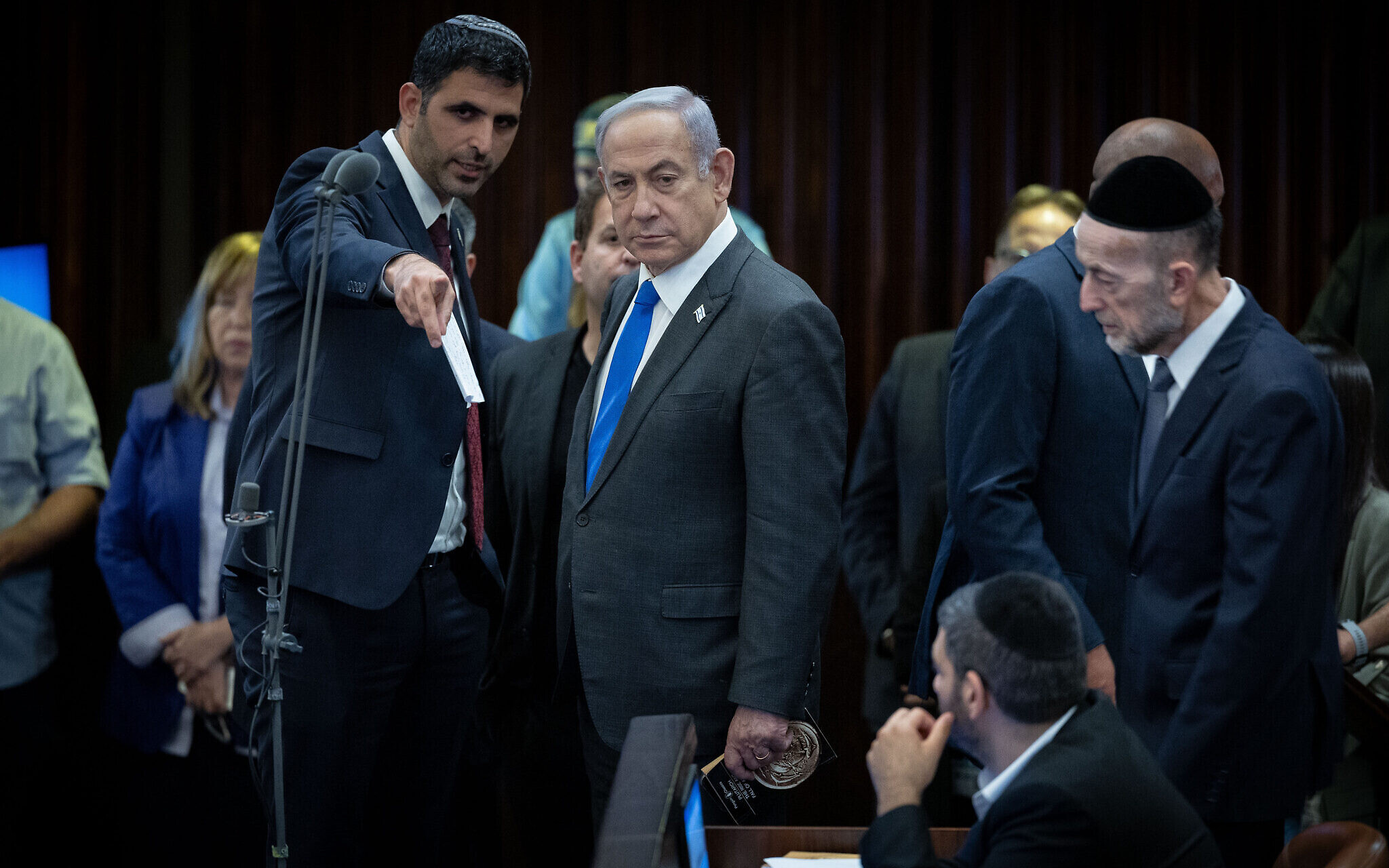
Prime Minister Benjamin Netanyahu at a Knesset plenum vote on reviving an ultra-Orthodox military enlistment bill, early June 11, 2024. (Yonatan Sindel/Flash90)
The decision by the UTJ factions was made after Netanyahu told Haredi MKs last week that the coalition currently doesn’t have the votes to pass the draft-exemption legislation, and reportedly asked them to agree to shelve the bill until after the elections. Since the beginning of the government’s tenure in December 2022, Netanyahu had repeatedly assured his Haredi partners that the legislation would be passed.
Channel 13 news quoted Lando as having also called Netanyahu a “liar” during Tuesday’s meeting with Degel HaTorah representatives. “We’ve had to suck it up time after time for the bloc [with Netanyahu], but they don’t understand. No more words from Netanyahu, only actions. Even if Netanyahu comes to me now and tells me one plus one equals two, I won’t believe him anymore. He is a conman.”
The Kan public broadcaster quoted an unnamed source in the Haredi parties as saying: “Netanyahu has been duping us for two years. You can’t keep trusting someone who fools you time after time.”
The draft exemption bill is unpopular among the premier’s own voters, especially given the demands on the IDF’s standing army and its reservists since the eruption of a multi-front conflict after Hamas-led terrorists invaded southern Israel on October 7, 2023, massacring 1,200 people. The IDF’s Chief of Staff Eyal Zamir has repeatedly warned that the IDF faces “collapse” if more manpower is not recruited. Some 80,000 young ultra-Orthodox men are currently eligible for service but have not been drafted.
The Haredi parties are widely reported to favor advancing elections to September 15, two days after Rosh Hashanah, assessing that the presence of students at yeshivas at the start of the school year, as well as potential voters attending Selichot rituals, will allow them to effectively canvas for votes and maximize their support.
For his part, Netanyahu is believed to want to avoid an election date close to the anniversary of the October 7 Hamas invasion and slaughter. Some reports Tuesday claimed he wants to hold the vote on October 20 or 27, which would be as late as possible, in order to maximize his prospects for achieving more definitive success in the conflicts with Iran, Hezbollah and Hamas.
Nonetheless, a strong showing by the Haredi polls in an election held in September might ultimately benefit Netanyahu since, for all their threats, UTJ and Shas have long been allied with Netanyahu and would not easily find support among the anti-Netanyahu parties for their demands for ongoing draft evasion. As things stand, Netanyahu could claim during the election campaign to have prevented the draft-evasion bill, but rebuild a coalition with the ultra-Orthodox if returned to power.
Shas’s official position is unclear
While the other ultra-Orthodox party, Shas, also resigned its government roles last year, it has continued to support the coalition in the Knesset, thus far staving off early elections. On Monday, the Israel Hayom daily reported that Shas chairman Aryeh Deri opposes passing the military exemption bill before the elections, and had asked Netanyahu to delay it, although Deri denied this report.

Shas chairman Aryeh Deri attends a vote on the 2026 state budget in the Knesset, March 29, 2026. (Yonatan Sindel/Flash90)
A spokesman for Shas did not respond to an inquiry sent by The Times of Israel on Tuesday morning. An unconfirmed Channel 12 report on Tuesday evening said Shas would support dissolving the Knesset.
Still, a spokesman for Lando insisted that “contrary to various reports, there is complete and absolute consensus and cooperation between Degel HaTorah and Shas regarding the course of action concerning the status of yeshiva students.”
In a separate statement, Degel HaTorah chairman Moshe Gafni cited Lando’s statement as a binding instruction that would guide the faction’s actions going forward.
Opposition seeks to fast-track dissolution
Following Lando’s decision, opposition party Yesh Atid said it had petitioned Knesset Speaker Amir Ohana to convene a special Knesset presidium meeting later Tuesday to fast-track a bill to vote on dissolving the Knesset on Wednesday.
In a letter to Ohana, MK Merav Ben-Ari wrote that “due to the change in circumstances and the support of Degel HaTorah members for dissolving the Knesset, I request that a Knesset presidium meeting be held by telephone already today to advance the bill to dissolve the 25th Knesset tomorrow in the plenum.”
Multiple opposition lawmakers also submitted bills earlier on Tuesday to dissolve the Knesset, including from Yair Golan’s Democrats party, Avigdor Liberman’s Yisrael Beytenu and Mansour Abbas’s Islamist party Ra’am.
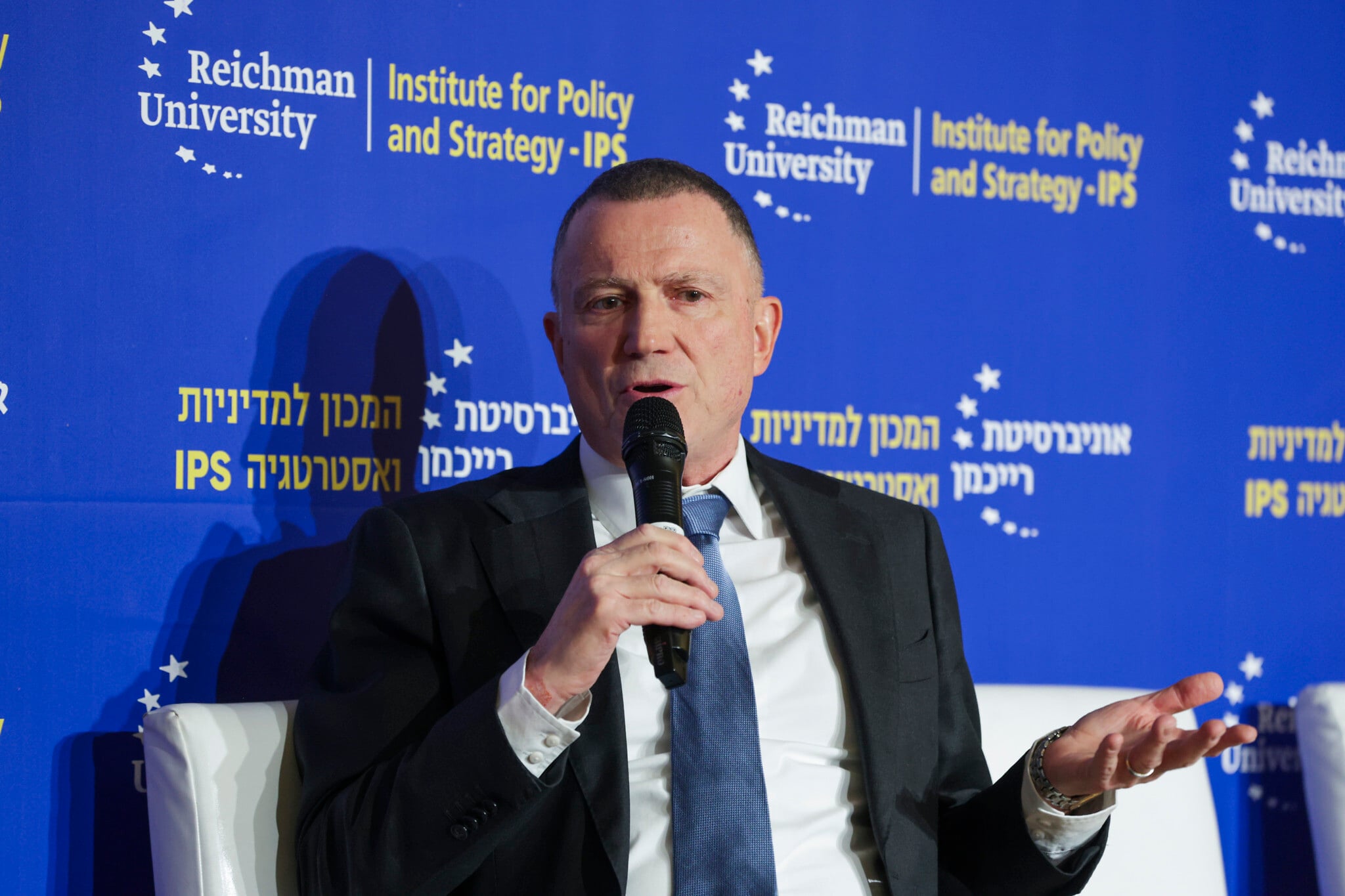
MK Yuli Edelstein speaks during a conference at Reichman University in Herzliya, on January 13, 2026. (Tal Gal/Flash90)
MK Yuli Edelstein, the ousted former chair of the Knesset Foreign Affairs and Defense Committee, responded to Degel HaTorah’s announcement with a pointed “I told you so” on X, apparently aimed at his own Likud party.
“To my great regret, I am forced to say today [that] I told you so,” wrote Edelstein, who was removed as committee chair last August over his push to pass legislation to conscript Haredi men into the IDF and refusal to agree with Haredi demands regarding its content. Edelstein recalled on Tuesday that, at the time, he warned that replacing him would “change nothing” and “would only bury the conscription law once and for all.”
“And that is exactly what happened,” Edelstein wrote.
“Since the outbreak of the war, I have fought for a real conscription law, but the Haredi leadership never wanted enlistment, even at the cost of toppling the right-wing government,” he continued. “Today, the Israeli public understands who spoke the truth and who played politics on the backs of the reservists and the serving public. I am proud that I prevented an evasion law, and I will continue to fight for a real and fair conscription law in the State of Israel.”
Edelstein was ousted from his post amid growing pressure on Netanyahu from within Likud after Shas and UTJ bolted the government, blaming the lawmaker for his attempts to advance a version of the conscription bill that would guarantee significant draft quotas and sanctions for evaders.
His successor, Likud MK Boaz Bismuth, instead introduced a bill that would have provided a blanket exemption from service to almost all yeshiva students. The draft legislation was panned by critics as ineffective and full of loopholes, and was opposed by some coalition lawmakers.
Meanwhile, several coalition MKs, led by Bismuth, on Tuesday urged their ultra-Orthodox allies not to bring down the government.
“Don’t dismantle the bloc! I worked side by side with the Haredim. I see them as partners on the path,” Bismuth said in a post on X, urging them “not to throw the baby out with the bathwater” and “not to give a gift” to the opposition or to Attorney General Gali Baharav-Miara, who has repeatedly said the government is violating the law in not drafting the Haredim.

MK Boaz Bismuth leads a Foreign Affairs and Defense Committee meeting at the Knesset in Jerusalem, February 24, 2026. (Yonatan Sindel/Flash90)
“The law is ready and can already be advanced tomorrow,” Bismuth said.
“We have one leader steering the ship. The authority, decision-making power, and final word belong solely to Prime Minister Netanyahu,” Bismuth added.
National Security Minister Itamar Ben Gvir’s far-right coalition party Otzma Yehudit said in a statement that while his party “is strong,” going to early elections would be a mistake. “We call on the parties of the national camp to act responsibly and not bring down the government. This government still has several tasks left to complete,” the party said in a statement.
Last year, ultra-Orthodox parties backed away from their threats for a bill to dissolve the Knesset after marathon talks netted an agreement with Edelstein. The agreement called for a softened version of a bill regulating mandatory enlistment requirements within the ultra-Orthodox community and punishing draft dodgers.
But after the version was not advanced, UTJ quit the government in protest.
The coalition’s current, stalled draft exemption bill — which would ostensibly increase military conscription in the Haredi community, but ultimately enshrines continued exemptions for full-time yeshiva students — is widely seen as legally iffy and loophole-laden and has generated intense resistance even among members of Netanyahu’s coalition.
Ultra-Orthodox parties have long demanded a law to formalize exemptions from military service for members of their community, an effort which was kicked into overdrive after the High Court in June 2024 ruled that there was no legal basis for the Haredi yeshiva students’ decades-long blanket exemption from the draft and that eligible males from the community must be drafted.
Some 80,000 ultra-Orthodox men aged between 18 and 24 are currently believed to be eligible for military service, but have not enlisted. The IDF has said it urgently needs 12,000 recruits — mostly combat troops — due to the strain on standing and reserve forces caused by the multi-front war of recent years.