
Violence in the West Bank has escalated sharply in recent months. But even by those standards, last Friday’s deadly incident on the outskirts of the northern West Bank village of Tell seemed to mark something new and harrowing.
The clash began when an ideologically motivated settler group entered Tell, located in Areas A and B of the West Bank, and was confronted by local residents. The ensuing melee between radical settlers, later joined by Israeli troops, and Palestinian villagers resulted in six deaths: two Israelis and four Palestinians.
Much of what occurred remains in dispute, but all sides agree that whatever happened did not start that sweltering morning. How it ends, many fear, may be even more cataclysmic.
For years, Palestinians subjected to regular settler harassment, theft and violence, on top of what are often already dire living conditions, have been warning of an “explosion.” To some, Friday’s deadly firefight, which came the day after a settler from an adjacent outpost was stabbed and his assailant killed, appeared to be the opening salvo of the foretold conflagration.
With Palestinians seemingly increasingly organizing to resist settler violence, the Tell incident, though apparently unrelated, has renewed Israeli concerns over the emergence of grassroots village watch groups in the West Bank that could violently resist settlers who are increasingly entering Palestinian communities.
Get The Times of Israel’s Daily Edition
by email and never miss our top stories
By signing up, you agree to the terms
In the wake of the shooting, Palestinian officials called for more such groups to organize and prepare for possible confrontations. And while they are unarmed, there are worries among Israeli officials that that could change.
Radical settlers, meanwhile, seem to be raring for a fight, and Israeli authorities have shown little willingness to constrain them. The catastrophic disturbance in Tell set off a series of mass reprisals by settler extremists against Palestinian villages across the West Bank over Friday, Saturday and into this week.
And the army is liable to keep putting pressure on the Palestinians, treating both retaliatory attacks on Israelis and self-defense as terrorism.
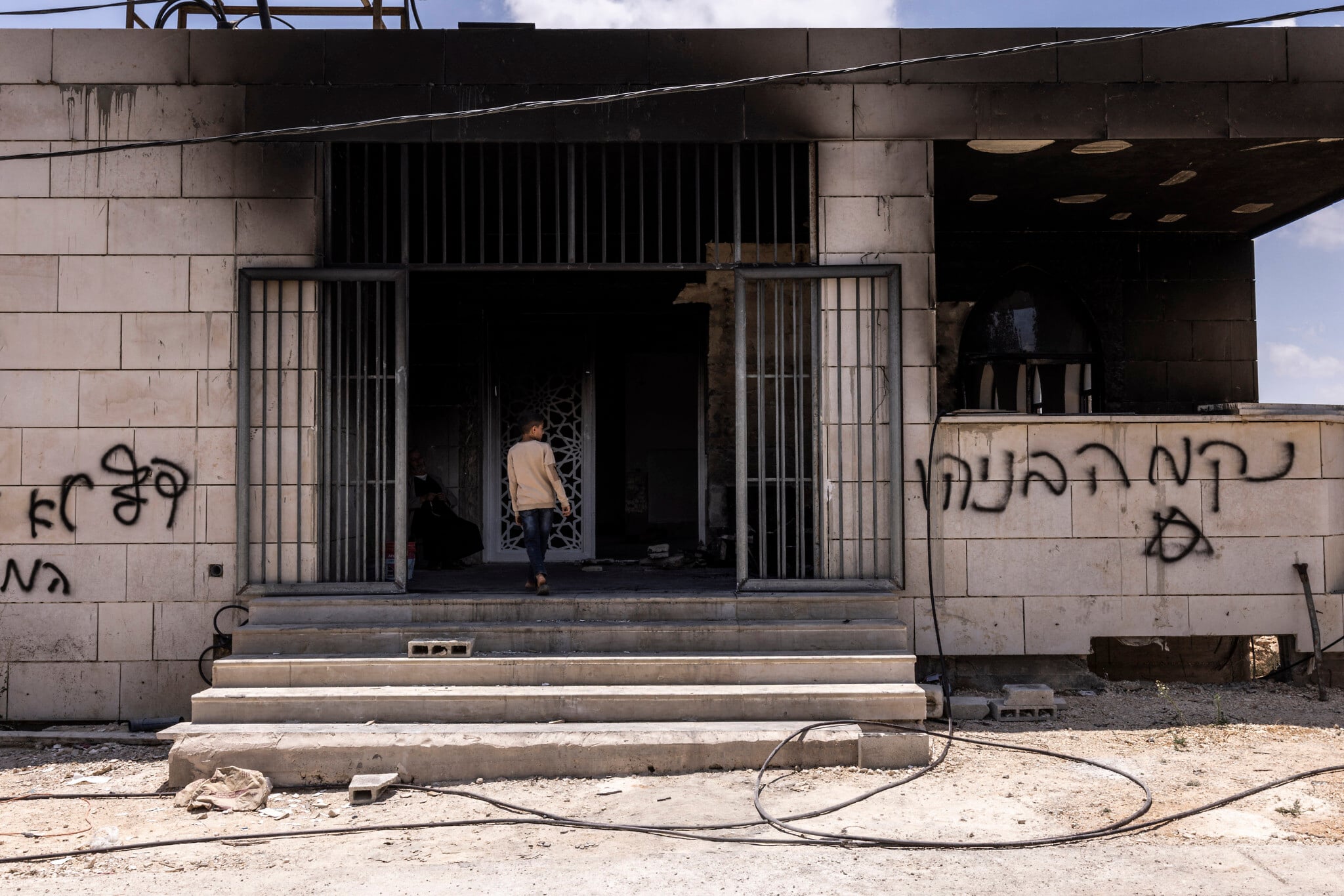
A young Palestinian boy walks past walls daubed with Hebrew graffiti reading “Revenge for Benayahu” as he enters a mosque allegedly burned by Israeli settlers in the village of Qusra, south of Nablus in the Israeli-West Bank on July 26, 2026. The graffiti refers to Israeli reservist Benayahu Mellet, who was killed in a shooting near the nearby Palestinian village of Tell two days earlier. (JOHN WESSELS/AFP)
In the wake of the Tell clash, the IDF conducted raids in several villages, detained dozens of Palestinians and imposed severe restrictions on Palestinian freedom of movement in the region, keeping residents of local villages shut inside their dwellings and, according to human rights groups, unable to access basic goods and services.
While some West Bank observers note that what happened at Tell was simply the continuation of trends already at play and question whether it will be the spark that sets off the West Bank powderkeg, others fear that it may be a harbinger of even greater unrest and destabilization.
“Friday wasn’t a point of change, after all, it could have ended without deaths,” said Yonatan Kanonich, head of research at the Yesh Din organization, which monitors settler violence.
“But the last few days have been catastrophic,” he added, pointing to the settler reprisal attacks and IDF clampdown. “Those paying the price of settler attacks are always the Palestinians through the IDF’s response.”
Unsettling
Although the death toll in Tell was exceptional, the incursion of settler activists into a Palestinian town was anything but. Though it was once relatively rare for settlers to stage raids on Palestinian towns off limits to Israelis, over the last three years, extremists have made it a regular habit to roll into Palestinian villages and cities, actively seeking confrontation and attempting to send a message of being in charge.

Israeli settler activists and Palestinian residents of the village of Tell confront each other in a deadly incident that resulted in the death of two Israelis and four Palestinians, July 24, 2026. (Screenshots)
“The change over a period of time is that the point of contact between Israelis and Palestinians is now inside the villages,” Kanonich said.
According to the researcher, extremist settler attacks against Palestinians used to take place in Area C, where Israel has full security and civilian control, but in the last two years, attacks have been increasingly staged in Areas A and B, where the majority of Palestinians live. Under the Oslo Accords, the Palestinian Authority is supposed to have security and civilian control over Area A and civilian control over Area B.
“Now it is almost always in Area B and A, and this is leading to a worsening situation,” Kanonich said, while noting that such attacks had been going on for years, and not just the past few months.
A compilation of videos and photographs from an extremist settler attack on the West Bank village of A-Tuwani on July 19, 2026, made by the “Our People News” WhatsApp channel, in which radical settler activists post incidents of extremist settler violence against Palestinians. (Courtesy Our People News WhatsApp channel)
A WhatsApp channel run by settler extremists that proudly documents and lists every incursion into Palestinian towns and villages has counted attacks on 32 different towns between June 15 and July 14, 2026, with some locations hit multiple times.
From May 15 to June 14, 47 different Palestinian population centers were attacked, according to the group.
The incidents included physical assaults that left 80 Palestinians injured, arson attacks on dozens of vehicles, homes and other structures, including four mosques. The attackers often also vandalize structures with graffiti, including Stars of David, nationalist slogans and threatening messages.
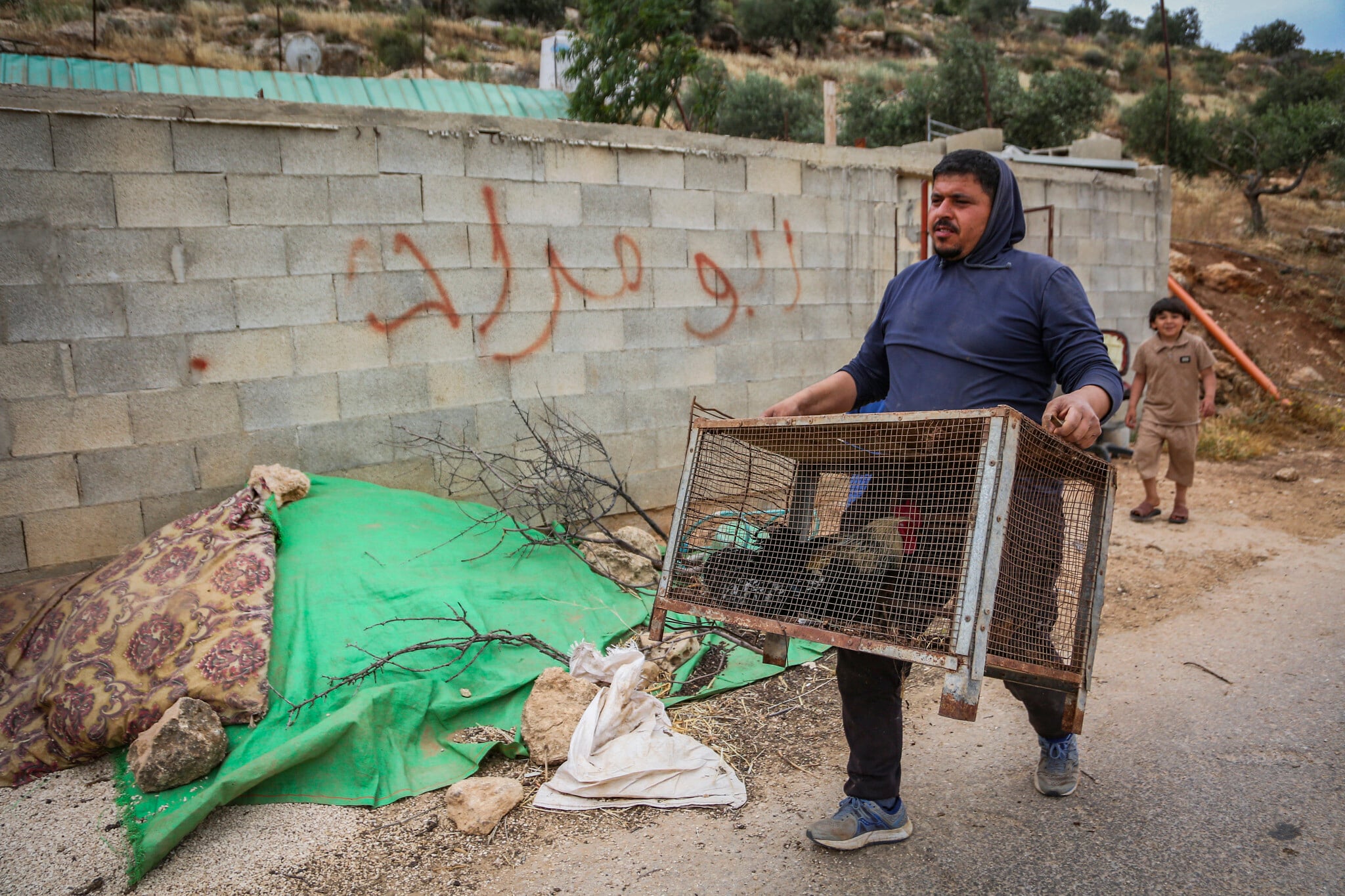
A Palestinian family leaves their farm after being forced to leave by a group of extremist Jewish settlers in the Tana area near Beit Furik, east of Nablus in the West Bank, May 15, 2026. (Nasser Ishtayeh/Flash90)
Rabbi Arik Ascherman, a longtime advocate for Palestinian civil rights, said that the Palestinian towns and villages in the central West Bank where his Torat Tzedek organization is active have experienced harassment and violence as a matter of routine in recent weeks and months.
He warned, though, that he expects “a constant incremental growth in violence if no steps are taken to stop it.”
Not armed, yet
In response to the violence, there are signs that Palestinians are organizing themselves to fend off attacks.
In recent weeks, the Israeli army has identified increasing activity by watch groups made up of village volunteers who patrol their communities and warn residents of approaching settlers.
In towns with patrols, volunteers gather nightly, using flashlights to scan the area for settlers. When someone spots a group of settlers, they alert others by phone, mobilizing additional residents to the area to confront and push the settlers back.
On one night earlier this month, volunteer watchmen in Sinjil saw a group of masked settlers descending from the hillside toward the town, which is outside Ramallah. When others from Sinjil joined to protect the area, some set the brush by the roadside ablaze, in an effort to block the settlers’ advance.
Settlers threw stones and used slingshots to launch objects at Palestinian residents, who responded in kind.
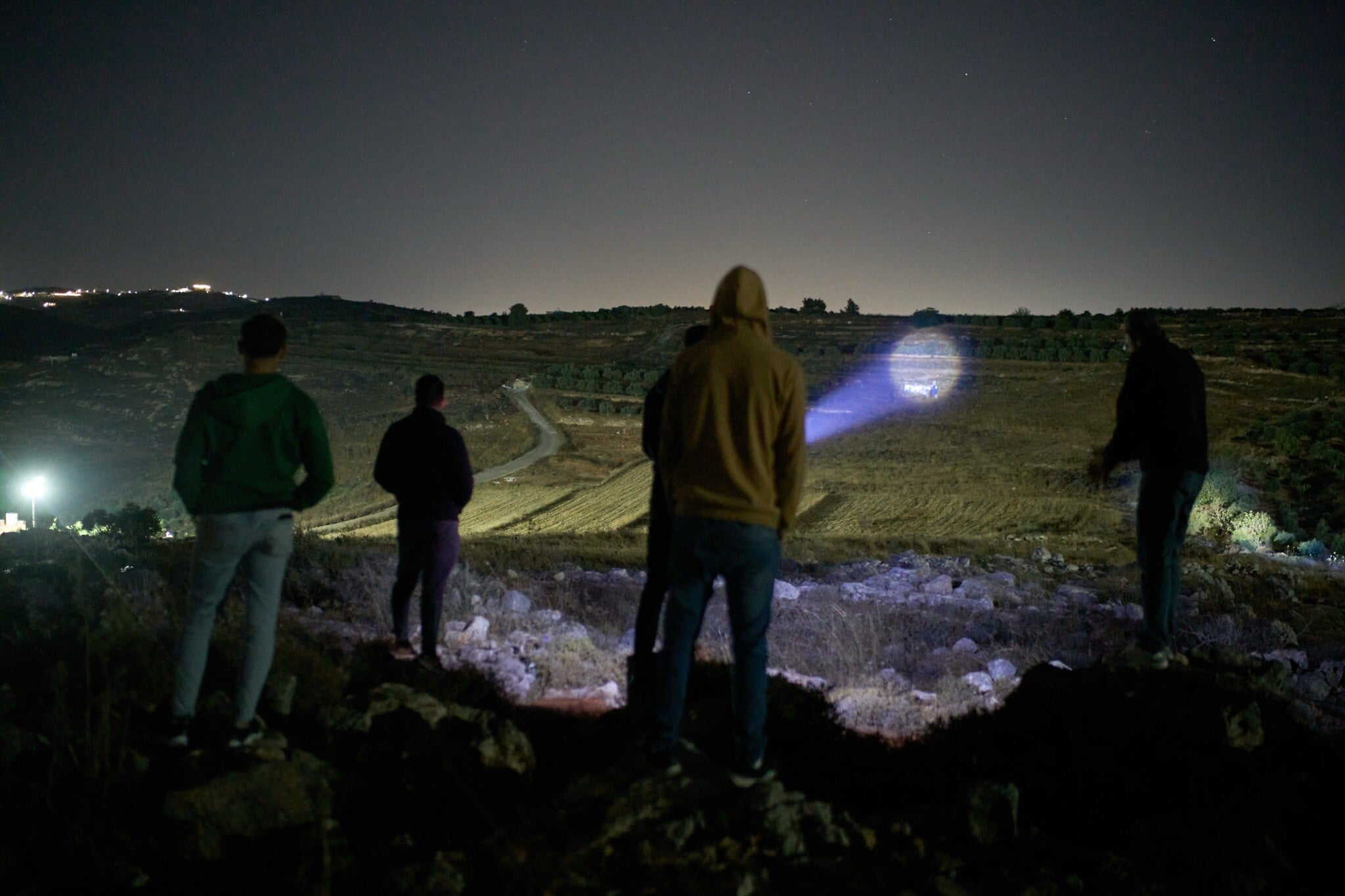
A Palestinian uses a flashlight after spotting Israeli settlers on a nearby hill while taking part in a night watch in Sinjil in the West Bank on July 16, 2026. (AP/Leo Correa)
The sound of gunfire later sent residents running for cover.
Palestinians have been unwilling to discuss the groups with the media, but a senior Israeli military official, speaking on condition of anonymity, told The Times of Israel that some 70 of these watch groups currently exist.
“As of now, they are not armed,” the officer said. However, the IDF is concerned that some of these groups could eventually arm themselves, raising fears that future confrontations between settlers and Palestinians could become significantly more violent.
“This is one of our focus areas, to ensure that an incident of this kind does not happen,” the officer said.
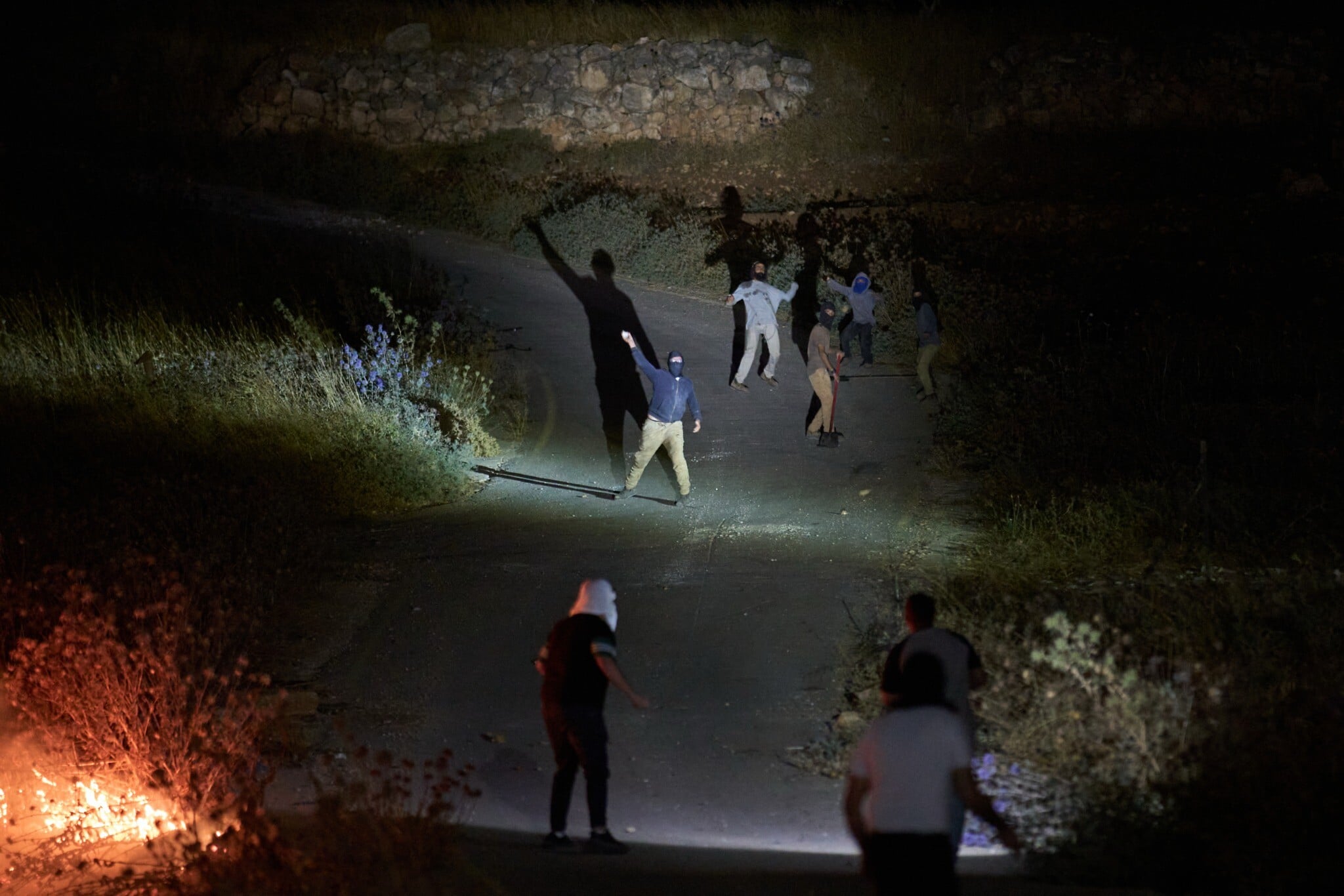
Israeli settlers throw stones toward Palestinians as brush burns along a roadside after it was set ablaze to prevent the settlers from approaching the West Bank village of Sinjil, July 17, 2026. (AP/Leo Correa)
In one recent incident, a group of 10 Hassidic Jews entered Mukhmas while running from police, but were allegedly attacked by Palestinians while in the town. After the incident, the officer said, the West Bank village’s watch group deleted security camera footage.
According to the officer, the incident in Tell was not the result of a village watch group, but rather “spontaneous and not preplanned.”
Nonetheless, it echoed across the West Bank as a klaxon call for such groups to get organized.
On Saturday, the Nablus National Factions — an umbrella body affiliated with Fatah — called for the activation of watch groups in all villages “in light of the incitement calling for further attacks,” referring to alleged settler violence.

Illustrative: Palestinians and activists clash with Israeli settlers near the Ramallah-area Palestinian village of Abu Falah, in the West Bank, July 3, 2026. (Flash90)
And on Monday, the Palestinian news agency Sanad reported that village leaders across the West Bank agreed on the need to establish “popular watch committees in an official capacity,” apparently referring to committees operating under the auspices of the Palestinian Authority, “to prevent the land from being emptied” of Palestinians.
Following the Tell incident, Nablus Governor Ghassan Daghlas called on the watch groups, along with local councils, emergency teams, medical personnel and other official institutions, to raise their level of preparedness in response to what he described as an escalation in settler attacks.
Outpost challenge
As for the Israel Defense Forces, it dispatched five companies of troops to the West Bank as part of its efforts to assert greater control and stability in the territory.
But those efforts are being made more complicated by the spread of illegal settlement outposts, which are funded by the government but not formally authorized.

Israeli soldiers patrol the Palestinian village of Tell in the West Bank on July 25, 2026, after Palestinians from the village clashed with Israeli settlers as they tried entering. (Jaafar ASHTIYEH/AFP)
According to a recent review by Peace Now, there are now 18 illegal outposts in Area B, up from seven at the end of 2024.
Another six outposts have been established in the so-called Agreed Upon Reserve, which until recently was under the civilian control of the Palestinian Authority in accordance with agreements made with Israel.
Extremist settler activists have used the illegal outposts they have established in Area C as forward posts for attacking local Palestinians, and to take control over large tracts of land through grazing livestock.

Israeli settlers are seen establishing an outpost on the outskirts of the village of Tell, near the West Bank city of Nablus, July 25, 2026. (Nasser Ishtayeh/Flash90)
The spread of these tactics to Area B is now a new cause of concern for increased violent confrontations between extremists and Palestinians.
The military official said that the approximately 80 illegal outposts across the West Bank, often populated by the most extremist settlers, were a major obstacle to the IDF’s ability to maintain control and order in the West Bank.
“The issue of the outposts today, especially the violent ones, is one of the most challenging issues there is,” the official said.