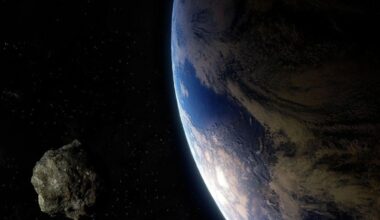
SSpace Read More The main asteroid belt of our solar system is slowly disappearingOctober 3, 2025 The main asteroid belt in our solar system is located between Mars and Jupiter. And although it is…
PPhysics Read More Scientists Find Cosmic “Fingerprints” of Mysterious Dark MatterOctober 2, 2025 Rutgers researchers have mapped hidden patterns of dark matter by studying distant star-forming galaxies, uncovering clues about how…
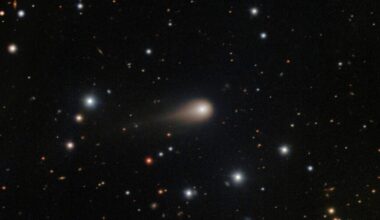
SScience Read More Interstellar comet 3I/Atlas to swing by MarsOctober 2, 2025 CAPE CANAVERAL, Fla. (AP) — A comet from another star system will swing by Mars on Friday as…
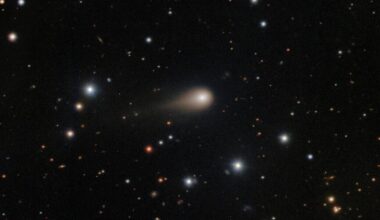
SSpace Read More Interstellar comet swinging past Mars as a fleet of spacecraft looks onOctober 2, 2025 CAPE CANAVERAL, Fla. — A comet from another star system will swing by Mars on Friday as a…
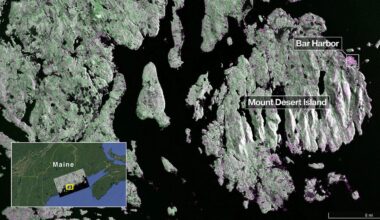
SSpace Read More NISAR satellite snaps radar images of Maine, North Dakota. See photosOctober 2, 2025 The two radar images, captured in August by the NISAR satellite, detail portions of both Maine’s coast and…
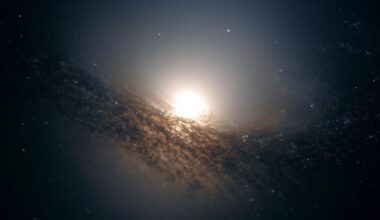
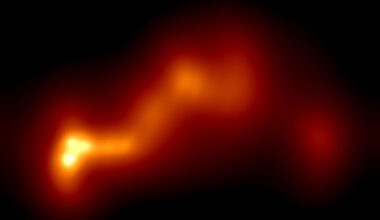
PPhysics Read More What Lies Within? New Image From a Mysterious Galaxy Asks Big QuestionsOctober 2, 2025 A new image of galaxy OJ 287 reveals for the first time the sharply curved, ribbon-like structure of…
SSpace Read More 10 Wild Things Astronomers Discovered While Chasing Something ElseSeptember 30, 2025 More often than not, astronomers have a specific something they’re looking for when searching the cosmos. But the…
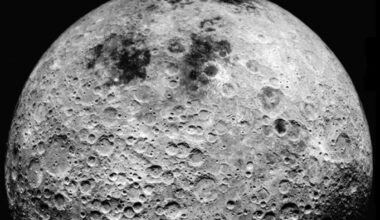
SSpace Read More New Discovery Reveals Just How Different the Moon’s Two Sides Really AreSeptember 30, 2025 The Moon is seriously two-faced. The near and far sides of Earth’s only natural satellite are so unlike…
SScience Read More The New Vaonis Vespera II X_Edition Smart Telescope Looks StellarSeptember 30, 2025 French smart telescope company Vaonis has announced the Vespera II X_Edition, a new limited edition version of its…
SScience Read More James Webb Space Telescope’s First Look at an Atmosphere on Habitable Zone ExoplanetSeptember 30, 2025 An illustration of a habitable zone planet orbiting the star called TRAPPIST – credit NASA, ESA, CSA, J.…