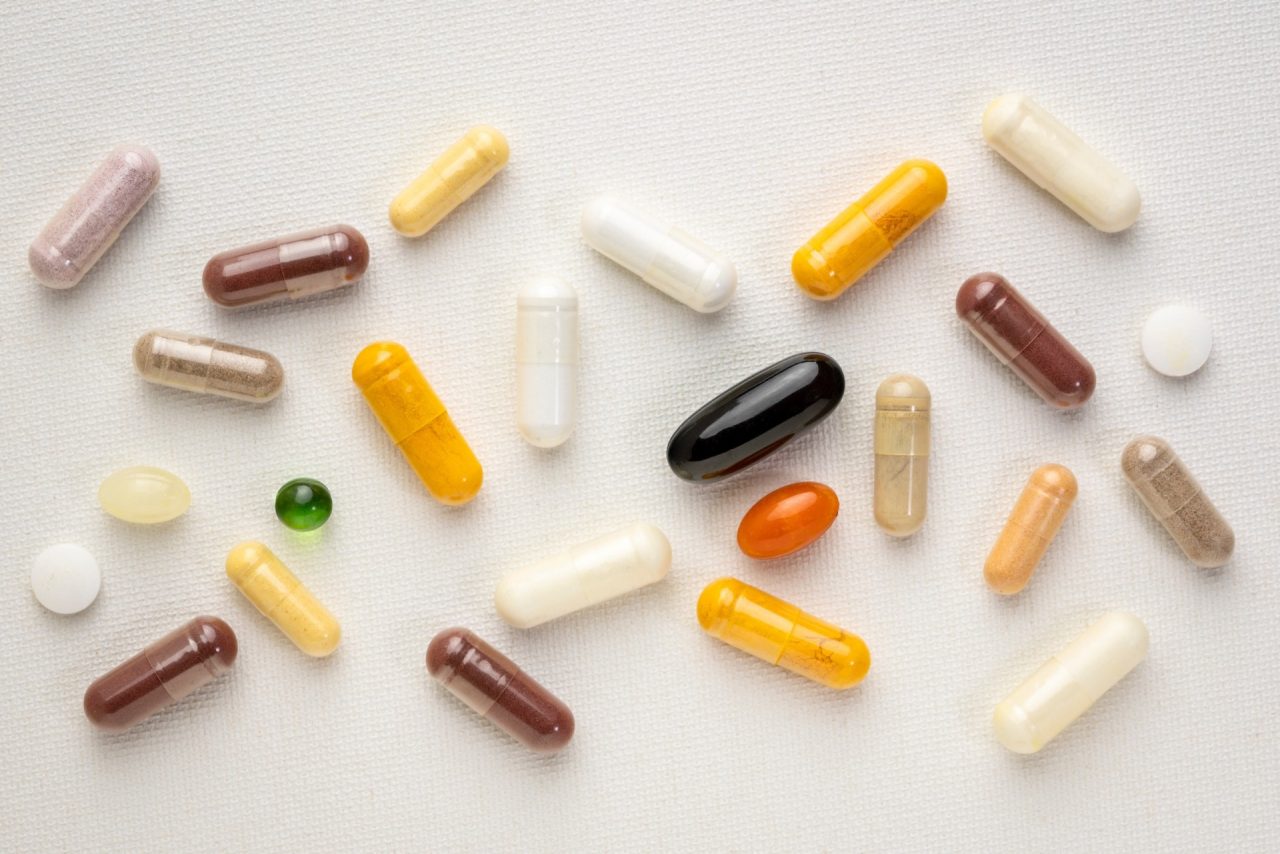
Myth #3: You can take them and not worry about your diet
Evidence suggests that many nutrients are better absorbed through from foods than from supplements, and heat processing to make supplements shelf-stable can make them less potent. “If you take a special compound out of broccoli and put it in a powder, it’s not going to have the same effect as the whole plant did,” Oppezzo said. She notes that there is stronger evidence that fermented food such as yogurt, kefir and kimchi improve gut health than there is for probiotics.
Even people who take supplements should eat a balanced diet, Hu said. “Focus on eating whole foods and a variety of foods,” she said.
Supplements also can’t replace movement and other elements of a healthy lifestyle, Oppezzo said. “People think it’s easier to take a pill than to go exercise. True, but it doesn’t make it better.”

Previous Next
- Addiction
Myth #4: More is better
Higher doses of nutrients don’t necessarily lead to better results and can sometimes backfire, the experts warned. “A lot of times, companies put in a very large quantity of the supplement that might be more than most people need,” Hu said. That’s not an issue when the body excretes what it can’t absorb, as with vitamin B complex.
But other compounds can build up and pose health risks. For example, too much vitamin B6 can damage nerves, high doses of omega-3s can trigger irregular heartbeat in some people, excess vitamin A in retinoid form can harm the liver, and excessive vitamin D may increase the risk of fractures.
To avoid overdoing it, Hu suggests sticking to recommended dietary allowances set by the National Academies of Sciences, Engineering and Medicine, which vary based on age, sex and other factors.
Supplements containing multiple minerals, or high doses of a mineral, may not be fully absorbed. “Multivitamins have all these minerals, like iron and calcium, that compete for absorption,” Oppezzo said. “Also, you can’t take 1,000 milligrams of calcium and absorb it all at once- I think only about 500 mg get into your body.” She recommends if you’re going with a multi, choosing multivitamins without minerals, splitting up larger doses of minerals throughout the day and taking multivitamins every other day if they greatly exceed recommended values.

Previous Next
- Alcohol
Myth #5: They can fix everything
In some cases, claims of supplement efficacy are backed by solid research. For example, magnesium is a proven stool softener, and creatine has been shown to help contribute to muscles energy supply, Oppezzo said. (Oppezzo takes omega-3 pills, which promote heart health among other benefits, to complement what she gets from food.)
But for many popular supplements, the proof is lacking. Studies have found that melatonin, for one, shortens the time it takes to fall asleep by an average of only four minutes, Oppezzo notes. “The effect size is so small, why don’t you spend your time and money on something else?” she asked.
Even when taking unnecessary supplements isn’t harmful, it can be costly. “Some people refer to it as having very expensive urine,” Hu said.
Oppezzo warns against turning to supplements as a substitute for proper diagnosis or evidence-based treatments. “Sometimes it displaces seeking out normal care,” she said. “In the worst cases, people are taking supplements for perimenopause or cancer, when we have really effective, FDA-approved ways to handle those conditions.”
If you’re feeling fatigued or having other symptoms while otherwise healthy, Oppezzo suggests looking at major pillars of well-being before turning to micronutrients. “Are you getting enough calories, carbs, fats, proteins? Are you getting enough sleep?” she said. “These are the big drivers. Most people are pretty good at getting enough micronutrients unless they’re on a really restricted diet.”

Alcohol consumption and your health: What the science says

Sleep and mental health: What the science says

Young people and nicotine: 5 things to know
Ultraprocessed food: 5 things to know

Kids, teens and antidepressants

The science behind sunscreen
Understanding the gut-brain connection
Previous Next
- Insights
- 8
- 9
- 6
- 2
- 3
- 4
- 5