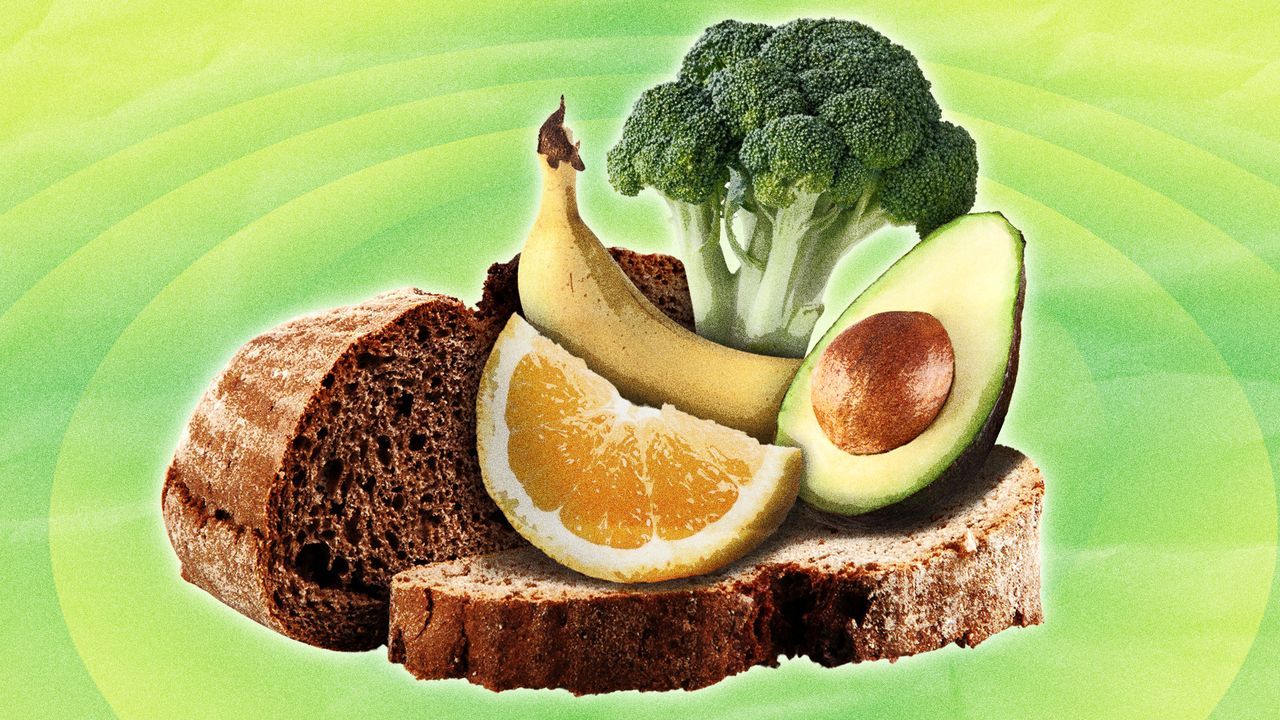
Some signs you might not be getting enough fiber include bloating, constipation (and hemorrhoids), irritable bowel syndrome, or diverticulitis, says LeVeque.
High-Fiber Foods to Add to Your Shopping List
LeVeque says she recommends getting your fiber from whole foods like produce, nuts, and seeds before turning to supplementation. “Embracing a holistic approach to nutrition, I find that incorporating these wholesome options not only contributes to my daily fiber intake but also offers myriad [other] essential nutrients,” she says.
Here’s what you can load up on to reap the health benefits of dietary fiber:
1. Fruits
“Fruit has a bad reputation often with dieters because of its sugar content, but fruits are high in fiber,” says Berghoff. “I want you to eat your fiber, eat your fruits and vegetables”—preferably with the skin on. “When you juice them, it takes away most of that fiber and then leaves just the high sugar, which … spikes your insulin levels.”
LeVeque says some of her favorite fruits include berries and avocados (yes, avo is a fruit). Pears, apples, kiwi, and pomegranate also pack a punch of fiber.
2. Vegetables
Shocker, I know, but fiber is another reason to eat your greens.
Peas (8.8 grams of fiber per serving) and broccoli (5.2 grams) are really high in fiber, says Berghoff. Other expert-recommended high-fiber veggies include cruciferous vegetables like kale, cauliflower, and brussels sprouts; carrots; and sweet corn. Artichokes top the USDA’s list of high-fiber foods (9.6 grams per serving), and potatoes and sweet potatoes are also great sources.
The USDA recommends cooking most of your vegetables to maximize their fiber content (although there are some instances where raw is the better choice, such as for red bell peppers, carrots, and jicama).
3. Beans and legumes
High-protein beans and legumes include navy beans, white beans, lima beans, mung beans, lentils, and chickpeas—each of which has 7 to 9 grams of fiber per standard serving.
4. Whole grains
Berghoff says that oats are her top pick for an easy way to reach your fiber goals. “Most people are eating oats in some form anyways, and that’s a really good high fiber choice.”
According to the USDA, many ready-to-eat cereals are high in fiber, including shredded wheat and bran flakes. Whole wheat pasta, quinoa, bulgar, spelt, and barley are also fiber-rich whole grains (clocking 3 to 7 grams per serving).
5. Nuts and seeds
In addition to being rich and fiber, LeVeque says she loves nuts and seeds because they “offer a satisfying crunch along with healthy fats,” says LeVeque. Pumpkin seeds, chia seeds, coconut, almonds, and chestnuts are at the top of the USDA’s list.
Chia seeds, which are also rich and omega-3 fatty acids and help promote hydration by absorbing water, are an easy way to add a fiber boost to your meal. “Chia seeds are my secret sauce,” says Berghoff. “I will put them in drinks, I will put them in meals. If I’m doing an Instant Pot recipe, I usually add chia seeds.”
What About Fiber Supplements?
Nutrition experts, including Berghoff and LeVeque, say that it’s best to get your nutrients from whole foods. But if that’s difficult for you to do consistently, supplementing your food with fiber powder—from a source like psyllium, inulin, or methylcellulose—may be a good way for you to go.
“A daily non-negotiable for me is adding organic psyllium husk powder to my smoothie as a main fiber source because it provides six grams of soluble fiber in one serving,” says LeVeque.
Just remember to check with your doctor before adding any supplements to your regimen. Supplements, even something as harmless-seeming as a fiber supplement, could exacerbate certain health conditions or impact medications you’re taking.