
Fitness trainer Siddhartha Singh shared a glimpse of Tamannaah Bhatia doing leg workouts. “Training Tamannaah Bhatia in Spain,” Singh noted on his Instagram, adding, “lower body means squats.” “Followed by a run conditioning piece.” In the video, the actor can be seen doing squats and then running with Singh.
Strong legs, glutes, and hips are not only vital for athletic performance but also for everyday functionality such as walking, climbing stairs, and maintaining balance as we age. So, we asked experts about the benefits of a lower-body routine.

Dr Anup Khatri, senior consultant, orthopaedics, Gleneagles Hospital, Parel, Mumbai, said a lower-body routine is extremely important because it strengthens the body’s foundation.
“Your legs, hips, and glutes support daily movements like walking, climbing stairs, lifting, and maintaining balance. A strong lower body also reduces pressure on the knees and lower back. A good lower-body routine can include simple exercises such as squats, lunges, step-ups, leg presses, glute bridges, calf raises, and light resistance-band workouts. Even bodyweight exercises done correctly can give great results, especially for beginners,” said Dr Khatri.
From what she demonstrates, her training involves controlled, compound movements that simultaneously target multiple muscle groups, said consultant dietitian and fitness expert Garima Goyal.
Exercises that emphasise hip hinge patterns, squatting depth, and dynamic stability work not only build muscle but also improve neuromuscular coordination. This kind of training stimulates both slow and fast-twitch muscle fibres, contributing to better strength, endurance, and power, added Goyal.
Notably, the benefits of lower-body training go beyond muscle strength. It improves posture, boosts metabolism, enhances balance, and lowers the risk of falls and injuries, especially as we age. Strong leg muscles also support better heart health and help with weight management.
Story continues below this ad
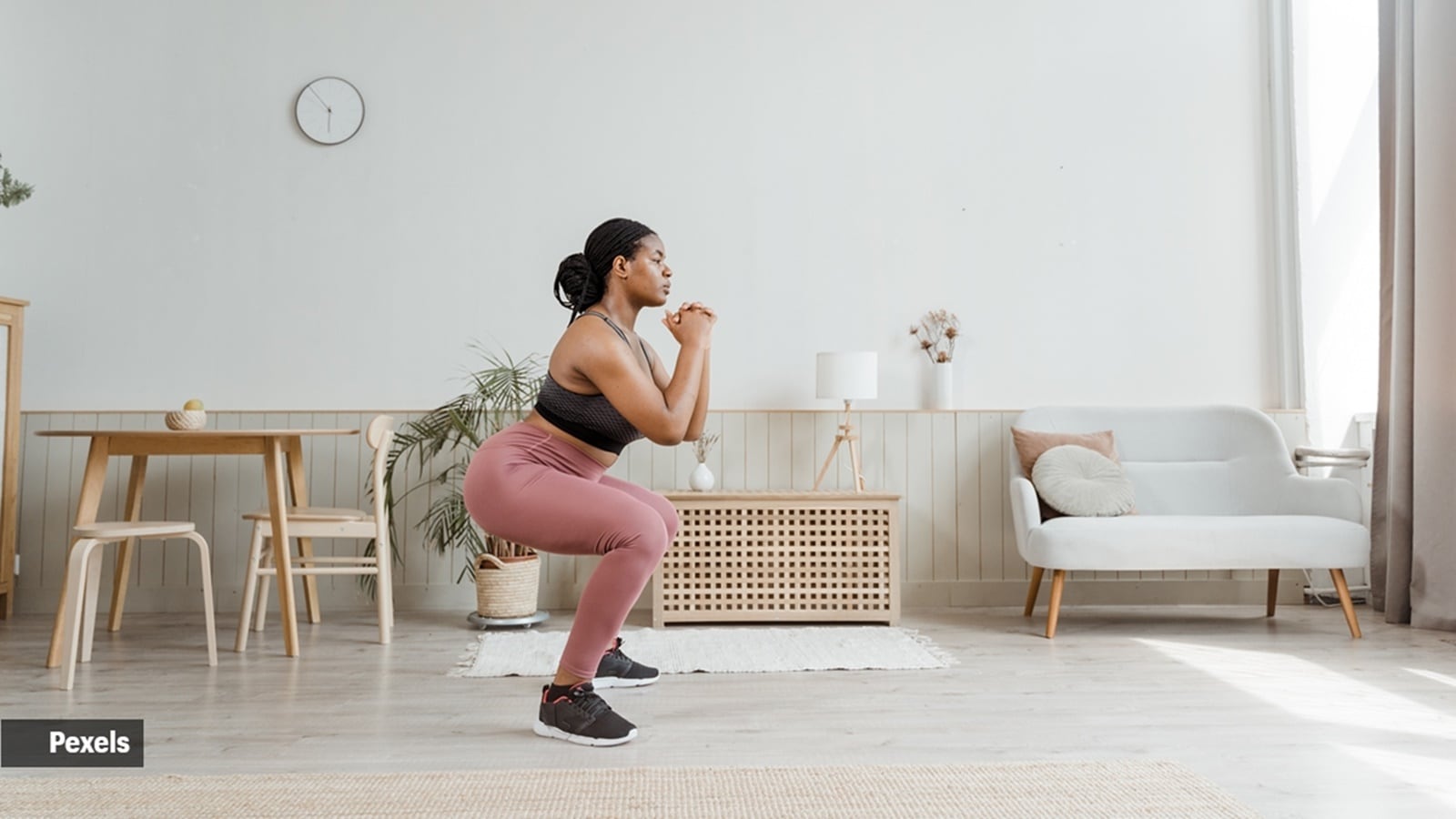 Why lower body routine matters (Photo: Pexels)
Ideally, the lower body should be trained twice a week. This gives muscles enough time to recover while still building strength. Rest days are just as important as workout days for long-term fitness and overall well-being, said Dr Khatri.
A strong lower body is also closely tied to metabolic health. Larger muscle groups require more energy, so training them regularly can elevate resting metabolic rate and support body composition goals. Practical, functional movements not only improve aesthetics but also enhance daily performance and athletic capacity.
“Pairing lower body strength work with consistent mobility and flexibility focus ensures that the body moves smoothly through different ranges of motion without strain,” said Goyal.
When it comes to fitness, consistency and correct form matter more than heavy weights. “Warm up properly, stretch after workouts, and listen to your body. Pain is a signal, not something to ignore,” said Dr Khatri.
DISCLAIMER: This article is based on information from the public domain and/or the experts we spoke to. Always consult your health practitioner before starting any routine.