By the time you’ve put in a full day, crawled through rush-hour traffic, and stared down the refrigerator like it’s personally offended you, dinner stops being a romantic notion and starts feeling like a logistical failure. Parents know this moment well. So do chefs, even the ones who make their living preaching the gospel of scratch-made everything.
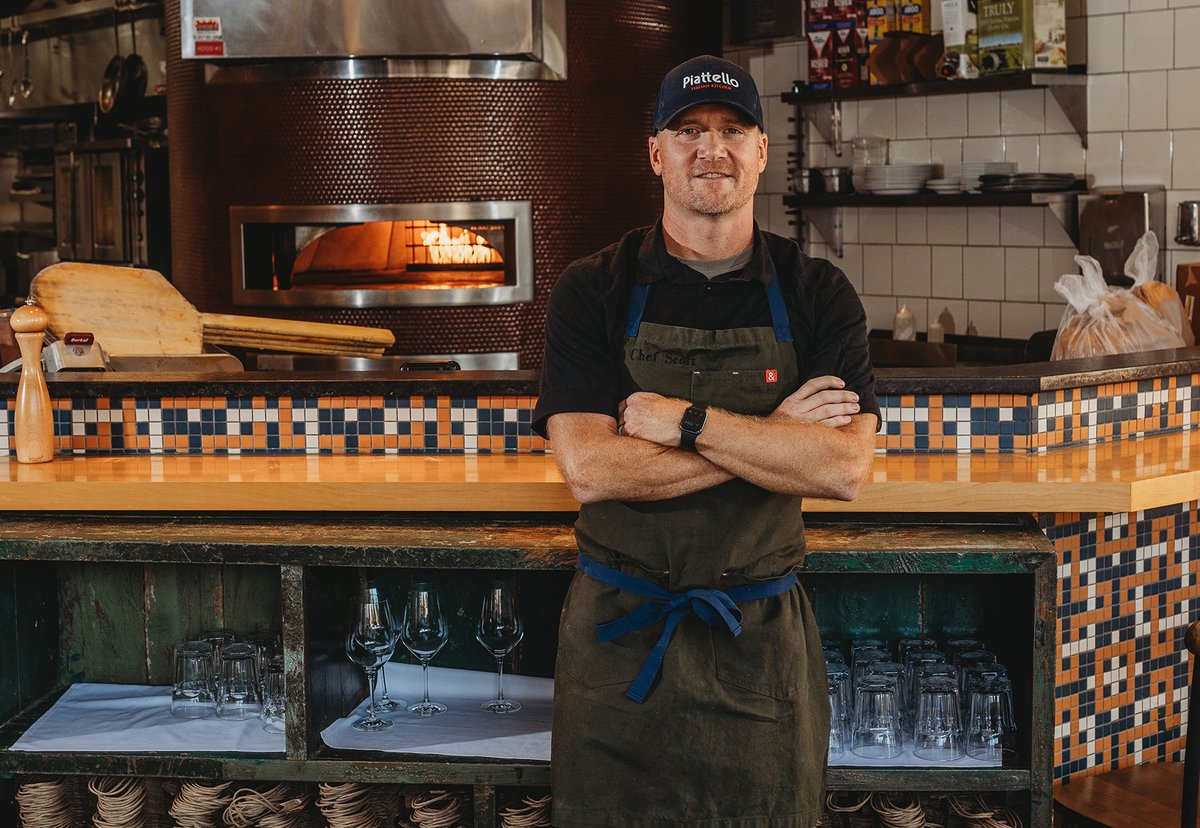
Scott Lewis, executive chef at From Scratch Hospitality, has a confession that might rattle the purists. On certain weeknights, with three kids orbiting the kitchen, he reaches for box pasta. And he doesn’t feel the least bit guilty about it.
“It’s okay,” Lewis says. “There’s nothing wrong with doing that.”
This may sound sacrilegious coming from one of the chefs we spoke with for the “Scratch-Made Pasta Revolution” in November 2023, but for Lewis, fast pasta doesn’t have to mean you’ve given up.
If his name sounds familiar, it’s because Lewis oversees multiple kitchens for From Scratch Hospitality and pours his heart into Piattello — the modern Italian restaurant founded by Marcus Paslay. Still, Lewis lives in the real world, where dinner needs to hit the table in a timely manner.
We sat down with Lewis the day after National Spaghetti Day, which lands on January 4, to talk about how dried pasta earned a permanent spot in his personal pantry.
“It really isn’t that complicated,” he says. “You just have to know what you’re buying.”
Lewis recommends shopping at places like Central Market and Whole Foods, where it’s easier to find imported dried pastas made with minimal ingredients. “Read the label,” he says. “Flour and water, or flour, egg, and water. That’s it. No additives. Nothing extra.”
He also looks for pasta extruded through bronze dies, which roughen the surface and help sauce cling. “It frays the pasta a little,” he explains. “That’s what makes it work.”
The water matters just as much. “I make it taste like the ocean,” Lewis says. “Taste as you go. Once you go too far, there’s no coming back.”
At home, Lewis usually cooks a single pound for his family of five. “That’s perfect,” he says. “And you don’t want to waste it, especially with some of these pastas costing $8, $10, $12 dollars a box.”
He always saves pasta water, scooping a few cups into a container before draining. “It’s got all that starch in it,” he explains. “That’s what helps the sauce stick and helps finish the pasta in the pan.”
Lewis pulls the noodles early, finishing them directly in the sauce and adding reserved water as needed. Then comes the quiet finishing move. “Don’t be afraid of the butter,” he says. “A knob at the end brings everything together. It gives you that silky texture and helps emulsify the sauce.”
That philosophy carries through everything Lewis cooks, whether it’s a quick weeknight meal or a dish at Piattello. He favors minimal ingredients, careful seasoning, and letting quality shine. His marinara, for example, is little more than garlic, onion, good canned tomatoes, and basil.
“If the tomatoes are good, you don’t need to do much,” he says. “Let them speak.”
That respect for ingredients is rooted in his relationships with local farmers and markets across Fort Worth.
“You can taste when something’s been treated right,” he says. “There’s care in it.”
At Piattello, that care shows up in dishes like Sunday gravy, a slow-simmered combination of veal, beef, pork, and sausage that cooks for seven hours before being served with rigatoni and finished with a generous scoop of house-made ricotta — a dish that feels as comforting as it is indulgent.
Still, Lewis is quick to separate restaurant cooking from home cooking. “Making fresh pasta is a labor of love,” he says. “But after a long day, with kids running around, sometimes you just need to make something fast.”
That realization traces back to his early days in Dallas, when his mentor, Julian Barsotti, challenged his all-or-nothing view of dried pasta. Lewis took a bag home, cooked it simply, and watched his kids devour it.
“They were like, ‘Dad, this is really good,’” he says. “If it passes the kid test, you’re in good shape.”
For Lewis, box pasta isn’t a compromise. It’s a tool — one that buys time, sanity, and a seat at the dinner table with his family.
“We all work hard,” he says. “If you can put something good on the table in twelve minutes and spend that time with your kids, that matters.”